
The Recommended Reading Order: The Core Trilogy First
If you want to experience the mystery of the Silo series as it was intended, you should read the core books in their official publication order. The main trilogy is a single, continuous narrative where early twists build into later revelations. Reading the prequel first will strip away the suspense that makes the opening chapters of the story so legendary.
Here is the recommended reading path for the main series:
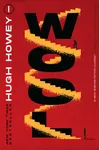
- Wool (2011) – The book that started it all. It introduces you to the claustrophobic life inside the 144-story subterranean bunker and the initial mystery of the toxic world outside.
- Shift (2013) – A prequel novel that spans hundreds of years, revealing the origins of the silos, who built them, and the catastrophic decisions that led to humanity going underground.
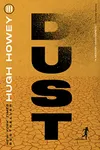
- Dust (2013) – The final novel in the trilogy, which brings together the storylines of Wool and Shift, leading to a tense, dramatic conclusion for the survivors of Silo 18 and Silo 17.
Understanding the Serialization: Novellas and Omnibuses
Before the Silo series became a polished trilogy on bookstore shelves, it was a self-publishing phenomenon that Hugh Howey released in serialized chunks. Because of this history, you may encounter different editions and older titles when browsing booksellers or online libraries.
The Wool Novellas (Parts 1–5)
Hugh Howey originally wrote Wool as a standalone short story in 2011. Its viral success prompted him to write four sequel novellas. Together, these five parts form the novel now sold simply as Wool (or the Wool Omnibus):
- Wool: Part One (2011) – The original short story introducing Sheriff Holston.
- Wool: Proper Gauge: Part Two (2011) – Follows the mechanics and the election of a new sheriff.
- Wool: Casting Off: Part Three (2011) – Focuses on Juliette's journey down the silo.
- Wool: The Unraveling: Part Four (2011) – Explores rebellion and the mechanics' resistance.
- Wool: The Stranded: Part Five (2012) – The climactic conclusion to Juliette's first arc.
The Shift Novellas (Parts 1–3)
Similarly, the prequel novel Shift was initially released in three serialized segments. If you are looking at older digital editions, you might see them listed as individual works, but they are now standardly bundled into a single volume:
- First Shift: Legacy (2012) – The early days of the silos' construction.
- Second Shift: Order (2012) – Life inside the silos centuries after the downfall.
- Third Shift: Pact (2013) – The events directly setting up the connection to Juliette's story.
The Silo Short Stories: When to Read Them
In addition to the main trilogy, Hugh Howey wrote three official short stories set within the Silo universe. These stories provide extra color, exploring life outside the immediate bubble of the main characters:
- In the Air (2014)
- In the Mountain (2014)
- In the Woods (2015)
These stories were originally published in thematic anthologies (The End is Nigh, The End is Now, and The End Has Come) but were later collected in Howey’s 2017 anthology, Machine Learning: Stories. While they can technically be read at any point after finishing the first book, the safest and most rewarding path is to read them after completing Dust. Reading them earlier can disrupt the pacing of the main trilogy, and they serve as an excellent epilogue to the overall universe.
Publication Order vs. Chronological Order
Because the second book, Shift, is a prequel, some readers wonder if they should read the series chronologically. The chronological order would place Shift first, followed by Wool, and then Dust. However, doing so is highly discouraged by both the author and the fan community.
Reading Shift first ruins the central mysteries of Wool. In Wool, you are meant to share the characters' confusion, fear, and complete lack of knowledge about the bunker, the rules, and the outside world. Shift explains the exact mechanics of why the silos exist, who is in control, and what lies outside. If you have those answers beforehand, the atmospheric suspense of Juliette’s discoveries in Wool is largely lost. Stick to the publication order for your first read-through.
What to Know Before You Start: Tone, Themes, and Adaptations
Hugh Howey's Silo series is not just another run-of-the-mill post-apocalyptic story; it is a slow-burn psychological mystery. The narrative relies heavily on its setting—the silo itself is a character, representing rigid class structures, bureaucratic control, and the physical weight of secrets. The lower levels house the mechanics and laborers who keep the lights on, while the upper levels house the administrators and IT departments who control the flow of information. This division of labor drives the themes of rebellion and societal control throughout the books.
If you prefer visual media, you may also be familiar with the hit Apple TV+ television adaptation, simply titled Silo. Season 1 premiered in May 2023, covering roughly the first half of the novel Wool, while Season 2 followed in November 2024. The television show expands on the world-building and character dynamics of the books, making it a fantastic companion piece—though we still recommend reading the books to experience the original pacing of the mysteries.
The Expanded Fan Fiction Universe
For readers who finish the main books and still crave more subterranean stories, the Silo universe has a unique extended life. Hugh Howey officially opened the world to fan fiction through Amazon's Kindle Worlds program before it closed in 2018. During this time, several independent authors wrote authorized spin-offs set in different silos. Popular contributions include Patrice Fitzgerald's Karma series (beginning with The Sky Used to be Blue) and Ann Christy’s popular Silo 49 series. While these works are not written by Howey and are not considered main canon, they offer fun, creative expansions for dedicated fans.