

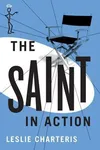


Where Should You Start Reading Simon Templar?
With over fifty books spanning more than fifty years, finding the right entry point for The Saint can feel daunting. Because Simon Templar’s adventures are largely episodic, you don’t need to read them in strict order. However, depending on what type of reader you are, there are three ideal starting points:
Option 1: The Rayt Marius Trilogy (For the Classic Origin)
If you want to watch the character evolve from a swashbuckling outlaw into a classic detective, start at the very beginning with the books that establish his core relationships and his most famous rivalry. This informal story arc consists of:
- Meet the Tiger! (1928): The debut novel that introduces a 27-year-old Simon Templar, his adventurous love interest Patricia Holm, and his trademark stick-figure calling card.
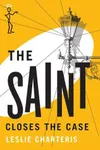
- The Last Hero (1930) – also published as The Saint Closes the Case: This is the true launchpad of the series. It pits Templar against the criminal mastermind Dr. Rayt Marius, who is attempting to trigger a global war. The stakes are high, and the tragedy in this book sets Templar on a crusade of justice.
- Knight Templar (1930) – also published as The Avenging Saint: A direct sequel continuing the hunt for Rayt Marius and seeking vengeance for a fallen friend.
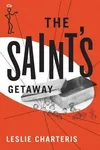
- The Saint's Getaway (1932) – also published as The Getaway: The fast-paced European chase that concludes the Marius saga, featuring stolen diamonds and high-speed escapes.
Option 2: The Saint in New York (For a Gritty Standalone Thriller)
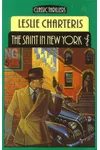
If you want a self-contained, darker, and action-packed story, pick up The Saint in New York (1935). Widely considered the best novel in the series, this book sees Templar hired to clean up the gangster-ridden streets of New York. It shows a more ruthless, hard-boiled side of Simon Templar and serves as the perfect showcase of his capabilities outside of England.
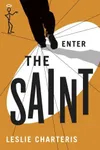
Option 3: Enter the Saint (For the Novella Experience)
If you prefer shorter, punchier stories to test the waters, start with Enter the Saint (1930). This collection of three novellas establishes the playful, Robin Hood-style dynamic between The Saint and Scotland Yard's frustrated Chief Inspector Teal.
Publication Order vs. Chronological Order
For Simon Templar, publication order is chronological order. The stories follow Templar's life and career linearly as he ages, shifts his base of operations from London to the United States, and eventually becomes a globetrotting investigator. Reading the books in the order they were published is the most rewarding way to experience the series, as it showcases how Leslie Charteris's writing style and the character's tone evolved over five decades.
Deciphering the Collection Confusion
One of the most confusing aspects of buying Simon Templar books is that they are not all traditional, single-story novels. Of the 52 canonical books, Leslie Charteris utilized three distinct formats:
- Full-Length Novels: Books like Meet the Tiger!, The Last Hero, and The Saint in New York tell a single, continuous story.
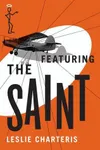
- Novella Collections: Many books contain two or three longer, self-contained stories. Examples include Enter the Saint, Featuring the Saint, and The Saint Steps In.
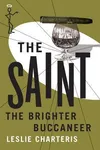
- Short Story Collections: Some books are packed with shorter, highly episodic capers. For example, The Brighter Buccaneer (1933) contains fifteen short stories detailing Simon’s quick-witted schemes to outsmart local swindlers.
The Eras of Simon Templar: From Solo Canon to Collaborations
To navigate the later books, it helps to understand the three distinct eras of the series' publication history. Leslie Charteris wrote the first 36 books entirely on his own, but the later titles involved substantial collaboration:
1. The Solo Era (1928–1963)
This includes the first 36 books, from Meet the Tiger! through The Saint in the Sun. These represent the pure, unadulterated vision of Leslie Charteris. During this era, Templar evolves from an anarchic, swashbuckling vigilante who robs the corrupt to a wartime counter-espionage agent, and eventually to a smooth, wealthy globetrotter.
2. The Collaboration and TV-Script Era (1964–1983)
As the Roger Moore television adaptation of The Saint became a massive hit, Leslie Charteris stepped back from writing the books himself. He took on an editorial and supervisory role, while other authors ghostwrote or adapted television scripts into books, which were still published under Charteris's name:
- Harry Harrison: The legendary science fiction author wrote Vendetta for the Saint (1964), a fan-favorite novel that pits Simon Templar against the Sicilian Mafia.
- Fleming Lee: A primary collaborator who adapted many TV episodes into books, including The Saint on TV (1967), The Saint Returns (1968), and The Saint and the People Importers (1971).
- Peter Bloxsom, John Kruse, and Donald James: These writers contributed to the late-era books like Send for the Saint (1977) and the final entry Salvage for the Saint (1983).
3. The Film Tie-Ins (1997)
Two final books were published in 1997 to coincide with the Val Kilmer movie. These were written by Burl Barer (a novelization of the film and an original novel, Capture the Saint) without the involvement of Leslie Charteris, who passed away in 1993.
Navigating the Title Discrepancies (UK vs. US)
If you are hunting for vintage paperbacks or ebooks, you will quickly notice that many Simon Templar books have different titles depending on which side of the Atlantic they were printed. Here is a quick translation guide for some of the most common title swaps:
- UK Title: The Last Hero / US Title: The Saint Closes the Case
- UK Title: Knight Templar / US Title: The Avenging Saint
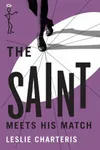
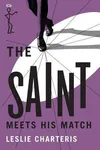
- UK Title: She Was a Lady / US Title: Angels of Doom (or The Saint Meets His Match)
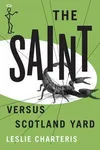
- UK Title: The Holy Terror / US Title: The Saint versus Scotland Yard
- UK Title: The Misfortunes of Mr. Teal / US Title: The Saint in London
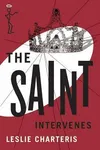
- UK Title: Boodle / US Title: The Saint Intervenes
Key Characters to Watch For
As you read, three recurring characters anchor Simon Templar's world:
- Patricia Holm: Simon's partner, lover, and fellow adventurer. Unlike typical "damsels in distress" of the era, Patricia is a capable combatant and driver who frequently assists in Simon's high-stakes heists. She appears regularly in the early novels but fades from the series as Simon becomes a globetrotter.
- Chief Inspector Claud Eustace Teal: The long-suffering Scotland Yard detective who represents the law. While Teal is determined to arrest The Saint, he grudgingly respects Templar, and the two often find themselves working together to take down worse criminals.
- Hoppy Uniatz: Simon's loyal, dim-witted American thug sidekick, first introduced in the novella collection The Misfortunes of Mr. Teal (1934). Hoppy's reliance on his gun ("Betsy") and his comical misunderstandings of British culture provide much of the series' comedy in the middle years.
What to Know Before You Start
Simon Templar represents a transition point in crime fiction. He bridges the gap between the classic "gentleman thief" archetype (like Arsène Lupin and Raffles) and the modern "superspy" (like James Bond). Templar targets the "ungodly"—war profiteers, corrupt politicians, and vicious gangsters—and funds his luxurious lifestyle by taking a "tax" from his marks. While the early stories have a lighthearted, swashbuckling tone, the series adapts to the times, featuring grittier noir elements in the 1940s and espionage thrills during the Cold War. Keep this stylistic evolution in mind, and feel free to jump between eras to find the style of mystery you enjoy most!