




The Recommended Reading Path: Where to Begin
William Faulkner’s novels set in the fictional Yoknapatawpha County are not a traditional, chronological book series. Instead, they form a vast, interconnected literary universe. Because of this, reading them in strict publication order is rarely recommended for newcomers. Faulkner's modernist prose, characterized by shifting timelines and stream-of-consciousness narratives, can be incredibly challenging. Starting with his most famous and complex book, The Sound and the Fury, often leads to frustration.
For the best experience, we recommend starting with a more accessible entry point before diving into the denser masterpieces. Here is the ideal reading path:
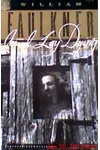
- As I Lay Dying (1930): This is the perfect starting point. While it utilizes Faulkner's signature multi-narrator technique with 15 different point-of-view characters, the plot is straightforward: the Bundren family's journey across the Mississippi countryside to bury their matriarch, Addie. It introduces readers to his dark humor, Southern Gothic atmosphere, and narrative experimentation in an approachable format.
- Light in August (1932): After getting comfortable with Faulkner’s style, this novel offers a compelling narrative focused on race, religion, and identity. The story follows Lena Grove, a pregnant woman looking for the father of her child, and Joe Christmas, a man haunted by his racial identity. It is structured more traditionally than his other works but contains rich thematic depth.
- Sartoris / Flags in the Dust (1929): This was Faulkner's first novel set in Yoknapatawpha County. It introduces the aristocratic Sartoris family and establishes the geography and history of the county. Note that Sartoris is an abridged version of the narrative; the complete text was later published as Flags in the Dust.
- Sanctuary (1931): A sensationalist Southern Gothic noir that explores the darkest corners of human nature. This book is crucial because it introduces Temple Drake, setting up a major storyline that concludes later in the reading order.
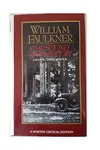
- The Sound and the Fury (1929): Faulkner’s undisputed masterpiece. Now that you are well-acquainted with his style, you are ready to tackle this brilliant but difficult story of the declining Compson family, told through four fragmented perspectives.
- Absalom, Absalom! (1936): Often considered Faulkner's greatest work, this novel is incredibly dense and complex. It recounts the rise and fall of Thomas Sutpen and his grand Mississippi plantation, exploring how the sins of the past haunt future generations.
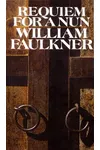
- Requiem for a Nun (1950): The direct sequel to Sanctuary. Part play and part novel, it follows Temple Drake eight years after the events of Sanctuary as she seeks redemption and confronts her past.
The Publication Order of the Sin and Salvation Books
If you prefer to read the novels in the order they were published to witness the evolution of Faulkner’s fictional cosmos and his writing style, use this sequence:
- Sartoris (1929) – The debut of Yoknapatawpha County, introducing the recurring Sartoris and Snopes families.
- The Sound and the Fury (1929) – The tragic downfall of the Compson family, showcasing Faulkner’s mastery of stream-of-consciousness.
- As I Lay Dying (1930) – The multi-perspective Odyssey of the Bundren family.
- Sanctuary (1931) – A gritty, atmospheric thriller centering on the abduction of Temple Drake.
- Light in August (1932) – A powerful exploration of alienation, community, and race in the deep South.
- Absalom, Absalom! (1936) – The epic, multi-layered history of the Sutpen family dynasty.
- Requiem for a Nun (1950) – A hybrid dramatic-narrative work that serves as a sequel to Sanctuary.
Key Narrative Connections: The Temple Drake Duology
While most Yoknapatawpha novels stand alone, there is one direct, chronological storyline within this grouping: the connection between Sanctuary and Requiem for a Nun. Read these two back-to-back to follow the life of Temple Drake. In Sanctuary, Temple is a college student who suffers a horrific kidnapping. Years later, in Requiem for a Nun, she is married to Gowan Stevens, attempting to rebuild her life while facing blackmail, murder, and the heavy burden of her past choices. This duology represents Faulkner’s most explicit exploration of the journey from deep sin to the painful search for salvation.
What to Know Before You Start
Faulkner did not write these novels as a planned sequence. They are grouped under the 'Sin and Salvation' moniker because they share the same geographical setting and deal with core moral themes. Yoknapatawpha County acts as a mirror to the post-Civil War American South, showing how the weight of history, slavery, and familial expectations crush the individuals living there. Faulkner's prose uses stream-of-consciousness, shifting timelines, and unreliable narrators. Do not worry if you feel disoriented in the first few chapters of books like The Sound and the Fury; Faulkner designs the narrative to reveal its secrets slowly as the perspectives shift.
Expanding Your Reading: Other Yoknapatawpha Works
If you finish these seven books and want to explore more of Faulkner's world, you can read the Snopes Trilogy, which details the rise of the ruthless Snopes family in Yoknapatawpha County. This subseries consists of The Hamlet (1940), The Town (1957), and The Mansion (1959). Additionally, the collection Go Down, Moses (1942) offers vital context on the McCaslin family and features the famous novella The Bear.