







The Recommended Starting Point: Where to Begin
If you are planning to dive into the historic mysteries of Sister Fidelma, the absolute best path is to read the novels in their original publication order. Written by Peter Tremayne (the pen name of Celtic scholar and historian Peter Berresford Ellis), the series follows a distinct character progression. Fidelma's legal cases, her personal growth, and her evolving relationship with her Saxon partner, Brother Eadulf, build continuously from book to book. Skipping around can spoil major relationship milestones, marriages, family developments, and career transitions.
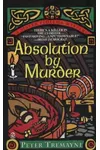
Your journey should begin with the very first novel, Absolution by Murder (1994). This book introduces Fidelma during the historic Synod of Whitby in AD 664, setting up the tense religious and cultural conflicts that form the backdrop of the entire series. While some short stories take place chronologically prior to this novel, starting with the first full-length book is highly recommended to fully appreciate how Tremayne establishes his lead sleuth's world.
Sister Fidelma Books in Publication Order
The core of the series is composed of full-length historical novels. Below is the complete publication order of the main novels, as detailed in our database:
- Absolution by Murder (1994)
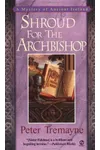
- Shroud for the Archbishop (1995)
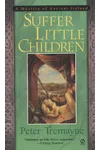
- Suffer Little Children (1995)
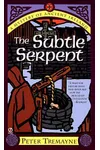
- The Subtle Serpent (1996)
- The Spider's Web (1997)
- Valley of the Shadow (1998)
- The Monk Who Vanished (1999)
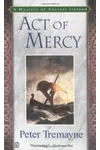
- Act of Mercy (1999)
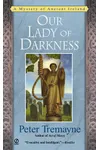
- Our Lady of Darkness (2000)
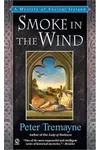
- Smoke in the Wind (2001)
- The Haunted Abbot (2002)
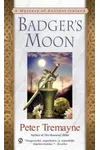
- Badger's Moon (2003)
- The Leper's Bell (2004)
- Master of Souls (2005)
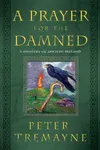
- A Prayer for the Damned (2006)
- Dancing with Demons (2007)
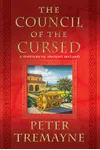
- The Council of the Cursed (2008)
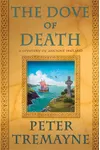
- The Dove of Death (2009)
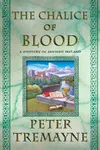
- The Chalice of Blood (2010)
- Behold a Pale Horse (2011)
- The Seventh Trumpet (2012)
- Atonement of Blood (2013)
- The Devil's Seal (2014)
- The Spiteful Shadow (2015)
- The Second Death (2015)
- The Lair of the White Fox (2016)
- Penance of the Damned (2016)
- Night of the Lightbringer (2017)
- Bloodmoon (2018)
- Blood in Eden (2019)
- The Shapeshifter's Lair (2020)
- The House of Death (2021)
- Death of a Heretic (2022)
- Revenge of the Stormbringer (2023)
- Prophet of Blood (2024)
The Short Story Collections
Before launching into full-length novels, Peter Tremayne introduced Sister Fidelma to the world in a series of short stories beginning in 1993. Over the years, he has written over a hundred short pieces of fiction. Most of these have been compiled into dedicated anthologies, which you can read alongside the novels. The three primary English-language short story collections are:
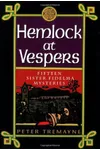
- Hemlock at Vespers (2000) - The first collection, gathering 15 early short stories that showcase Fidelma's first cases and her legal training under Brehon law.
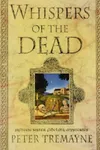
- Whispers of the Dead (2004) - The second collection, featuring another 15 historical mysteries that expand on her travels and early adventures.
- An Ensuing Evil and Others (2005) - A third compilation featuring 14 tales, some of which feature Fidelma alongside other historical settings written by Tremayne.
For completionists, these stories are best read between the novels that match their publication years, though they also work perfectly fine as standalone weekend reading.
Chronological Order vs. Publication Order
Unlike many historical mystery franchises where the author frequently jumps backward to write prequels, the Sister Fidelma series is remarkably straightforward. The novels are written in a linear fashion, tracking the calendar years of the late 7th century. Therefore, the internal chronological order of the novels aligns almost exactly with their publication order.
However, the short stories complicate this slightly. A few stories in the collections are set during Fidelma's youth and schooling, long before the events of Absolution by Murder. Additionally, some international releases (such as German collections like Die Wahrheit ist der Lüge Tod) package novellas that take place at various points in the timeline. If you are a casual reader, you do not need to stress about these minor variations. Sticking to the publication order remains the most satisfying way to experience the saga.
Companion Guides & Reference Books
Because of the dense historical details and authentic Celtic terminology used throughout the series, fans have established dedicated resources to help navigate Fidelma's world. If you want to dive deeper, look for these companion books:
- The Sister Fidelma Compendium: A Reader's Guide to the Sister Fidelma Mysteries of Peter Tremayne (2022) - Written by David Robert Wooten (the founder of the International Sister Fidelma Society), this comprehensive 460-page handbook features maps, character lists, historical breakdowns, and direct insights from the author.
- The Sister Fidelma Mysteries: Essays on the Historical Novels of Peter Tremayne (2012) - A collection of academic essays edited by Edward J. Rielly and David Robert Wooten, detailing the social, political, and historical contexts of the novels.
What to Know Before You Start
To fully enjoy the Sister Fidelma mysteries, it helps to understand the unique historical landscape Peter Tremayne paints. Fidelma is not a typical medieval nun. She is a dalaigh—a qualified advocate of the ancient Irish Brehon law courts. Under Brehon law, women in 7th-century Ireland held significant rights, including the ability to own property, divorce, and hold high-ranking professions, which stood in stark contrast to the rest of Europe.
The series is set during a pivotal transition period. Celtic Christianity (which was highly progressive, egalitarian, and localized) is actively clashing with the centralized, hierarchical authority of the Roman Catholic Church. This cultural friction, combined with local Irish political rivalries, drives much of the political intrigue throughout the series. Understanding this dynamic will help you appreciate the rich subtext of Fidelma's legal battles and Eadulf's role as her Saxon companion.