

Recommended Reading Order for the Soldier Son Trilogy
The Soldier Son Trilogy is a linear, self-contained fantasy series. Because the story follows a strict chronological progression with a single protagonist, there are no spin-offs, short story tie-ins, or complicated alternate timelines. Readers should progress through the books in their original publication order.
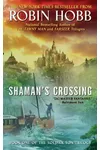
- Shaman's Crossing (2005) - Nevare Burvelle enters the King's Cavalla academy, where he is first exposed to the mysterious Speck magic.
- Forest Mage (2006) - Nevare deals with the devastating physical and social aftermath of a magical plague and his forced transformation.
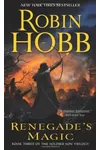
- Renegade's Magic (2008) - The conclusion to the trilogy, where Nevare is caught in the ultimate confrontation between Gernian iron and Speck magic.
Publication History and Context
The trilogy was published between 2005 and 2008 by HarperCollins under the Voyager imprint in the UK and Eos in the US. Unlike Robin Hobb's massive, multi-series Realm of the Elderlings universe (which spans the Farseer, Liveship Traders, and Tawny Man trilogies), the Soldier Son Trilogy is completely standalone. It takes place in an entirely different world, featuring unique geography, magic systems, and cultures. Readers do not need any prior knowledge of Hobb's other works to start this series, nor does reading this trilogy spoil any elements of the Elderlings books.
The World of Gernia, Specks, and Shamanic Magic
The trilogy is set in the kingdom of Gernia, a rapidly expanding, industrializing society that bears strong thematic parallels to colonial-era Europe and North America. Gernian culture is highly structured, particularly regarding birthright: first sons inherit the land, second sons are destined for the military (the "Soldier Sons"), third sons enter the priesthood, and so forth.
As Gernia pushes its borders eastward to construct a highway through the ancient barrier forests, they clash with the indigenous forest-dwelling people known as the Specks. The Specks are attuned to a powerful, primal magic that resides within the forest. Unlike typical fantasy magic systems, Speck magic is physical and demanding. It treats the human body as a vessel, storing energy in the form of body fat. Those who carry the strongest magic—the "Great Ones" or shamans of the Speck people—are physically massive, a trait that the Specks revere but which the militaristic, status-obsessed Gernians view with deep disgust and prejudice.
Key Themes: Duty, Prejudice, and Colonialism
Robin Hobb uses this setting to explore several heavy, challenging themes that set this trilogy apart from mainstream epic fantasy:
- The Weight of Expectations: Nevare Burvelle is raised from childhood to be a model soldier. His entire identity is wrapped up in fulfilling his father's expectations and serving his country, making his gradual, forced alienation from Gernian society psychologically devastating.
- Colonial Expansion and Environmentalism: The conflict between Gernia and the Specks highlights the destructive nature of industrial progress, the exploitation of natural resources, and the cultural erasure of indigenous populations.
- Body Image and Social Ostracization: Nevare's weight gain is a central plot point. Because Gernian society associates physical fitness with moral and military virtue, Nevare's change in appearance leads to immediate rejection, abuse, and loss of status from his family, peers, and betrothed. Hobb uses Nevare's perspective to deliver a raw, uncomfortable look at societal fatphobia and physical prejudice.
Practical Reading Guidance and Expectations
Before diving into the Soldier Son Trilogy, readers should prepare for a very different experience than Hobb's other famous books. Here is what to keep in mind:
Expect a Polarizing Story: The trilogy is widely considered Hobb's most polarizing work. Fans appreciate its bold willingness to tackle topics like severe social isolation, body dysmorphia, and the dark realities of colonialism. Critics, however, often find the pacing slow and the protagonist's passivity frustrating, as Nevare spent long stretches of the narrative suffering under circumstances he cannot control.
Pacing and Tone: The narrative is highly introspective, detail-oriented, and frequently grim. Nevare undergoes intense physical and emotional trauma, and the series offers very few traditional heroic victories. It is a slow-burn tragedy and recovery arc rather than a fast-paced military adventure.
No Alternate Orders: There are no prequels or side novels. Reading the books out of order will spoil the major transitions of Nevare's life and render the plot incomprehensible, so stick strictly to starting with Shaman's Crossing.