





Where to Start Reading Solomon Kane
For modern readers, navigating the adventures of Solomon Kane is remarkably straightforward thanks to how the publishing industry has consolidated pulp-era stories. The absolute best place to start is with the definitive collection, The Savage Tales of Solomon Kane (Del Rey, 2004). This single volume contains all of Robert E. Howard's completed stories, unfinished fragments, and poetry. If you are diving into the character for the first time, starting here ensures you get the unedited, raw text exactly as Howard wrote it, beautifully illustrated by Gary Gianni.
If you prefer to read the individual stories one by one, your ideal starting point is the classic tale "Red Shadows". Published in 1928, it was the very first Solomon Kane story to see print and acts as the perfect introduction to Kane's character, his tragic motivations, and his deep connection to the African continent.
The Two Ways to Read Solomon Kane
Because Robert E. Howard wrote these stories as standalone pulp adventures for magazines like Weird Tales, he did not write them in a linear chronological order. As a result, readers can choose between two popular reading pathways: the order in which they were published, or a reconstructed chronological timeline based on Kane's journey from Europe to Africa.
1. The Publication Order
Reading in publication order allows you to experience Solomon Kane exactly as the original pulp audience did in the late 1920s and early 1930s. This path lets you witness Robert E. Howard developing Kane's voice, weapon choices, and philosophical depth over time. The core publication sequence is as follows:
- "Red Shadows" (Weird Tales, August 1928) — Kane hunts the villain Le Loup from France to the depths of Africa.
- "Skulls in the Stars" (Weird Tales, January 1929) — A gothic ghost story set in the misty English moors.
- "Rattle of Bones" (Weird Tales, June 1929) — A sinister encounter at a dark German tavern.
- "The Moon of Skulls" (Weird Tales, June–July 1930) — A two-part novella where Kane travels to a lost city in Africa to rescue a captive girl.
- "The Hills of the Dead" (Weird Tales, August 1930) — Kane teams up with the shaman N'Longa to fight hordes of vampires in Africa.
- "The Footfalls Within" (Weird Tales, September 1931) — While captured by slave traders in Africa, Kane encounters an ancient, cosmic evil.
- "Wings in the Night" (Weird Tales, July 1932) — A tragic and dark tale of Kane defending an African tribe from bloodthirsty flying monsters.
- "Solomon Kane's Homecoming" (Fanciful Tales, 1936) — A somber narrative poem showing Kane returning to Devon, England, only to leave again.
2. The Chronological Timeline
While Howard never published a formal chronology, scholars and fans have constructed a narrative timeline based on geographical clues. Kane starts his career fighting bandits and ghosts in Europe, journeys to Africa where he spends years battling ancient horrors, and finally returns to England as an aging wanderer. This sequence arranges the core stories as follows:
- "Skulls in the Stars" (England)
- "The Castle of the Devil" (Germany — Howard fragment completed by Ramsey Campbell)
- "Rattle of Bones" (Germany)
- "The Right Hand of Doom" (Europe)
- "Red Shadows" (Starts in Europe, ends in Africa)
- "Hawk of Basti" (Africa — Howard fragment completed by Ramsey Campbell)
- "The Moon of Skulls" (Africa)
- "The Hills of the Dead" (Africa)
- "The Children of Asshur" (Africa — Howard fragment completed by Ramsey Campbell)
- "The Footfalls Within" (Africa)
- "Wings in the Night" (Africa)
- "Blades of the Brotherhood" (Europe)
- "Solomon Kane's Homecoming" (Devon, England)
Understanding the Solomon Kane Collections
For decades after Howard's death, publishers grouped his short stories and fragments into various paperback collections. Recognizing these volumes helps when searching through older bookshops or libraries:
- The Moon of Skulls (1968, Lancer Books): A paperback collection featuring early stories and some of the fragments completed by Ramsey Campbell.
- The Hand of Kane (1970, Centaur Press): Contains several core stories, including "Red Shadows" and "The Hills of the Dead."
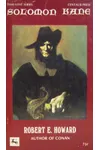
- Skulls in the Stars (1978, Bantam Books): Features a mix of stories and poems with cover art representing the dark, gothic tone of the series.
- The Hills of the Dead (1979, Bantam Books): Focuses heavily on Kane's African adventures and battles with the undead.
- Solomon Kane (1995, Baen Books): A unified paperback collection that gathers the complete stories under one cover.
- The Savage Tales of Solomon Kane (2004, Del Rey): The definitive, highly recommended collection containing everything written by Howard, including alternate drafts, notes, and illustrations.
- The Right Hand of Doom & Other Tales of Solomon Kane (2007, Wordsworth Editions): A solid budget-friendly collection of the public domain stories.
What to Know Before You Start
Solomon Kane is distinct from Robert E. Howard's other famous creation, Conan the Barbarian. While Conan seeks gold, glory, and crowns in a prehistoric fantasy era, Solomon Kane is a somber, deeply religious 17th-century Puritan who views himself as an instrument of divine justice. He does not seek reward; he is driven by a restless urge to wander the earth and destroy evil wherever he finds it.
As products of the late 1920s and early 1930s pulp magazines, these stories reflect some of the cultural and racial stereotypes of that era. However, modern readers still appreciate Kane for his psychological complexity. He is a brooding, fanatical hero who often wrestles with the boundaries of his own sanity and the morality of his crusade. His deep friendship with the African shaman N'Longa—who gives Kane a magical wooden staff that plays a central role in his later adventures—adds a fascinating layer of cultural crossover and mutual respect to the series.