




The Recommended Reading Order for Soul Rider
To fully appreciate the narrative design, shifting mysteries, and world-building of Jack L. Chalker's Soul Rider series (sometimes referred to as the Flux and Anchor series), we strongly recommend following the original publication order. While the series includes a major prequel, reading it in the sequence it was released is the best path for new readers.
- Spirits of Flux and Anchor (1984) - The entry point introduces Cassie, a young girl from a highly structured Anchor who receives a mysterious spiritual companion called a soul rider, leading to her exile into the chaotic Flux.
- Empires of Flux and Anchor (1984) - The second book expands the scale of the conflict, following Cassie's evolution from a naive outcast into a powerful revolutionary leader fighting oppressive systems.
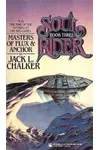
- Masters of Flux and Anchor (1985) - This installment details the grand political and military clashes between powerful wizard-like figures known as Fluxlords.
- The Birth of Flux and Anchor (1985) - A historical prequel set approximately 2,600 years before the first book, revealing the technological origins of the world.
- Children of Flux and Anchor (1986) - The final novel wraps up the saga, dealing with the long-term consequences of the conflict and the ultimate fate of humanity on this colony world.
Publication Order vs. Chronological Order
For most of the series, chronological order matches publication order. However, the major exception is The Birth of Flux and Anchor, which functions as Book 4 in publication order but serves as a historical prequel chronologically. It details the initial colonization, the setup of the planetary computer network, and how the division between stable Anchors and the reality-bending Flux was first engineered.
While it might be tempting to read chronologically by starting with the prequel, doing so is highly discouraged for several reasons:
- Mystery and Discovery: Reading the first three books first allows you to experience the world's rules, magic, and political dynamics just as the characters do. Starting with the prequel immediately explains the underlying science fiction mysteries, stripping away the sense of wonder and discovery in the early chapters of Spirits of Flux and Anchor.
- Narrative Flow: Jack L. Chalker wrote the prequel with the assumption that readers were already familiar with the terminology, geography, and mechanics of the Flux. The book acts as a deeper look into the lore rather than an introduction to the universe.
- Culmination: Children of Flux and Anchor relies heavily on both the historical details revealed in The Birth of Flux and Anchor and the character arcs of the original trilogy. Reading the prequel fourth bridges the gap perfectly before the final conclusion.
What to Know Before You Start
Before diving in, it is helpful to understand the unique characteristics of Chalker's speculative universe:
- The Flux and the Anchor: The setting is a half-failed colony world. Anchors are isolated, technologically controlled city-states where physical laws are absolute, and life is highly regimented and stable. Surrounding them is the Flux, a chaotic, shifting environment where physical laws are malleable. Those who understand the computer systems governing the planet can manipulate the Flux, performing acts that look like magic.
- Soul Riders: These are mysterious, body-snatching entities that can merge with human hosts, granting them immense power to manipulate the Flux, but often at the cost of personal agency or identity.
- Chalker's Signature Tropes: Readers familiar with Jack L. Chalker's other works, such as the Well World saga, will recognize his fascination with extreme physical and mental transformation, brainwashing, and mind control. The series features highly provocative themes, particularly in the later books when Cassie is captured by the patriarchal society of New Eden and chooses to be transformed into a subservient "Fluxgirl." These elements of sexual psychology and bodily transformation are central to the series' identity.
Practical Reading Guidance and Standalone Status
The Soul Rider series is not a collection of standalone novels. The books tell a continuous story and cannot be read out of order or as individual stories. The narrative was originally conceived by Chalker as a single massive manuscript, which was subsequently divided into five books for publication due to its length. Consequently, you must read them from start to finish to understand the plot.
There are no official spin-offs, co-authored books, or crossovers in the Soul Rider universe. However, if you enjoy the themes of high-tech environments disguised as fantasy worlds, you should check out Chalker's other main series, most notably The Saga of the Well World and Four Lords of the Diamond, which share similar stylistic DNA.