













The Recommended Reading Order for St. Cyr & Kohler
For readers diving into the shadowy, morally ambiguous world of Nazi-occupied France, the best way to read the St. Cyr & Kohler series is in publication order. Written by Canadian author J. Robert Janes between 1992 and 2015, the series consists of 16 novels that follow an unlikely detective duo: Chief Inspector Jean-Louis St-Cyr of the French Sûreté Nationale and Inspector Hermann Kohler of the German Gestapo.
Reading the books in their published order allows you to fully appreciate the slow, complex evolution of the relationship between the two main characters. Because they are forced by historical circumstance to work together, their mutual suspicion gradually gives way to a tense, fragile, yet deeply human partnership. Additionally, the progression of the books matches the chronological advancement of the war itself, letting you experience the tightening vise of the German occupation and the rising stakes of the French Resistance alongside the protagonists.
The Complete St. Cyr & Kohler Book List
Below is the complete list of the St. Cyr & Kohler novels in their recommended reading order. Note that the first novel was released under different titles in the US and the UK; we have noted this below to help you avoid accidentally buying the same book twice.
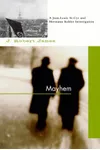
- Mayhem (also published as Mirage) (1992)
- Carousel (1992)
- Kaleidoscope (1993)
- Salamander (1994)
- Mannequin (1994)
- Dollmaker (1995)
- Stonekiller (1995)
- Sandman (1996)
- Gypsy (1997)
- Madrigal (1999)
- Beekeeper (2001)
- Flykiller (2002)
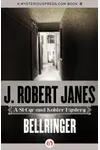
- Bellringer (2012)
- Tapestry (2013)
- Carnival (2014)
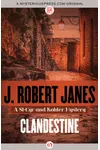
- Clandestine (2015)
Publication Order vs. Chronological Timeline
Fortunately for readers, the publication order of the St. Cyr & Kohler series is virtually identical to its internal chronological timeline. The entire saga is tightly compressed into the mid-war years of the German occupation, specifically spanning the tense months of 1942 and 1943. This was a period when the initial shock of the defeat had worn off, the Vichy regime was fully collaborating, and the Resistance was growing increasingly organized—and violent.
By starting with the first book, Mayhem, which begins in December 1942, you are introduced to the characters at the exact moment their partnership is forged. The subsequent novels follow them month-by-month as they travel across occupied France, from the freezing streets of Paris to provincial villages, resolving ordinary crimes that are inevitably complicated by the extraordinary geopolitical circumstances surrounding them.
What to Know Before You Start
J. Robert Janes’s writing style is unique and can be somewhat disorienting for first-time readers. He relies heavily on rapid-fire, stylized dialogue, shifting perspectives, and dense period details without providing much hand-holding or exposition. The books feel immediate, atmospheric, and fog-like, mimicking the confusion, paranoia, and uncertainty of living under an occupying force. Here are a few key points to keep in mind before you start reading:
- The Moral Dilemma: Jean-Louis St-Cyr is a patriotic Frenchman who must work with the occupying forces to solve civilian murders. This invites constant suspicion from his compatriots, who often view him as a collaborator. Hermann Kohler, on the other hand, is a former Munich police detective who has been drafted into the Gestapo. He is disillusioned by the Nazi regime but must operate within its brutal structure to survive and do his job.
- Ordinary Crimes in Extraordinary Times: While the backdrop is World War II, St-Cyr and Kohler are not soldiers or spies; they are homicide detectives. They investigate murders, arsons, and thefts. However, because of the setting, every investigation involves navigating the competing interests of the German military (the Wehrmacht), the Gestapo, the French collaborationist police, the black market, and various factions of the Resistance.
- Self-Contained Mysteries: Each book features a complete, self-contained murder investigation. You can theoretically read them as standalones, but we highly discourage this. The character development, recurring side characters, and the escalating tension of the war build from book to book.
Spin-Offs and Companion Works
There are no spin-offs, short story collections, or co-authored books in the St. Cyr & Kohler universe. J. Robert Janes wrote all 16 novels entirely on his own, maintaining a consistent tone and vision throughout. The series had a notable ten-year gap between Flykiller (2002) and Bellringer (2012), during which it was out of print, but Janes eventually returned to complete the narrative, culminating in Clandestine in 2015.