
The Recommended Reading Order for S.T.O.R.M.
For readers diving into the high-tech spy missions of S.T.O.R.M., the best way to experience the series is in its original publication order. The narrative follows a linear timeline where the characters grow, their interpersonal dynamics evolve, and the technology they utilize becomes increasingly sophisticated. Starting with the team's origin story in the first novel is crucial for understanding how these three teenage geniuses came together to form their secret organization.
S.T.O.R.M. Books in Publication and Chronological Order
All five novels in the series were released between 2007 and 2009. Because the chronological story matches the publication order, you can follow this sequence straight through:
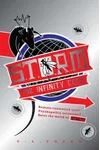
- The Infinity Code (2007) – The adventure begins when Will Knight, a brilliant but isolated inventor grieving the loss of his father, is recruited by software millionaire Andrew Minkel and chemistry whiz Gaia Carella. Together, they travel from London to the frozen landscapes of Russia to rescue Caspian Baraban's kidnapped father and prevent a catastrophic, earth-threatening weapon from being unleashed.
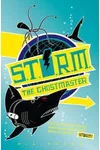
- The Ghost Machine / The Ghostmaster (2007) – In their second mission, the trio travels to Venice, Italy, to investigate a series of bizarre burglaries pulled off by a seemingly spectral figure known as "Il Fantasma" (The Ghost). Their investigation uncovers a far more dangerous conspiracy involving quantum computers, secret cults, and a plot to plunge the world into total chaos.
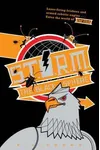
- The Black Sphere (2008) – The team heads to the Swiss Alps to investigate the mysterious deaths of several scientists involved in the top-secret "Project FIREball." With one scientist missing and carrying world-changing, dangerous technology, S.T.O.R.M. must race against rival intelligence agencies and a ruthless killer to secure the black sphere.
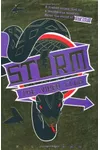
- The Viper Club (2008) – While in Sydney, Australia, for what was supposed to be a low-key mission, the team stumbles upon an international criminal plot. The head of a powerful Shanghai underworld syndicate has challenged members of his exclusive "Viper Club" to develop three undetectable methods of murder for a $100 million prize, putting innocent lives in the team's hands.
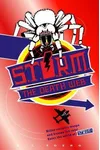
- The Death Web (2009) – In the final book of the series, S.T.O.R.M. travels to Palm Springs to investigate a suspicious retreat for sick children run by Benedict Belvoir. They uncover a front for a sinister scheme involving a disgruntled movie director bent on executing a vengeful plot against film critics who panned his work, threatening the safety of the wider world.
Meet the Geniuses: The S.T.O.R.M. Trio
At the center of S.T.O.R.M.—which stands for Science and Technology to Over-Rule Misery (though some early editions refer to it as the Scientific and Technological Organization for the Restoration of Mankind)—are three fourteen-year-old prodigies who run the entire operation themselves:
- Will Knight: The ultimate gadgeteer. Will is an inventive loner who designs the team's high-tech tools. His creations are grounded in real-world physics, chemistry, and engineering rather than pure science fiction.
- Andrew Minkel: The financier and software mastermind. Andrew is a self-made software millionaire whose vast resources, hacking skills, and coding intelligence fund and support the team's global travels and technical infrastructure.
- Gaia Carella: The chemist and linguist. Gaia is a highly capable, multilingual operative who specializes in chemistry—frequently using her knowledge to safely create or disarm explosives when missions demand high-stakes action.
The Science and Inspiration Behind S.T.O.R.M.
What sets S.T.O.R.M. apart from generic spy thrillers is the authenticity of its science. The author, Emma Young (who published the series under the pen name E.L. Young in the UK), is an award-winning science journalist. She drew inspiration from classic spy series like James Bond and Alex Rider, but wanted her young protagonists to solve problems using genuine scientific principles rather than fantasy gadgets.
To ground the narrative, Young included a science appendix at the end of each book. These sections explain the real-world research, emerging technologies, and physical principles that inspired the gadgets used by Will, Andrew, and Gaia. Reading these appendices adds a rich, educational layer to the fast-paced adventure.
Critical Reading Caveats: Alternate Titles
When searching for the second book in the series, readers may encounter some confusion due to regional title variations. In the United Kingdom and Australia, the second installment was published under the title The Ghost Machine. However, in other markets and library databases, it is frequently listed as The Ghostmaster. Despite the different titles, the text and storyline are identical, and both refer to the Venice-based adventure.
What to Know Before You Start
Before diving into S.T.O.R.M., here are a few practical tips to keep in mind:
- Target Audience: The books are fast-paced, accessible spy thrillers aimed at middle-grade readers and young teens (ages 9 to 14).
- Standalone vs. Continuity: While each book features a self-contained mission with a resolved mystery, the overarching character development and the origin details in The Infinity Code mean that reading them out of order will spoil major plot points.
- No Spin-offs or Co-authored Works: The series consists strictly of the five core novels written entirely by Emma Young. There are no side novellas, graphic novels, or companion books to keep track of.
- A Clean Conclusion: The series wrapped up successfully with The Death Web in 2009, offering a satisfying conclusion to the trio's adventures without leaving readers on an unresolved cliffhanger.