
The Recommended Reading Order for Story Thieves
For the best experience, the Story Thieves series must be read in publication order. Because the narrative is highly serialized, each book builds directly on the events, character developments, and reality-bending rules established in the previous installment. Reading the books out of sequence will lead to major spoilers and confusion regarding the overarching plot involving Owen, Bethany, and the mysterious forces threating the boundary between reality and fiction.
Here is the recommended reading path for the mainline series:
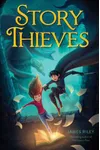
- Story Thieves (2015)
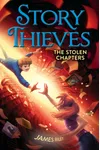
- The Stolen Chapters (2016)
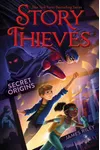
- Secret Origins (2017)
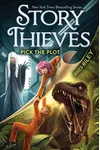
- Pick the Plot (2017)
- Worlds Apart (2018)
Breaking Down the Story Thieves Books
1. Story Thieves (2015)
The adventure begins here. We meet Owen Conners, an ordinary kid who is bored with real life and obsessed with the Kiel Gnomenfoot fantasy books. Everything changes when he discovers that his classmate, Bethany, can physically jump into books. Bethany is half-fictional, and she is secretly searching for her lost fictional father. Owen convinces her to take him into a Kiel Gnomenfoot book, but their interference accidentally unleashes a fictional villain into the real world, starting a chain reaction of page-turning chaos.
2. The Stolen Chapters (2016)
The second book shifts the genre into a mystery. Owen wakes up with no memory of his past library adventures, and Bethany has vanished into a library book. Owen must team up with a new classmate named Charm to piece together what happened, rescue Bethany, and figure out who is stealing the chapters out of their lives before the story is permanently rewritten.
3. Secret Origins (2017)
In this installment, the series dives headfirst into the superhero genre. Bethany is trapped in a comic book world, and Owen must navigate a city of heroes and villains to find her. The stakes escalate as the characters begin to uncover the true origins of Bethany's powers and the identity of the mysterious "Nobody" who is manipulating the boundaries between the fictional and real worlds.
4. Pick the Plot (2017)
The fourth book is the most unique entry in the series, written as a "choose-your-own-adventure" book where the reader's choices dictate Owen's path. Owen must travel through different fictional genres to save Bethany from being erased. Despite its interactive format, it is a critical piece of the main storyline and contains major plot developments that lead directly into the finale.
5. Worlds Apart (2018)
The epic conclusion to the saga. The barrier between the real world and the fictional world has completely shattered, causing books and reality to merge. Owen and Bethany must face their final battles, resolve the mysteries of their families, and make the ultimate choice about where they truly belong.
The "Pick the Plot" Interactive Caveat
Some readers wonder if they can skip or skim Pick the Plot because of its choose-your-own-adventure format. You should absolutely not skip it. While the interactive mechanics let you choose different pathways—some of which lead to funny, non-canonical "game over" endings—there is a core, canonical path that advances the main narrative. The book introduces crucial context about the villains and the state of the multiverse that sets up the events of the final book, Worlds Apart.
Fictional Series vs. Real Spin-offs
A common point of confusion for new readers is the Kiel Gnomenfoot series. Throughout the books, Owen is a massive fan of the fictional wizard-in-training, Kiel Gnomenfoot. While James Riley paints a vivid picture of Kiel's seventh-book adventure, Kiel Gnomenfoot and the Land of Magic, this is entirely a "book within a book." There are no standalone, real-world Kiel Gnomenfoot novels or spin-offs published by James Riley. If you want more of Kiel, you will find him interacting directly with Owen and Bethany as a main character within the Story Thieves series itself.
What to Know Before You Start
Before diving into Story Thieves, it is helpful to understand the series' unique style. James Riley relies heavily on metafiction—a style where characters are self-aware and actively comment on literary tropes, genre rules, and the fact that they are in a story. This makes the series highly engaging for avid readers who will recognize nods to classic fantasy, mystery, and superhero tropes. The series is primarily aimed at middle-grade readers (ages 8 to 12), but its clever writing and humor make it an enjoyable read for older fantasy fans as well.
Additionally, while James Riley has written other popular middle-grade fantasy series—such as the Half Upon a Time trilogy, the Once Upon Another Time trilogy, and The Revenge of Magic series—these do not cross over with Story Thieves. You do not need to read any of his other books to fully understand or enjoy this series.
Practical Reader Advice
- Start at the Beginning: Do not attempt to start anywhere other than Book 1. The complex lore, character relationships, and overarching plot are too interconnected to enjoy as standalones.
- Read the Interactive Book Fully: When reading Pick the Plot, try to find the "true" ending that leads to the next book, but don't hesitate to explore the bad endings for some of Riley's best comedic writing.
- Watch for the Meta-Humor: Keep an eye out for how the characters react to the rules of different genres, which changes dynamically from book to book.