

The Recommended Reading Order for Struggle For A Crown
For readers diving into the mud, blood, and political machinations of medieval England, the best path forward is clear: you should read the Struggle For A Crown series in its original publication order. Because Griff Hosker wrote the series chronologically, the publication order matches the historical timeline perfectly. Reading the books out of order will spoil major character deaths, political shifts, and the transition of the main protagonist mantle.
Struggle For A Crown Chronological Book List
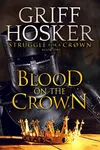
- Blood on the Crown (2018): Set in 1367, this novel introduces Will Strongstaff, a skilled mercenary who catches the eye of the Black Prince. He is tasked with protecting the young Prince Richard (the future King Richard II) amid rising domestic tensions and peasant rebellions.
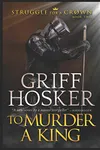
- To Murder a King (2018): Will, now a landowner, is drawn back into active service. He travels to Galicia to fight for John of Gaunt while protecting Henry Bolingbroke from assassins, all while Richard II falls under the corrupting influence of Robert de Vere.
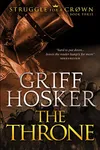
- The Throne (2019): Following the Queen's death, Richard II turns tyrannical. Will seeks to check the King's excesses, participating in crusades against Lithuanian pagans and navigating unrest across England, Scotland, and Ireland.
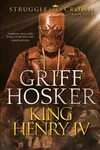
- King Henry IV (2019): Bolingbroke deposes Richard II to become Henry IV. Will is called upon to protect the new king from persistent rebellions and plots to overthrow the newly established Lancastrian line.
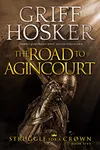
- The Road to Agincourt (2019): Will serves as a mentor to young Prince Hal (the future Henry V) after the prince survives a near-fatal arrow wound, preparing him for the legendary military campaigns that lie ahead.
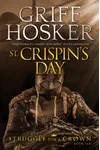
- St Crispin's Day (2020): The narrative shifts to France as Henry V launches his invasion, culminating in the famous and bloody victory at the Battle of Agincourt in 1415.
- The Battle for France (2021): Henry V returns to consolidate his French conquests. Sir William Strongstaff is sent on a diplomatic mission to Burgundy to secure an alliance with Duke John the Fearless.
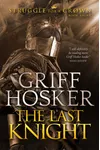
- The Last Knight (2021): Following the death of Sir William Strongstaff, his protégé Sir Michael of Weedon takes center stage. Michael is reassigned to France, where he must confront the rising threat of Joan of Arc.
- Queen's Knight (2022): As the English occupation of France begins to collapse, Sir Michael grows weary of the endless expenditure of lives and resources for what is increasingly recognized as a lost cause.
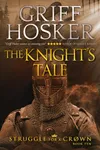
- The Knight's Tale (2024): Recalled to duty after the Queen's death, Sir Michael is sent to retrieve a sacred relic (a pyx) in France, only to be swept back into active warfare alongside the legendary commander Sir John Talbot.
Two Eras, Two Protagonists
The series is uniquely split into two distinct character arcs. For the first seven books, readers follow Will Strongstaff, who grows from a mercenary youth into an influential knight and trusted advisor to English monarchs. However, following the events of The Battle for France, Will passes away, and the mantle of protagonist is handed down to his loyal protégé, Sir Michael of Weedon. Michael guides the reader through the final years of the Hundred Years' War and the eventual collapse of the English claims in France, ensuring the narrative maintains its gritty, boots-on-the-ground perspective.
What to Know Before You Start
Griff Hosker is renowned for his highly prolific output and his action-focused, fast-paced historical fiction. If you enjoy the works of Bernard Cornwell (such as The Last Kingdom or the Sharpe series), you will find a similar style here. Hosker focuses heavily on the authentic details of medieval warfare—from the maintenance of weapons and armor to the harsh realities of supply lines, dysentery, and foraging. The series acts as a front-row seat to the transition from the High Middle Ages into the early modern era, charting the decline of the traditional knight in the face of longbows and early gunpowder.