



How to Read the Sunset Warrior Cycle in Order
For readers diving into the desolate, frozen, and subterranean world of the Sunset Warrior Cycle, the reading path is straightforward. Because the series follows a continuous, sequential narrative with evolving characters and overarching plotlines, the publication order is identical to the chronological order. You should read the novels in the order they were published to properly experience the growth of the protagonist, Ronin, and the expansion of the post-apocalyptic world.
The Sunset Warrior Cycle Reading Order
- The Sunset Warrior (1977)
- Shallows of Night (1978)
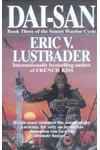
- Dai-San (1978)
- Beneath an Opal Moon (1980)
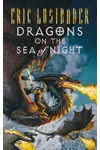
- Dragons on the Sea of Night (1997)
Chronological vs. Publication Order Details
Unlike some expansive fantasy franchises with complex prequels, spin-offs, and companion novellas, the Sunset Warrior Cycle keeps its structure linear. However, the series did undergo a major evolution during its publication history. The first three novels—The Sunset Warrior, Shallows of Night, and Dai-San—were released in rapid succession from 1977 to 1978, forming the core trilogy focusing primarily on Ronin's journey from a master Bladesman to the godlike protector known as the Dai-San.
Lustbader returned to the setting two years later with 1980's Beneath an Opal Moon, shifting the narrative focus to Moichi Annai-Nin (Ronin's bond-brother) in a side-story that takes place after the apocalyptic events of the third book. Finally, after a massive 17-year hiatus, Lustbader published the concluding volume, Dragons on the Sea of Night, in 1997. This fifth book reunites the storylines of Ronin, Moichi, and newer characters to provide a final resolution to the threat of Chaos. Because of this progression, deviating from the publication order is not recommended, as key character developments and major plot shifts build directly on the events of previous books.
Deep Dive into the Novels
1. The Sunset Warrior (1977)
The series begins deep underground in the Freehold, a claustrophobic subterranean city built by humanity after a global ecological catastrophe plunged the surface world into a permanent ice age. The story introduces Ronin, an elite Bladesman who refuses to pledge allegiance to any lord. In this rigid, samurai-like society ruled by the elite Saardin, Ronin is drawn into a struggle for survival. When war and systemic collapse threaten the Freehold, Ronin makes the desperate decision to escape to the frozen surface, discovering secrets that shatter everything he believed about his world.
2. Shallows of Night (1978)
Picking up immediately after his escape, Shallows of Night finds Ronin traveling across a brutal, ice-covered landscape. He eventually discovers Sha'angh'sei, a massive, vibrant city reminiscent of ancient Shanghai that has managed to survive in the frozen wilderness. Here, Ronin is forced to battle occult forces and navigate complex political intrigue, all while learning to wield mysterious magical artifacts, including the legendary Firemask, to combat the dark forces tracking him.
3. Dai-San (1978)
The epic climax of the original trilogy, Dai-San (which translates to "The Third"), sees Ronin undergo a mythical transformation into the legendary Sunset Warrior. Faced with the ultimate threat of the Dolman—the primordial spirit of Chaos—Ronin must lead a final battle for the survival of humanity. The novel wraps up the immediate threat of the underground Freehold's legacy and establishes Ronin as a godlike savior, setting a high watermark for the series' action-packed sword-and-sorcery elements.
4. Beneath an Opal Moon (1980)
This fourth installment takes a step away from Ronin's direct perspective to follow his bond-brother and skilled navigator, Moichi Annai-Nin. Detained in Sha'angh'sei after the final battle of the third book, Moichi is recruited by the city's regent to investigate a series of bizarre, grisly murders. Alongside Chiisai, a fierce Bujun warrior, Moichi's quest leads him to confront the dark sorceress Sardonyx. Sardonyx seeks to steal the Firemask to unleash nightmares upon the world, driving Moichi and Chiisai on a rescue mission to the edge of their harsh world.
5. Dragons on the Sea of Night (1997)
Written nearly two decades after the fourth book, this final volume bridges the stories of Ronin (the Dai-San) and his companions Moichi and Chiisai. The Dai-San is now a figure of godlike, reality-warping power, but he remains vulnerable to the lingering influences of Chaos. While the plot heavily focuses on the travels of Moichi, Chiisai, and Sardonyx across a hostile landscape, the Dai-San's fateful return in the climax brings a definitive end to the cycle, delivering a dark, philosophical, and mystical conclusion to the entire saga.
What to Know Before You Start
Before jumping into the series, readers should be prepared for its unique blend of genres. While it starts as a classic sword-and-sorcery adventure, the underlying setting is post-apocalyptic science fiction, with the feudal culture being a direct result of humanity's descent into underground shelters. Lustbader draws heavily on Eastern philosophy, martial arts, and Japanese samurai culture, which heavily influences the characters' code of honor, fighting styles, and terminologies.
Additionally, because of the 17-year publishing gap between books four and five, there is a noticeable shift in Lustbader's writing style. The early books are fast-paced, poetic, and gritty, while the final book is more descriptive, dense, and philosophically focused. Keep this in mind when transitioning to the final chapter of the saga.
Spin-Offs and Universe Connections
The Sunset Warrior Cycle is a completely self-contained fantasy series. Unlike Eric Van Lustbader's popular Nicholas Linnear (Ninja) thriller series or his later high-fantasy franchise, The Pearl Saga, the Sunset Warrior books do not connect to any other works in his bibliography. There are no official spin-off stories, companion short stories, or co-authored books set in this universe. Reading the five core novels is all that is required to experience the full story of Ronin and the Freehold.