




The Recommended Reading Path
Because the Tales to Tickle the Funnybone series consists of entirely standalone novels, you do not need to worry about a strict chronological timeline. Each book introduces a fresh cast of characters, unique settings, and separate misadventures. You can easily read them in any order you choose. However, if you want to watch the author's comedic style evolve over a sixteen-year span, we recommend following the original publication order. Alternatively, if you want to start with the strongest entry in the series, you should begin with the fan-favorite classic, Harris and Me.
Publication Order of Tales to Tickle the Funnybone Books
Here is the breakdown of the core six novels in the series by their original release years. Each book captures the chaotic, hilarious, and heartfelt experiences of adolescence.
The Boy Who Owned the School (1990)
The series kicks off with this schoolyard classic. The story follows Jacob Freisten, a pathologically shy high schooler whose ultimate goal in life is absolute invisibility. He has mastered the art of blending into the wallpaper to avoid bullies, teachers, and social embarrassment. However, his quiet life is shattered when he is forced to participate in the school's production of The Wizard of Oz. Suddenly thrust into the spotlight, Jacob must navigate his first crush, eccentric classmates, and the terrifying prospect of being noticed.
Harris and Me: A Summer Remembered (1993)
Widely considered the crown jewel of the series, this autobiographical novel is inspired by Gary Paulsen's own childhood summers. The unnamed city-boy narrator is sent to live on his aunt and uncle's farm, where he meets his wild, hyperactive cousin, Harris Larson. What follows is a summer of pure, unadulterated country chaos. From wrestling massive pigs and leaping out of barn lofts to rigging up a motorized bicycle that runs at terrifying speeds, the boys find themselves in one hilarious scrape after another. Underneath the slapstick humor lies a warm story of belonging and family.
The Schernoff Discoveries (1997)
Fourteen-year-old Harold Schernoff and his best friend are the ultimate junior high outcasts. Harold, a science-obsessed nerd, refuses to accept defeat. Instead, he believes that every adolescent hurdle—whether it is dodging violent school bullies, figuring out how to make quick cash, or trying to secure a date with a girl—can be solved through rigorous scientific formulas and mathematical logic. Naturally, putting these theories into practice leads to catastrophic, side-splitting disasters that test their friendship to its limits.
The Glass Cafe: Or the Stripper and the State (2003)
Taking a slightly older, young adult tone, this novella introduces twelve-year-old Tony, a highly talented artist. Tony lives with his loving single mother, Al, who supports them by working as an exotic dancer at the Kitty Kat Club. Tony loves sketching the colorful backstage world of the dancers. When some of his sketches are accidentally displayed in a local art exhibition, it triggers a massive misunderstanding with social services. What follows is a media circus and a legal battle over custody, which Paulsen handles with his signature humor, warmth, and deep respect for unconventional family bonds.
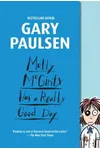
Molly McGinty Has a Really Good Day (2004)
Molly McGinty is a highly organized, anxiety-prone middle schooler who relies on her meticulously color-coded three-ring binder to keep her life from falling apart. When she loses the binder on Senior Citizens' Day, her structured world spirals into absolute chaos. With her eccentric, energetic grandmother visiting the school and a series of escalating disasters (including a black eye before the first bell even rings), Molly is forced to survive the worst day of her life. In doing so, she learns that sometimes letting go of control is the only way to have a truly great day.
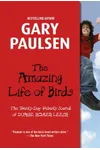
The Amazing Life of Birds: The Twenty-Day Puberty Journal of Duane Homer Leech (2006)
Written in a fast-paced journal format, this story follows twelve-year-old Duane Homer Leech as he struggles through the awkward, confusing onset of puberty. Duane documents his changing body, voice cracks, and sudden interest in girls in a personal diary. To make sense of the strange transitions, he begins comparing his own awkward developmental steps to a baby bird hatching and growing in a nest outside his bedroom window. The result is a highly relatable, funny, and comforting look at the physical realities of growing up.
Chronological vs. Publication Order: Are There Any Caveats?
Since the books are entirely thematic standalones, there are no timeline inconsistencies or narrative arcs carrying over between novels. Characters do not cross over, and the setting shifts from small-town high schools to rural farms. You can pick up any book at random and enjoy a complete, self-contained story. The only timeline that exists is the real-world publication order spanning 1990 to 2006, which shows Paulsen experimenting with different narrative styles, from traditional third-person narratives to journals and sketches.
The "Eight-Book" Listing: How Lawn Boy Fits In
Some library catalogs, digital bookstores, and online community sites like Goodreads list the series as containing eight books rather than six. These listings include Lawn Boy (2007) and its sequel, Lawn Boy Returns (2010), as Books 7 and 8. While both books share the lighthearted coming-of-age humor, entrepreneurial themes, and middle-school protagonist dynamics of the original series, they are officially recognized as their own separate duology. However, if you enjoy the tone of the core six books, adding the Lawn Boy duology to your reading queue is highly recommended.
What to Know Before You Start
For readers who only know Gary Paulsen for his survival adventures like Hatchet or Brian's Winter, this series will come as a delightful surprise. Instead of life-or-death struggles in the Canadian wilderness, these books focus on the everyday struggles of teenagers trying to survive school, family, and themselves. Many of the stories are deeply rooted in Paulsen's own life; he frequently ran away from home, worked odd jobs, and relied on humor to get through a difficult childhood. That real-life resilience is what gives these funny books their lasting emotional weight.