
Where to Start Reading Tarzan
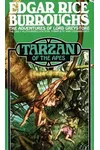
For anyone looking to experience the wild adventures of the Lord of the Jungle, the absolute best place to start is with the original 1912 novel, Tarzan of the Apes. Unlike many long-running pulp series of the early 20th century where the first book is optional, the debut Tarzan novel is an essential foundation. It establishes Tarzan's origin story—how the orphaned John Clayton, Viscount Greystoke, was raised by the Mangani apes in the African jungle—his first interactions with other humans, and his romance with Jane Porter. Reading the series without this introduction leaves later character motivations and settings completely ungrounded.
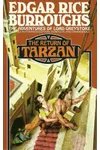
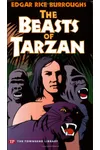
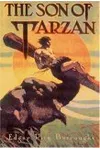
After the first book, the narrative continues directly into The Return of Tarzan (1913), which follows his struggles to adapt to Western civilization and his eventual return to his jungle home, followed by The Beasts of Tarzan (1914) and The Son of Tarzan (1915/1916). While the books eventually transition into more episodic and standalone adventures, these first four novels form a cohesive, continuous story arc that should be read in order.
The Core Edgar Rice Burroughs Tarzan Canon
Edgar Rice Burroughs wrote 24 core books in the Tarzan series. While they were originally serialized in pulp magazines, their book publications spanned over five decades. Experiencing the series in its original publication order is the most widely recommended path for modern readers. Here is the complete list of the 24 canonical books:
- Tarzan of the Apes (1912) – The essential origin story of Tarzan, Kala, and Jane Porter.
- The Return of Tarzan (1913) – Tarzan travels to Paris and the Sahara before returning to his jungle and discovering the lost city of Opar.
- The Beasts of Tarzan (1914) – Tarzan fights to rescue his kidnapped wife and son with the help of animal allies.
- The Son of Tarzan (1916) – Focuses on Tarzan's son, Jack (known in the jungle as Korak), and his own coming-of-age adventures.
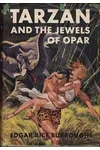
- Tarzan and the Jewels of Opar (1916) – Tarzan returns to Opar to rebuild his family fortune but suffers from amnesia after an accident.
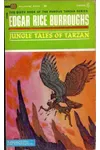
- Jungle Tales of Tarzan (1919) – A collection of short stories detailing Tarzan’s youth, occurring chronologically during the events of the first novel.
- Tarzan the Untamed (1919) – Set during World War I, Tarzan seeks vengeance against German soldiers whom he believes killed Jane.
- Tarzan the Terrible (1921) – Tarzan searches for Jane in the prehistoric hidden valley of Pal-ul-don.
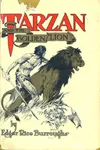
- Tarzan and the Golden Lion (1923) – Tarzan returns to Opar and adopts Jad-bal-ja, the loyal golden lion.
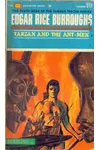
- Tarzan and the Ant Men (1924) – Tarzan stumbles upon a race of miniature warriors, the Minuni, in a hidden forest.
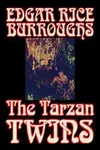
- The Tarzan Twins (1927) – A companion story written for younger readers, following the adventures of two teenage cousins.
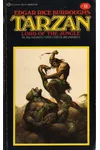
- Tarzan, Lord of the Jungle (1927) – Tarzan encounters a lost outpost of medieval crusaders in the Valley of the Sepulchre.
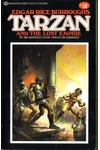
- Tarzan and the Lost Empire (1928) – Tarzan discovers two lost Roman cities fighting a centuries-old war.
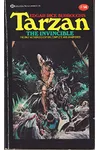
- Tarzan the Invincible (1930) – Tarzan defends the treasures of Opar against a group of European conspirators.
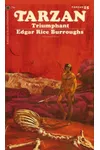
- Tarzan Triumphant (1931) – The jungle lord battles Soviet agents and encounters a lost tribe of early Christians.
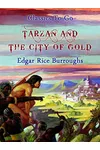
- Tarzan and the City of Gold (1932) – Tarzan is captured by the warring cities of Athne and Cathne.
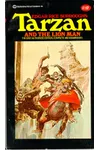
- Tarzan and the Lion Man (1934) – Tarzan encounters a Hollywood film crew shooting a movie in the jungle and meets a mad scientist.
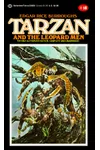
- Tarzan and the Leopard Men (1935) – An amnesiac Tarzan joins a war against a violent secret society.
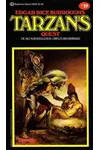
- Tarzan's Quest (1935) – Jane and Tarzan's allies search for a legendary elixir of youth.
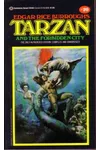
- Tarzan and the Forbidden City (1938) – Tarzan guides an expedition to find a missing explorer in the valley of Ashair.
- Tarzan the Magnificent (1939) – Tarzan gets caught between rival queens in the cities of Cathne and Athne.
- Tarzan and the Foreign Legion (1947) – Set during World War II, Tarzan fights alongside a stranded Allied crew in Sumatra.
- Tarzan and the Madman (1964) – Published posthumously, Tarzan hunts down an impostor living as a king in a lost city.
- Tarzan and the Castaways (1965) – A posthumous collection of three adventure novellas, including the title story, "Tarzan and the Champion," and "Tarzan and the Jungle Murders."
Chronological Order and Reading Caveats
For the most part, publication order matches chronological order. However, there is one major exception: Jungle Tales of Tarzan (Book 6). Rather than continuing the narrative from Tarzan and the Jewels of Opar, this book is a collection of twelve episodic short stories detailing Tarzan's adolescence. Chronologically, these events take place entirely during the first half of the original novel, Tarzan of the Apes, specifically between the death of his ape mother, Kala, and his first encounters with adult white humans (roughly between chapters 11 and 12).
For readers who want a strictly chronological experience, you can pause your reading of Tarzan of the Apes about halfway through, read all of Jungle Tales of Tarzan, and then finish the first novel. However, doing so disrupts the narrative flow of Tarzan's initial origin story. Most fans recommend reading Jungle Tales in its publication spot as a nostalgic flashback collection.
Additionally, Tarzan and the Foreign Legion takes Tarzan out of Africa to the jungles of Sumatra during World War II. Although published before Tarzan and the Madman and Tarzan and the Castaways, it represents the final chronological adventure of Tarzan written by Burroughs.
The Pellucidar Crossovers and Shared Universe
Edgar Rice Burroughs was a pioneer in creating a shared universe among his various pulp series. Tarzan's adventures cross over significantly with Burroughs' Pellucidar series, which takes place in a hollow world at the Earth's core. In the fourth Pellucidar book, Tarzan at the Earth's Core (1929–1930), Tarzan organizes an expedition using a giant dirigible to enter Pellucidar through a polar opening to rescue the series protagonist, David Innes. Fans of both series should read this crossover after Tarzan and the Lost Empire and after the third Pellucidar book, Tanar of Pellucidar.
Spin-offs, Authorized Novels, and Posthumous Works
Beyond the core 24 novels, there are several notable books that expand the Tarzan mythos:
- The Tarzan Twins (1927): Originally written as two separate novellas for younger readers (and later collected), this story features two cousins who get lost in the jungle and are briefly aided by Tarzan. It is a lighthearted spin-off that has minor ties to the main series.
- Tarzan and the Valley of Gold (1966) by Fritz Leiber: This was the first authorized Tarzan novel written by an author other than Burroughs. Designated by the estate as the official 25th book, Leiber adapted a film screenplay into a highly regarded, canon-friendly novel that respects Burroughs' original world-building.
- Tarzan: The Lost Adventure (1995) by Edgar Rice Burroughs and Joe R. Lansdale: Burroughs left behind an unfinished 83-page manuscript at the time of his death. Decades later, the Burroughs estate hired acclaimed author Joe R. Lansdale to complete the book, which was published to positive reviews. It features Tarzan on a quest to a lost city that connects directly to the subterranean world of Pellucidar.
What to Know Before You Start
When diving into the Tarzan books, it is important to remember the context of their creation. Written between 1912 and the 1940s, the novels reflect early 20th-century colonialist attitudes, racial stereotypes, and gender dynamics common in the pulp fiction of that era. While Tarzan himself is portrayed as a noble hero who respects nature and defends the innocent, modern readers should expect outdated depictions of Africa and its indigenous peoples. Approaching these classic adventure stories with an understanding of their historical context makes for a much smoother and more enjoyable reading experience.