




Where to Start with Kage Baker's The Company
Entering the world of Kage Baker's The Company can feel like stepping into a temporal maze. The overarching premise is deceptively simple: in the 24th century, a shadowy entity known as Dr. Zeus Incorporated (the titular Company) recruits orphans from throughout history and transforms them into immortal, cybernetically enhanced operatives. These operatives are sent to various historical eras to preserve rare flora, fauna, artwork, and historical treasures for future corporate profit. But with time-travel mechanics, plots spanning millennia, and character timelines that do not match historical chronology, finding the right starting point is essential.
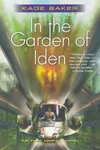
For anyone new to the series, the absolute best starting point is the first novel, In the Garden of Iden (1997). This book introduces Mendoza, a young botanist cyborg rescued from the Spanish Inquisition, and establishes the core rules, dark humor, and emotional stakes of the series. Because the overarching narrative is a slow-burn conspiracy where the true motives of Dr. Zeus are gradually uncovered, reading the books in any other order will ruin key plot revelations and spoil the emotional weight of character arcs.
The Recommended Publication Order
To experience the series as Baker intended, you should read the main novels and novella-length additions in their order of publication. This order ensures that you piece together the grand conspiracy of the 2355 deadline alongside the characters.
The Core Novel Sequence
- In the Garden of Iden (1997) – Introduces Mendoza in Elizabethan England. A perfect blend of romance, historical detail, and corporate satire.
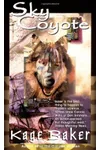
- Sky Coyote (1999) – Shifts focus to Joseph, a facilitator posing as a Native American trickster god in 1699 California to rescue a tribe from colonial destruction.
- Mendoza in Hollywood (2000) – Mendoza is stationed in 1862 Los Angeles, dealing with the aftermath of personal tragedy while encountering bizarre temporal anomalies.
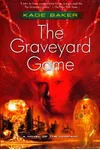
- The Graveyard Game (2001) – The plot thickens as Joseph and other operatives begin investigating missing cyborgs and whispers of the mysterious 2355 cutoff.
- The Life of the World to Come (2004) – A deeper dive into the origin of the Company and the existential dread of the immortal operatives.
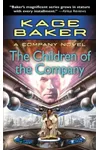
- The Children of the Company (2005) – A unique novel structured as a series of biographical vignettes focusing on the creators and prominent figures of Dr. Zeus.
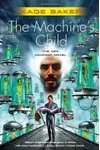
- The Machine's Child (2006) – The conspiracy enters its final phases as the operatives make desperate plans to survive the approaching future.
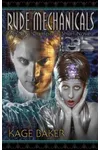
- Rude Mechanicals (2007) – A companion novella focusing on the bickering operatives assisting with a production of A Midsummer Night's Dream in Elizabethan England.
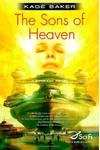
- The Sons of Heaven (2007) – The epic, long-awaited climax to the main storyline that ties up the primary Mendoza and Joseph arcs.
- The Empress of Mars (2009) – Originally a 2003 novella, this expanded standalone novel takes place on a corporate-dominated Mars and can be read independently.
- Not Less Than Gods (2009) – A novel focusing on Edward Alton-Bell Fairfax and the Victorian-era Gentlemen's Speculative Society, which served as a precursor to the Company.
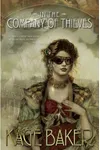
- In the Company of Thieves (2013) – A posthumous collection containing key novellas and short stories, including the final story completed by Baker's sister, Kathleen Bartholomew.
Why Chronological Order is a Trap
Because the main characters are immortal cyborgs who exist across thousands of years, attempting a chronological reading order based on historical settings is a massive trap. For instance, a single book might feature chapters set in ancient Mesopotamia, Victorian England, and the 24th century. A chronological order based on the "setting date" would require jumping mid-book or reading late-series entries first, which would completely ruin the narrative momentum and spoil massive plot twists regarding the origins and final goals of Dr. Zeus Incorporated. Stick to the publication order to keep the emotional and conspiratorial arcs coherent.
Collections, Spin-offs, and Companion Works
In addition to the main novels, Baker wrote several short stories and novellas that flesh out the wider universe. These side works are highly regarded by fans and explain what happens to certain characters during the long gaps between the novels.
The Short Story Collections
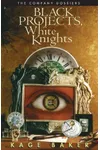
The universe is expanded in three major collections. The first, Black Projects, White Knights: The Company Dossiers (2002), is best read between The Graveyard Game and The Life of the World to Come, as it bridges important character details. The second, Gods and Pawns (2007), compiles stories highlighting the everyday lives and struggles of different operatives. Finally, In the Company of Thieves (2013) collects posthumous tales, including the story "Hollywood Ikons," which was completed by Kathleen Bartholomew using Baker's extensive notes.
The Gentlemen's Speculative Society (Nell Gwynne) Subseries
This subseries details the origins of the Gentlemen's Speculative Society, a nineteenth-century precursor to the 24th-century Company. It starts with the Nebula-nominated novella The Women of Nell Gwynne's (2009) and continues with Nell Gwynne's Scarlet Spy (2010) and Nell Gwynne's On Land and At Sea (2012), the latter completed posthumously by Kathleen Bartholomew. These works lean heavily into Victorian steampunk and espionage, and while they enrich the lore, they can be read as a standalone subseries.
The Standalone Companion: The Empress of Mars
Set far in the future on a corporate Mars, The Empress of Mars (2009) follows Mary Griffith, a former xenobotanist who opens a bar for Martian colonists. While it is set in the same universe, it contains minimal direct ties to the main Mendoza and Joseph conspiracy, making it a wonderful, low-stakes entry point for readers who want to sample Baker's world-building style without committing to the full nine-novel arc.
What to Know Before You Start
Before you dive in, it helps to understand the unique tone of Baker's universe. The series is not a hard science fiction story about the mechanics of time machines. Instead, it is a character-driven blend of historical fiction, romantic tragedy, and dark corporate satire. The time-travel rules are strict: history cannot be changed, and the past is static. The tragedy of the cyborgs is that they must watch atrocities unfold without interfering, all while preserving items for a future they might not have a place in. Baker's background in theater and history shines through in her witty, theatrical dialogue and rich period details, offering a distinct voice in the sci-fi landscape.