
How to Read The Corps: The Recommended Order
Unlike some sprawling military series where readers are forced to choose between complex chronological orders and publication schedules, W.E.B. Griffin's The Corps makes it easy: you should read the books in their original publication order. The series is deeply character-driven, tracking the development, promotions, and relationships of a recurring cast of Marines from the late 1930s through the aftermath of the Korean War. Jumping around the list will spoil key promotions, character deaths, and romantic arcs, leaving you lost in the complex military bureaucracy Griffin depicts so well.
The Corps Books in Order
Here is the complete sequence of books in the series. Although there are minor timeline overlaps between some of the middle entries, the order below is the definitive path for your reading list:
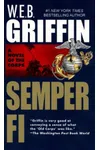
- Semper Fi (1986) – The book that started it all introduces Kenneth J. "Killer" McCoy, a tough China Marine, and sets the stage for the global conflict ahead. The timeline runs from January 1941 to January 1942, capturing the immediate aftermath of Pearl Harbor.
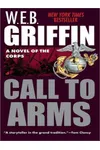
- Call to Arms (1987) – This entry focuses on the creation of the elite Marine Raiders and McCoy's operations in the Pacific theater, covering the period from December 1941 to August 1942.
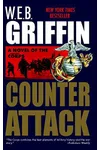
- Counterattack (1990) – Focusing on the chaotic months following the U.S. entry into World War II, this book follows the battles of Guadalcanal and Midway, detailing events from December 1941 to August 1942.
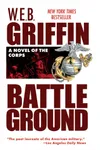
- Battleground (1991) – Centered on the grueling Guadalcanal campaign, the story runs from June 1942 to August 1942, showing the brutal realities of island-hopping warfare.
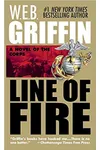
- Line of Fire (1992) – The plot thickens with espionage and reconnaissance on the Solomon Islands, covering the timeline from Spring 1942 to October 1942.
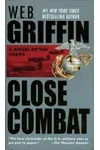
- Close Combat (1993) – Focusing on the public relations war and the home front as much as the battlefront, this entry runs from October 1942 to November 1942.
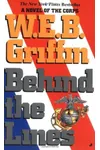
- Behind the Lines (1996) – Diving deep into guerrilla warfare and the resistance in the Philippines, this book backtracks slightly to cover April 1942 through February 1943.
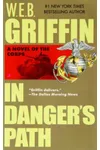
- In Danger's Path (1999) – The final World War II novel in the series covers November 1941 to May 1943, focusing on the rescue of American nationals and key intelligence operations.
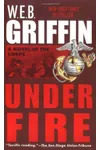
- Under Fire (2002) – The series shifts focus to the Korean War and the early operations of the CIA, running from June 1950 to September 1950.
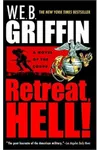
- Retreat, Hell! (2004) – The final book in the series continues the Korean War campaign, particularly the Inchon landings and the freezing battles around the Chosin Reservoir, covering late 1950.
Meet the Key Players
The series succeeds because it grounds massive historical events in the lives of a consistent cast. Understanding these characters will help you appreciate how the books connect:
- Kenneth J. "Killer" McCoy: McCoy starts the series as an enlisted "China Marine" private who earned his lethal nickname in a knife fight. Over the course of the series, his sharp intelligence and survival instincts lead to a commission as an officer and a pivotal role in covert reconnaissance and intelligence. Watching his career evolve is the ultimate reason to read these books in order.
- Fleming Pickering: A wealthy shipping magnate and World War I Marine veteran, Pickering is recalled to active duty by President Franklin D. Roosevelt to serve as a personal liaison. His high-level perspective allows Griffin to explore the political maneuvering and strategic command decisions behind the war effort.
- Edward Banning: A veteran officer who understands both the Chinese language and the complexities of military intelligence, Banning serves as a mentor and commander to McCoy and others, representing the brainpower behind the operations.
Chronological Overlaps and the Big Time Jump
While the publication order matches the overall narrative progression, readers should be prepared for two structural quirks in the timeline. First, books three through eight feature significant chronological overlaps. Griffin often backtracks to tell a parallel story from a different character's perspective or focus on a separate military intelligence branch operating during the same months. For example, Behind the Lines and In Danger's Path run parallel to events that occurred during the earlier Pacific campaigns. Do not let this confuse you; the narrative is designed to introduce these characters and operations in this specific sequence to maintain dramatic tension.
Second, there is a massive seven-year gap in the timeline between In Danger's Path (Book 8) and Under Fire (Book 9). The series completely skips the final years of World War II (1943–1945) and the post-war demobilization period. When Under Fire begins, it is 1950, and the characters are thrust directly into the outbreak of the Korean War. Many readers find this transition jarring, as major historical milestones like the atomic bomb, the surrender of Japan, and the immediate postwar lives of the characters are left off the page. However, Griffin uses the characters' new roles in the newly formed CIA and the peacetime military to quickly bridge the gap.
The Broader W.E.B. Griffin Universe: Connections and Spin-offs
W.E.B. Griffin was famous for creating a shared universe across his various military and intelligence series. While The Corps is a standalone epic focusing on the Marines, it shares a historical canvas with several of his other popular series:
- Men at War: This series focuses on the Office of Strategic Services (OSS) during World War II. Because The Corps heavily features intelligence operations and characters like Ken McCoy working in covert roles, you will see thematic overlaps and occasional minor character cameos between the two series.
- Clandestine Operations: Focusing on the early days of the CIA in post-WWII Europe, this series is a natural thematic successor for readers who enjoyed the intelligence-focused later books of The Corps (specifically Under Fire and Retreat, Hell!).
- Badge of Honor: Though set in the modern era and focusing on the Philadelphia Police Department, this series is another staple of Griffin's bibliography that is co-authored with his son, William E. Butterworth IV.
What to Know Before You Start
Before you dive into Semper Fi, keep in mind that W.E.B. Griffin's writing style is highly detailed and process-oriented. He focuses heavily on military bureaucracy, decoding messages, logistics, and command structures. If you are expecting non-stop frontline combat, you might be surprised by how much time the characters spend navigating red tape in Washington or Tokyo. However, this is precisely what makes the series feel authentic to veterans and history buffs.
Additionally, while Griffin's depiction of tactical actions and intelligence work is incredibly realistic, his handling of romance is often noted by fans as simplistic, with characters frequently falling in love at first sight. Think of it as a product of its era and enjoy the series for what it does best: delivering a gripping, respect-filled tribute to the U.S. Marine Corps.