





Where Should You Start Reading The Culture?
Because the novels in Iain M. Banks’ The Culture series are written as standalones set hundreds or thousands of years apart, you do not need to read them in a rigid order. However, choosing the right entry point is crucial for appreciating the scope and tone of this post-scarcity, AI-governed galactic utopia. There are two primary schools of thought on where to begin:
Option 1: The Player of Games (The Recommended Start)
Most long-time readers and critics recommend starting with The Player of Games (1988). This second-published novel serves as the perfect introduction to the everyday workings, values, and language of the Culture. The story follows Jernau Morat Gurgeh, a master game player bored with his easy life, who is recruited by the Culture's covert operations division, Special Circumstances, to travel to a brutal, deeply hierarchical alien empire. By contrasting the egalitarian utopia of the Culture with the oppressive Azad Empire, Banks effortlessly explains how the Culture functions without relying on heavy exposition.
Option 2: Consider Phlebas (The Chronological & Publication Start)
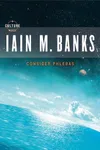
If you prefer to watch the series evolve from its very beginning, start with Consider Phlebas (1987). It is the first published book and depicts the height of the Idiran-Culture War. However, it comes with a major caveat: the protagonist, Bora Horza Gobuchul, is a shapeshifting agent fighting against the Culture. Reading this first gives you an outsider's, highly critical view of the society, which can skew your perception of the rest of the series. It is also more of a traditional, action-heavy space opera compared to the highly philosophical novels that follow.
The Core Culture Books in Publication Order
Reading in publication order is highly recommended. It allows you to experience how Banks’ world-building expanded, how his prose matured, and how his depiction of the AI "Minds" evolved. Here is the publication sequence:
- Consider Phlebas (1987) – A fast-paced, galaxy-spanning adventure showcasing the brutal conflict between the machine-assisted Culture and the religious, biological Idiran Empire.
- The Player of Games (1988) – A tightly plotted psychological drama focusing on games, politics, and the clash of civilizations.
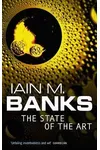
- The State of the Art (1989/1991) – A short story collection. The titular novella features Culture agents visiting Earth in 1977 to decide if humanity is worth contacting.
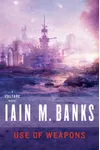
- Use of Weapons (1990) – A complex, non-linear masterpiece following Cheradenine Zakalwe, a mercenary hired by Special Circumstances to destabilize non-Culture civilizations.
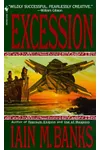
- Excession (1996) – A mind-bending look at the Culture's superintelligent starship Minds as they deal with a mysterious, ancient anomaly that threatens the galaxy.
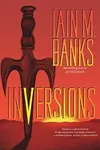
- Inversions (1998) – A unique novel set on a medieval-level planet, told from the perspective of locals. It is widely understood to show two Culture observers subtly interfering (or refusing to interfere) with the local society.
- Look to Windward (2000) – A thematic sequel to Consider Phlebas, examining the long-term trauma and artistic consequences of the Idiran-Culture War, set on a massive Orbital habitat.
- Matter (2008) – A multi-layered adventure following a princess from a pre-industrial society inside a massive Shellworld who seeks the help of the Culture.
- Surface Detail (2010) – A dark, thrilling look at virtual afterlives, digital Hells, and the wars fought in cyberspace to decide their existence.
- The Hydrogen Sonata (2012) – The final novel written before Banks' passing, exploring the concept of "Subliming"—where an entire civilization chooses to ascend to a higher plane of existence.
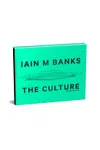
- The Culture: The Drawings (2023) – A posthumous collection of Banks' original annotated sketches, maps, and design notes illustrating the spacecraft, habitats, and languages of his universe.
The Chronological Timeline of The Culture
Because the stories are highly independent, reading chronologically is not necessary and does not offer a traditional narrative arc. However, for curious fans, the approximate timeline of events in our Earth calendar is as follows:
- 1331 AD: Consider Phlebas (The Idiran War era)
- c. 1800–1875 AD: Excession
- c. 1890 AD: Matter
- 1977 AD: The State of the Art (Earth visit)
- c. 2083–2092 AD: The Player of Games and Use of Weapons
- c. 2160 AD: Look to Windward (set roughly 800 years after the Idiran War)
- c. 2300–2400 AD: The Hydrogen Sonata
- c. 2800–2900 AD: Surface Detail
Inversions is difficult to place on a strict timeline due to its low-tech setting and lack of explicit interstellar dates, though many place it roughly around the time of The Player of Games.
Important Continuity Connections & Warnings
While the books are standalones, there are a few connections that will greatly enhance your reading experience if read in order:
- Read Consider Phlebas before Look to Windward: Look to Windward deals heavily with the emotional and political fallout of the war depicted in Consider Phlebas. Reading them in order makes the tragedy of the later book resonate much more deeply.
- Read Use of Weapons before Surface Detail: A key character from Use of Weapons makes a surprising appearance in Surface Detail. To avoid major spoilers and fully appreciate this cameo, ensure you read the former first.
What to Know Before You Start
The Culture is a post-scarcity society where humanoids, aliens, and sentient machines live in absolute luxury and freedom, guided by benevolent, highly advanced AI Minds. Because there are no internal struggles for resources, the conflicts in the novels almost always arise at the borders of the Culture—where they interact with less developed, hostile, or morally incompatible civilizations. This often involves Special Circumstances, the division of the Culture that does the "dirty work" of espionage, intervention, and warfare that the rest of the peaceful society prefers to ignore.