
The Recommended Reading Path
For the absolute best reading experience, you should read Enid Blyton's original Famous Five books in their original publication order. Because the characters grow slightly older across the series and reference previous adventures—most notably returning to locations like Kirrin Cottage and Kirrin Island—following the release timeline ensures you experience their character development and recurring dynamics exactly as Blyton intended.
While almost all the books are written to be self-contained mysteries that can technically be enjoyed as standalones, starting at the beginning gives you the essential origin story of how this adventurous quintet first came together.
The 21 Original Novels by Enid Blyton
Between 1942 and 1963, Enid Blyton penned 21 core novels that form the bedrock of the Famous Five universe. Here is the canonical order to read them:
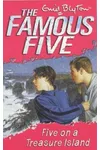
- Five on a Treasure Island (1942) – The legendary start where the cousins meet George and Timmy, leading to the discovery of a shipwreck off Kirrin Island.
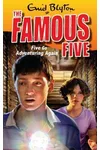
- Five Go Adventuring Again (1943) – A winter holiday mystery at Kirrin Cottage involving a suspicious tutor and a secret map.
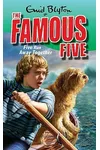
- Five Run Away Together (1944) – The children flee to Kirrin Island to escape the unpleasant housekeeper, Mrs. Stick, only to discover someone else is hiding on the island.
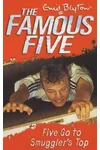
- Five Go to Smuggler's Top (1945) – The children are sent to stay in a hilltop house surrounded by mist and marshland, featuring hidden passages and smuggling plots.
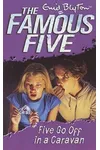
- Five Go Off in a Caravan (1946) – A summer holiday traveling in horse-drawn caravans leads the group to a mystery near a circus troupe.
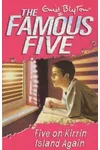
- Five on Kirrin Island Again (1947) – Uncle Quentin is conducting secret scientific research on the island, but someone else is trying to steal his discoveries.
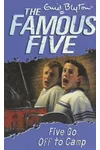
- Five Go Off to Camp (1948) – A camping trip on the moors turns suspicious when the children hear stories of phantom trains running on abandoned tracks.
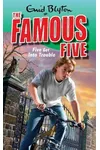
- Five Get Into Trouble (1949) – While on a cycling holiday, Dick is mistaken for someone else and kidnapped, forcing the others to track him down.
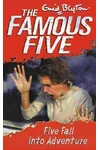
- Five Fall Into Adventure (1950) – When Kirrin Cottage is burgled and Uncle Quentin's papers are stolen, the children team up with a local girl named Jo.
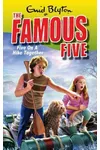
- Five on a Hike Together (1951) – A muddy autumn hike becomes an adventure when Gaston, a dirty-faced boy, delivers a cryptic message in the night.
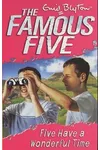
- Five Have a Wonderful Time (1952) – Staying in tents near a ruined castle, the group investigates the mysterious disappearance of a scientist friend.
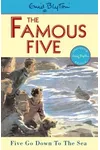
- Five Go Down to the Sea (1953) – The Five spend their holidays in Cornwall, learning about the dark history of old wreckers who lured ships onto the rocks.
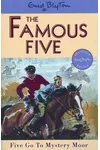
- Five Go to Mystery Moor (1954) – Staying at a riding school, the children follow a trail to the misty moors where gypsies are behaving suspiciously.
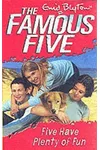
- Five Have Plenty of Fun (1955) – The Five are tasked with protecting Berta, a young American girl hiding from kidnappers.
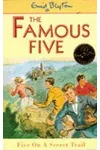
- Five on a Secret Trail (1956) – Seeking a quiet holiday, the children camp near a ruined cottage, only to encounter midnight signals.
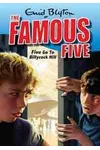
- Five Go to Billycock Hill (1957) – Staying near a pilot friend's airfield, the cousins must investigate when two experimental planes go missing.
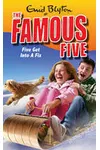
- Five Get Into A Fix (1958) – A snowy trip to Wales leads the group to a mysterious, vibrating hill and a deserted mansion.
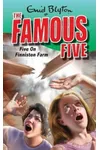
- Five on Finniston Farm (1959) – A farm holiday turns into a treasure hunt for the ruins of a medieval castle buried underground.
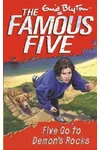
- Five Go to Demon's Rocks (1960) – Staying in a lighthouse, the children learn about old pirates and seek a legendary hidden treasure.
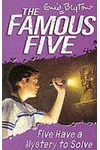
- Five Have a Mystery to Solve (1960) – The Five explore Whispering Island, discovering a hoard of valuable statues hidden from the public.
- Five Are Together Again (1963) – The final original book sees the team camping in the grounds of a circus friend's estate, attempting to solve a theft of scientific papers.
The Official Famous Five Short Stories
In addition to the 21 novels, Enid Blyton wrote eight official short stories featuring the Famous Five. They were originally published in various magazines and annuals between 1954 and 1962. These are self-contained, bite-sized adventures that do not impact the main storyline, meaning you can read them at any point after you are familiar with the characters.
Today, these stories are most commonly read in the compilation volume Five Have a Puzzling Time and Other Stories (first published in 1995). The eight short stories are:
- A Lazy Afternoon (1954)
- George's Hair is Too Long! (1955)
- Five and a Half-term Adventure (1956)
- Well Done, Famous Five! (1956)
- When Timmy Chased the Cat! (1957)
- Five Have a Puzzling Time (1960)
- Good Old Timmy! (1961)
- Happy Christmas, Five! (1962)
Beyond Enid Blyton: The Claude Voilier Sequels
In the 1970s and 1980s, French author Claude Voilier—who had previously translated Blyton's original works into French—was authorized to write continuation novels. She wrote 24 books in total, 18 of which were translated into English by the celebrated translator Anthea Bell.
Because these books were written by a different author and focus on standalone escapades, they are not considered part of the core Enid Blyton canon. Their publication order in English differs significantly from the original French release order, and there is no strict chronological connection between them. You can read these legacy sequels in any order after you have finished the original 21 Blyton novels. Some of the most notable English titles include The Famous Five and the Mystery of the Emeralds, The Famous Five in Fancy Dress, and The Famous Five and the Stately Homes Gang.
What to Know Before You Start
The Famous Five books are product of their time, offering a nostalgic look at mid-20th-century British childhood. The stories are famous for their sense of independence: the children roam freely across the English countryside, sleep in tents, and cook over campfires, with adults rarely interfering in their detective work.
The series is also well known for its iconic television adaptations, which can serve as a fun companion to the books:
- The 1978 TV Series: A beloved 26-episode British-German adaptation that updated the setting to the contemporary 1970s.
- The 1995 TV Series: Another 26-episode adaptation, which opted for historical accuracy by keeping the setting in the 1950s.
- The 2023 TV Series: A stylized, modern reimagining produced by Nicolas Winding Refn for the BBC and ZDF, which adapts the adventures into 90-minute feature-length episodes.