















How to Start Reading The Leopard People Series
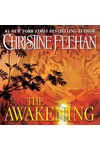
For readers looking to dive into the sultry and high-stakes world of Christine Feehan’s shape-shifter romance, the most logical starting point is the very beginning. The series officially launched in 2002 with the novella The Awakening, followed by the first full-length novel, Wild Rain, in 2004. Because these two works establish the essential lore of the shape-shifting Leopard People and their dangerous habitats, they are foundational for new readers.
To make starting easier, Feehan published a compilation volume titled Fever in 2006, which packages both The Awakening and Wild Rain in a single book. Starting with Fever gives you a comprehensive introduction to the Borneo rainforest setting, the concept of the primal mating bond, and the physical and psychological struggles that shifters face when balancing their human minds with their leopard instincts.
While every book in the series features a self-contained romance focusing on a specific couple, the overarching world-building, shifter laws, and political conflicts build upon one another. Jumping into the middle of the series is entirely possible, but reading in order prevents minor spoilers regarding who mates with whom and how the global shifter community evolves.
Publication Order of The Leopard People Books
The Leopard People series progresses in a straightforward linear fashion, meaning the publication order matches the chronological timeline of the universe. Below is the complete list of books in the series, including the key years they were published:
- The Awakening (2002) – A novella originally published in the Fantasy anthology, later collected in Fever.
- Wild Rain (2004) – The first full-length novel in the series.
- Fever (2006) – An omnibus compilation containing both The Awakening and Wild Rain.
- Burning Wild (2009)
- Wild Fire (2010)
- Savage Nature (2011)
- Leopard's Prey (2013)
- Cat's Lair (2015)
- Wild Cat (2015)
- Leopard's Fury (2016)
- Leopard's Blood (2017)
- Leopard's Run (2018)
- Leopard's Wrath (2019)
- Leopard's Rage (2020)
- Leopard's Scar (2022)
- Leopard's Hunt (2024)
Chronological Caveats and Settings
While you do not have to worry about complicated timelines or flashbacks, the series does shift geographically and tonally. Recognizing these transitions can help you navigate the series more comfortably:
The Borneo Rainforest Era
The early books (The Awakening and Wild Rain) are deeply rooted in the lush, untamed jungles of Borneo. Here, the focus is heavily on the isolation of the rainforest, scientific research, and the raw survival aspect of shifter life. The setting acts as a character itself, setting a dark, primal, and highly atmospheric tone.
The North American Transition
Starting with Burning Wild, the series shifts focus toward North America, introducing urban environments, wealthy business empires (such as Jake Bannaconni's corporate world), and the bayous of Louisiana. This transition expands the scope of the Leopard People, showing how shifters integrate into human society, run international businesses, and establish territories in modern cities while still hiding their wild natures.
The Russian Amurov Dynasty
The latter half of the series, starting with Leopard's Fury, shifts the spotlight to the Amurov family. The Amurovs are a lethal, tightly knit family of Russian leopard shifters who operate with intense family loyalty and military-grade security. Following their story arcs (Fyodor, Timur, Mitya, Sevastyan, and Gorya) provides a continuous, highly interconnected narrative thread that makes reading books 10 through 16 in order particularly satisfying.
The Core Shifter Lore: What to Know Before You Start
Before stepping into Feehan's world, it is helpful to understand the unique mythology she has built around her shifters. Unlike traditional werewolf lore, the Leopard People are not created by a bite; they are a distinct, ancient genetic race. They possess a dual nature—a human side and a leopard side—that constantly vie for control. If a shifter neglects their leopard side, the animal can turn wild and take over, leading to tragic consequences.
A central element of the series is the "mating bond." In Feehan's universe, leopard shifters cannot choose their mates; instead, their leopards recognize their perfect counterpart, triggering a chemical and spiritual bond that is absolute and unbreakable. This bond brings immense power and stability to the couple, but it also invites danger from rival shifters and criminal organizations who seek to exploit these pairs.
It is also worth noting that the series features highly explicit romance, intense alpha heroes, and graphic action. The tone is passionate and raw, leaning heavily into the animalistic instincts of the characters.
Connections to Other Christine Feehan Series
Many readers wonder if they need to read Christine Feehan’s other massive series—such as the Dark (Carpathian) series, the GhostWalkers, or the Shadow Riders—to understand the Leopard People. The short answer is no. Feehan maintains strict boundaries between her series. While some of her other series (like the Drake Sisters and Torpedo Ink) share a universe and are set in the same location, the Leopard People exist in their own separate reality. There are no crossovers, cameos, or shared plotlines with her other works, making this series entirely self-contained.