






The Recommended Reading Path
For readers looking to dive into the outrageous, tongue-in-cheek world of Ted Mark's iconic series, the best path forward is simple: read the books in their original publication order. While the series is highly episodic—meaning each book functions as a standalone adventure where Steve Victor jet-sets to a new exotic locale, encounters bizarre villains, and seduces beautiful women—the overarching satire and character dynamics evolve naturally across the run. Starting at the beginning lets you appreciate the escalating absurdity and the cultural shift from the mid-1960s free-love movement to the early-1980s post-disco era.
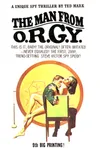
You should start directly with the debut novel, The Man from O.R.G.Y. (1965). This book establishes Steve Victor's unique dual role as a sex researcher and accidental secret agent. Reading in order also ensures you catch the minor recurring gags, character call-backs, and the shifting publishing landscapes that saw the series move from Lancer Books to Manor Books and other houses over its sixteen-year run.
The Man from O.R.G.Y. Publication Order
The series consists of 15 core novels published between 1965 and 1981. Note that publication dates can sometimes be confusing because many titles were reprinted in the 1970s with updated covers and copyright dates. The list below represents the true publication order based on original releases:
- The Man from O.R.G.Y. (1965) – The debut caper introducing Steve Victor as he travels from Damascus to Tokyo investigating nuclear secrets.
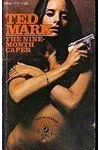
- The 9-Month Caper (1965) – Victor heads to Miami and the Caribbean to tangle with Cuban forces.
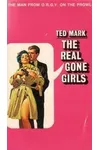
- The Real Gone Girls (1966) – A wild search for three missing heiresses, which later served as the basis for the 1970 film.
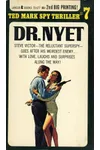
- Dr. Nyet (1966) – A direct parody of James Bond's Dr. No, featuring a scientist with a dangerous aphrodisiac formula.
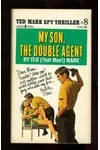
- My Son, the Double Agent (1966) – Steve Victor faces a double agent doppelgänger causing chaos across the globe (often reprinted in 1972).
- Hard Day's Knight (1966) – A parody that sends Victor into a medieval-themed conspiracy (often reprinted in 1972).
- Room at the Topless (1967) – A cheeky adventure set amidst the burgeoning topless bar scene of the late '60s (often reprinted in 1973).
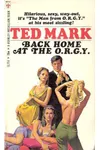
- Back Home at the O.R.G.Y. (1968) – Steve Victor returns to domestic soil for an espionage mission cloaked in domestic drama.
- Come Be My O.R.G.Y. (1968) – More satirical sexology and high-stakes spying.
- Here's Your O.R.G.Y. (1969) – Steve Victor takes on international syndicates in another fast-paced romp.
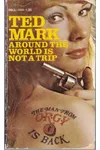
- Around the World is Not a Trip (1973) – An international adventure that pokes fun at global tourism and espionage.
- Dial "O" for O.R.G.Y. (1973) – A thriller parody blending telephone hotlines and undercover operations.
- The Beauty and the Bug (1973) – A rarer installment in which Steve Victor investigates a high-tech listening device ring.
- Thy Neighbor's Orgy (1981) – A later-era entry that returns to the satirical suburbs of the early 1980s.
- The Tight End (1981) – The final book in the series, featuring Steve Victor assisting a professional football team with their unique off-field performance issues.
Chronological vs. Publication Order Caveats
Because the novels are episodic adventure comedies, there is no strict chronological continuity that requires a specialized reading list. However, readers should be aware of a few chronological anomalies and publishing discrepancies:
- Reprint Date Shifts: Several books, including My Son, the Double Agent, Hard Day's Knight, and Room at the Topless, were widely redistributed in the early 1970s. This has led many contemporary databases to list their publication years as 1972 or 1973 rather than their original mid-to-late '60s releases.
- Omitted Titles: Works like The Beauty and the Bug and Thy Neighbor's Orgy are frequently missed in partial lists, but they are fully canonical and fit neatly into the publishing order.
- Anthologies and Compilations: Multi-book collections like The Ted Mark Reader (1966) compile early stories and chapters but do not contain new standalone missions. Stick to the list of 15 novels to get the complete narrative experience.
What to Know Before You Start
Before diving into the series, it is helpful to understand the context of the era in which it was written. Penned by Theodore Mark Gottfried under the pseudonym Ted Mark, the series was designed to capitalize on the massive 1960s spy craze kicked off by Ian Fleming's James Bond and shows like The Man from U.N.C.L.E.. Gottfried used the sub-genre of "sexpionage" to write social satire, mocking the self-serious nature of contemporary spy thrillers while celebrating the era's sexual revolution.
The central gag of the series is Steve Victor's cover organization: O.R.G.Y., which officially stands for the Organization for the Rational Guidance of Youth. In reality, Victor uses the organization as a vehicle to obtain research grants to fund his hedonistic lifestyle. Unlike James Bond, who relies on gadgets and martial arts, Victor's primary weapon is his "research" into human relationships. The tone is heavily pulpy, loaded with double entendres, and represents a distinct sub-genre of vintage adult paperback fiction.
The 1970 Film Adaptation
In 1970, the first novel was adapted into a comedy film titled The Man from O.R.G.Y. (also distributed under the title The Real Gone Girls). Directed by James Hill and starring Robert Walker Jr. as Steve Victor, the film adapted the book's premise of a spy looking for three missing women who are heirs to a massive fortune. The movie is famous among cult film fans for its absurd premise: the only way Steve Victor can identify the heirs is by locating a specific tattoo of a grinning gopher on their backsides. Despite the popularity of the books, the film was a critical failure and remains a minor footnote in the history of spy cinema.
Avoiding Confusion: The Coxeman Series
Pulp fiction fans should take care not to confuse Ted Mark's series with another prominent sexpionage parody from the same era: The Coxeman series written by Troy Conway (a house pseudonym used by various writers, including Michael Avallone). The Coxeman books carried the subtitle The Man From O.R.G.Y. on several editions, but they follow a completely different protagonist named Rod Logan. Ted Mark's Steve Victor novels remain the original and most satirical example of the genre.