
The Recommended Reading Order
For the best experience, readers should follow the series in its original publication order. Although almost every book in the series introduces a new protagonist and a self-contained investigation, the overarching dark, atmospheric tone of New York City and the gradual evolution of Lutz’s storytelling make the publication order the most satisfying reading path. Crucially, reading the fourth book in sequence is essential for transition into Lutz’s follow-up series.
Here is the recommended reading order for The Night series:
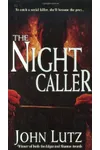
- The Night Caller (2001)
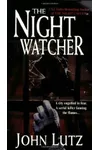
- The Night Watcher (2002)
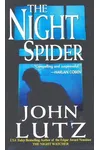
- The Night Spider (2003) – Also published under the title Night Victims
- Darker Than Night (2004) – Also serves as the first book of the Frank Quinn series
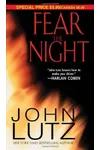
- Fear the Night (2005)
- Chill of Night (2006)
Publication Order of The Night Books
John Lutz published the six novels of the series over a rapid six-year period between 2001 and 2006. Below is the detailed breakdown of the books in their order of release:
1. The Night Caller (2001)
The series begins with retired NYPD detective Ezekiel 'Coop' Cooper. When his own daughter falls victim to a calculated serial killer, Coop is drawn back into the NYPD's orbit. Teaming up with a true-crime novelist, Coop enters a high-stakes cat-and-mouse game to catch an elusive murderer who uses phone calls to torment his victims before striking.
2. The Night Watcher (2002)
Shifting focus to detectives Ben Stack and Rica Lopez, this second installment centers on a pyromaniac serial killer terrorizing Manhattan's wealthy elite. The killer infiltrates locked, high-security high-rise apartments, setting deadly fires that incinerate victims in their homes. Stack and Lopez must navigate the complex web of high society to stop the arsonist before the next building burns.
3. The Night Spider / Night Victims (2003)
In this book (frequently retitled Night Victims in later editions), the narrative follows retired NYPD Captain Thomas Horn. A serial predator known as 'The Night Spider' is stalking women inside their own secure high-rise apartments, wrapping them in their bedsheets before killing them. Horn must return to active investigation to dissect the mind of a meticulous stalker who leaves no trace behind.
4. Darker Than Night (2004)
This pivotal novel introduces ex-cop Frank Quinn. After a disgraced exit from the police department, Quinn is recruited as an independent consultant to catch 'The Night Prowler,' a serial killer who uses the dark streets of New York City as his personal hunting ground. While this acts as the fourth entry in the Night series, it also serves as the launchpad for the highly successful 13-book Frank Quinn franchise.
5. Fear the Night (2005)
The fifth book follows retired homicide detective Vincent Repetto. After witnessing a brutal murder firsthand, Repetto becomes personally obsessed with stopping the 'Night Sniper,' a ruthless shooter who targets random citizens under the cover of darkness. The investigation alternates between past and present as Repetto races to predict where the sniper will strike next.
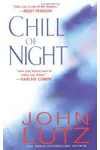
6. Chill of Night (2006)
The final book in the series centers on Artemis Beam, a former NYPD detective sidelined by injury and departmental friction who is mourning the suicide of his wife. Beam goes rogue to track down 'The Justice Killer,' an arrogant serial murderer who hunts down former jurors who voted to acquit notorious criminals, leaving a red letter 'J' on their bodies.
The Frank Quinn Connection and Spinoffs
One of the most notable aspects of the Night series is its structural relationship with John Lutz's broader bibliography. Specifically, the fourth book, Darker Than Night, serves a dual role. It concludes the serial-killer focus of the early Night books while simultaneously introducing Frank Quinn, his partner Pearl, and his quirky team of private investigators.
Following the publication of Darker Than Night, Lutz continued the Frank Quinn storylines as a distinct, standalone series beginning with In for the Kill (2007). While the Night series wrapped up with Fear the Night and Chill of Night, the Frank Quinn universe expanded into a major thriller franchise spanning thirteen novels, including titles like Night Kills (2008), Urge to Kill (2009), and Mister X (2010).
Where to Start and Practical Reading Advice
Because the books in the Night series function largely as standalone investigations with different protagonists, readers have a couple of viable entry points depending on their reading goals:
- For the complete atmospheric journey: Start with The Night Caller. This allows you to experience the full progression of Lutz's New York City mythos, moving from Ezekiel Cooper to the final hunt with Artemis Beam.
- For fans of team-up procedurals: Start with Darker Than Night. If your primary goal is to read the long-running Frank Quinn series, starting here gives you the essential origin story for Quinn and his team before jumping into the main Quinn books.
Regardless of where you begin, keep in mind that the series is known for its graphic crime scenes, psychological tension, and gritty depiction of early-2000s New York City. The titles are highly thematic, representing the shadowy, nocturnal world in which both the killers and their pursuers operate.
What to Know Before You Start
Before diving into John Lutz's Night series, it is helpful to understand the formula that makes these books tick. Rather than relying on a single, long-term protagonist like most crime series, Lutz uses New York City itself as the primary recurring character. The transition from active police investigations (like Stack and Lopez in The Night Watcher) to rogue, retired investigators (like Repetto in Fear the Night and Beam in Chill of Night) highlights a recurring theme: the legal system is often too slow or rigid to catch truly cunning monsters, requiring obsessive individuals to step outside the lines to deliver justice.
Readers should also note that some editions of the third book, The Night Spider, are published under the title Night Victims. The content is identical, so be careful not to accidentally buy the same book twice under different covers.