


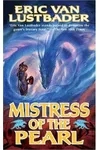
How to Read The Pearl Saga
The Pearl Saga is a tightly structured trilogy with a linear narrative. Because the plot builds directly from one volume to the next, there is no separate chronological order to worry about. Readers should follow the publication order to experience the overarching story of Kundala as the author intended.
Here is the recommended reading path for the series:
- The Ring of Five Dragons (2001)
- The Veil of a Thousand Tears (2002)
- Mistress of the Pearl (2003) — Note: Published as The Cage of Nine Banestones in the UK and other international markets.
The Pearl Saga Books: A Closer Look
1. The Ring of Five Dragons (2001)
The story begins on Kundala, a planet conquered and occupied for a century by the technologically superior, militaristic alien race known as the V'ornn. The Kundalans, a deeply spiritual people, pin their hopes on the prophecy of the Dar Sala-at, a savior destined to free them. The plot thickens when the V'ornn seek the Ring of Five Dragons, a legendary relic believed to unlock the long-lost sorcerous Storehouse of Kundala. Riane, a young Kundalan woman, finds her destiny irrevocably changed when a spell designed to save her merges her body with the dying psyche of a V'ornn prince, Annon Ashera. Together, this dual-natured protagonist must navigate political intrigue, cultural divides, and hidden magic to find the ring.
2. The Veil of a Thousand Tears (2002)
Picking up directly after the events of the first book, this installment focuses on the consequences of the magic that bound Riane and Annon Ashera. The spell that merged their consciousnesses inadvertently breached the Abyss, releasing ancient daemons once imprisoned by the Goddess Miina. As these dark entities threaten to consume Kundala, the archdaemon possesses Lady Giyan. Riane and her companions must embark on a perilous quest to locate the Veil of Thousand Tears to seal the rift, vanquish the daemons, and save their allies, all while struggling with the internal clash of their dual genders, races, and identities.
3. Mistress of the Pearl / The Cage of Nine Banestones (2003)
The final published book of the saga brings the characters' journeys to an emotional and action-packed climax. As the battle for Kundala's fate intensifies, Riane, alongside key allies like Eleana and Krystren, must confront their ultimate destinies. The story heavily explores themes of love, loss, and sacrifice. Because of the author's changing professional commitments, this book was restructured to provide a functional and satisfying ending to the primary story arc, wrapping up major plotlines while leaving the broader universe in a state of resolution.
The World of Kundala: Science Fiction Meets Fantasy
What sets The Pearl Saga apart from traditional epic fantasy is its distinct blend of genres. Eric Van Lustbader juxtaposes the high-tech, militaristic society of the invading V'ornn, who are secretly controlled by an enigmatic androgynous cabal known as the Gyrgon, with the mystical, nature-aligned, and deeply spiritual society of the native Kundalans. The planetary setting—featuring five moons and nine seas—feels exceptionally alive. Lustbader drew inspiration from the matriarchal societies of ancient Crete to build the culture of Kundala, emphasizing themes of language, gender, and the bridge between magic and science. Neither technology nor mysticism is framed as inherently good or evil; instead, the conflict highlights the struggle for balance and mutual understanding between two vastly different cultures.
What to Know Before You Start
Before diving into Kundala, readers should keep a few practical points in mind:
- The Series is Incomplete: While originally planned as a longer epic, Van Lustbader put the series on hold indefinitely to focus on writing the highly successful Jason Bourne continuation novels. Despite this, he intentionally redesigned the third book, Mistress of the Pearl, to act as a proper conclusion so readers would not be left on an unresolved cliffhanger.
- Title Variations: If you are hunting for physical copies, be aware that the third book goes by two entirely different names. The US edition is titled Mistress of the Pearl, whereas the UK edition is titled The Cage of Nine Banestones. They are the exact same novel.
- Complex Themes: The series deals extensively with identity, featuring a main character who literally shares a single physical form with a soul of a different gender and enemy race. This dual perspective is used to explore themes of tolerance, empathy, and overcoming deep-seated cultural prejudices.