
The Recommended Reading Path
For the best experience, readers should follow the publication order of the five core subseries. Robin Hobb designed the Realm of the Elderlings to be read as a continuous, evolving story. Skipping subseries—even those that shift focus away from the main characters—will cause you to miss crucial world-building, lore developments, and character crossovers that pay off spectacularly in the final trilogy.
Here is the recommended reading path across the five main subseries:
1. The Farseer Trilogy
This is where the entire saga begins, introducing the main protagonist, FitzChivalry Farseer, and setting up the core political struggles and magic systems of the Six Duchies.
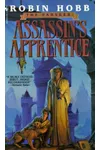
- Assassin's Apprentice (1995)
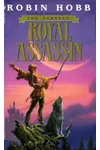
- Royal Assassin (1996)
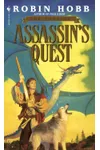
- Assassin's Quest (1997)
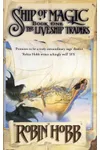
2. The Liveship Traders Trilogy
The series shifts south to Bingtown and the Rain Wilds. It features a new cast of characters, sentient wooden ships, and pirate-infested waters. While it initially feels separate, the events here are absolutely vital to the rest of the saga.
- Ship of Magic (1998)
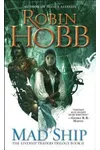
- The Mad Ship (1999)
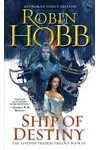
- Ship of Destiny (2000)
3. The Tawny Man Trilogy
The story returns to the Six Duchies and the first-person perspective of Fitz, picking up fifteen years after the events of the Farseer Trilogy.
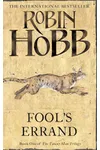
- Fool's Errand (2001)
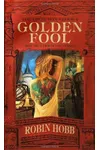
- Golden Fool (2002)
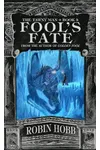
- Fool's Fate (2003)
4. The Rain Wild Chronicles
This four-book series returns to the Rain Wilds, focusing on dragons, their keepers, and the search for the mythical city of Kelsingra. It bridges the gap between Tawny Man and the grand finale.
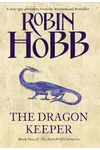
- Dragon Keeper (2009)
- Dragon Haven (2010)
- City of Dragons (2011)
- Blood of Dragons (2013)
5. The Fitz and the Fool Trilogy
The final trilogy ties all the threads of the previous 13 books together into a single, emotionally powerful conclusion.
- Fool's Assassin (2014)
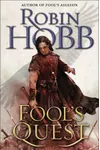
- Fool's Quest (2015)
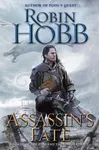
- Assassin's Fate (2017)
Why Publication Order Matters
Many new readers wonder if they can skip the non-Fitz trilogies (Liveship Traders and Rain Wild Chronicles) to focus solely on Fitz and the Fool. While it is technically possible, it is highly discouraged. Doing so ruins the emotional impact of the final trilogy, where characters and plotlines from the Liveship Traders and Rain Wild Chronicles converge. Furthermore, the origin of dragons and the secrets of the magical materials used in the world are explored primarily in these middle series.
Chronological Order and Novella Caveats
While the main 16 novels flow chronologically, several novellas and short stories take place at different times in the history of the world. First-time readers should avoid reading chronologically, as the prequels reveal secrets best discovered later in the main narrative.
Where the Side Stories Fit Chronologically:
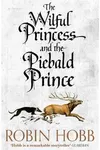
- The Willful Princess and the Piebald Prince (2013): A prequel novella set generations before Assassin's Apprentice. It explains the history of the Wit magic and the tragic origin of the Piebald family line. It is best read after the Tawny Man Trilogy to appreciate its historical context.
- Homecoming (2003): Set during the early colonization of the Rain Wilds. It is best read after the Liveship Traders Trilogy.
- Words Like Coins (2012) and Blue Boots (2010): Short stories set in the Six Duchies around the time of the Farseer Trilogy.
- The Inheritance (2011) and Cat's Meat (2011): Supplemental tales set in the Rain Wilds.
- Her Father's Sword (2017): A story set in the Six Duchies during the events of the Red Ship Raiders' attacks.
What to Know Before You Start
The Realm of the Elderlings is famous for its character-driven focus, emotional depth, and slow-burn pacing. Unlike action-heavy epic fantasies, Robin Hobb prioritizes the psychological toll that duty, magic, and political loyalty take on her characters. The magic systems—the telepathic, royal Skill and the animal-bonding, marginalized Wit—are deeply tied to the characters' identities and societal standing. The series does not feature co-authored books; Hobb wrote every entry solo. However, she has written other, unrelated works under her real name, Megan Lindholm, which should not be confused with this fantasy universe.