


The Recommended Reading Pathway
For almost all readers, the best way to experience The Sandman is to follow the original publication release order of the core storyline before branching into prequels and spin-offs. Neil Gaiman designed the narrative arc of Dream (Morpheus) to build incrementally across its original run. Even though The Sandman: Overture is chronologically a prequel, it was written decades later and assumes the reader is already familiar with the entire saga. Reading it first will spoil major plot points and diminish its emotional impact.
Start with the core series, move on to the post-series collections, and save the prequel for the grand finale. Here is the definitive roadmap:
- The Core Saga: Read the original 75-issue run (Volumes 1 through 10) in numerical order.
- The Prequel: Read The Sandman: Overture.
- The Companions & Side Stories: Dive into spin-offs like the Death collections, Endless Nights, and The Dream Hunters.
The Core Sandman Story (The Original 10 Volumes)
If you are collecting the classic trade paperbacks, the main storyline is divided into ten volumes. They must be read in this exact order to follow the overarching narrative:
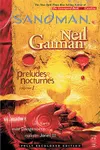
- Volume 1: Preludes & Nocturnes (Collects issues #1–8) – Introduces Dream as he escapes 70 years of captivity and seeks to reclaim his lost tools of power (his pouch of sand, his helm, and his ruby).
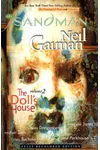
- Volume 2: The Doll's House (Collects issues #9–16) – Follows Dream as he tracks down rogue dreams that escaped during his absence, introducing the character Rose Walker and the terrifying Corinthian.
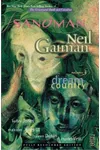
- Volume 3: Dream Country (Collects issues #17–20) – A collection of four independent tales, including the World Fantasy Award-winning "A Midsummer Night's Dream" and "Calliope."
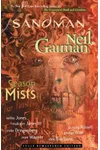
- Volume 4: Season of Mists (Collects issues #21–28) – Widely considered one of the series' high points, Dream travels to Hell to free a past lover, only for Lucifer to resign and hand him the key to the gates of Hell.
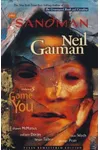
- Volume 5: A Game of You (Collects issues #32–37) – A dark fantasy journey centering on Barbie, a character introduced in The Doll's House, as she travels into her childhood dreamland.
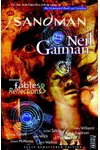
- Volume 6: Fables & Reflections (Collects issues #29–31, 38–40, 50, and The Sandman Special #1) – An anthology of stories exploring historical figures (like Orpheus and Roman Emperor Augustus) and their interactions with the Endless.
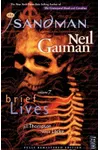
- Volume 7: Brief Lives (Collects issues #41–49) – Dream joins his sister Delirium on a quest through the waking world to find their missing brother, Destruction.
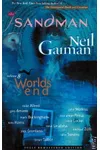
- Volume 8: Worlds' End (Collects issues #51–56) – Travelers from different realities find shelter during a reality-shaking storm and exchange stories, structured in a classic Canterbury Tales format.
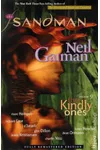
- Volume 9: The Kindly Ones (Collects issues #57–69) – The longest single story arc in the series, where the forces of fate and revenge converge upon Dream.
- Volume 10: The Wake (Collects issues #70–75) – The emotional epilogue and conclusion of the original saga, dealing with the aftermath of The Kindly Ones.
Navigating the Different Formats
DC Comics has repackaged The Sandman multiple times. Depending on which edition you purchase or borrow, the volume numbers and grouping will look different:
The Classic Trade Paperbacks (10 Volumes)
The standard way to read the series. If you buy the 10 graphic novels listed above, you have the complete core storyline.
The Deluxe Editions (Books 1 to 5)
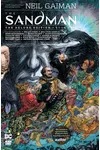
These are five oversized hardcover volumes that collect the entire original 75-issue run along with extra crossover material. Book One collects issues #1–16 and the Sandman Midnight Theatre crossover. Book Five finishes the main series and includes Endless Nights and both versions of The Dream Hunters. Note that The Sandman: Overture is sold separately in this format.
The Modern Paperbacks / DC Black Label Editions (Books 1 to 6)
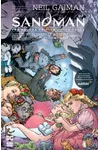
Released alongside the Netflix adaptation, these thick paperback collections divide the series into six books. Books 1 through 5 collect the original 75-issue series. Book 6 collects the prequel Overture, the crossover The Sandman Universe #1, and the comic book adaptation of The Dream Hunters.
The Chronological Catch: Why You Must Read Overture Last
The Sandman: Overture is chronologically the first story in the timeline, taking place immediately before Morpheus is captured in issue #1 of Preludes & Nocturnes. However, reading it first is a mistake. Gaiman wrote Overture in 2013–2015, long after finishing the original series. It utilizes character developments, callbacks, and revelations that assume you have read all 75 issues of the main run. Reading it first will spoil the end of the main series and cause confusion, as it features complex cosmic entities and references to characters who only make sense after reading the entire story.
Essential Spin-Offs and Universe Expansions
Once you finish the main story, you can expand your journey with these highly recommended additions:
The Death Miniseries
Dream's older sister, Death, is one of the most beloved characters in the franchise. Neil Gaiman wrote two miniseries focusing on her: Death: The High Cost of Living (1993) and Death: The Time of Your Life (1996). They are usually collected together in a single volume simply titled Death.
The Dream Hunters
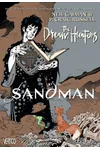
Set in ancient Japan, this side story follows a monk and a fox spirit. There are two versions of this book: the original 1999 prose novella illustrated by Yoshitaka Amano, and the 2008 four-issue comic adaptation illustrated by P. Craig Russell. Both are excellent, but the prose version is the original experience.
Endless Nights
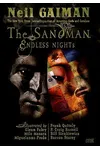
Published in 2003, this graphic novel features seven chapters, each focusing on one of the seven Endless siblings, illustrated by a different legendary artist. It serves as a beautiful post-script to the series.