
The Recommended Secret Seven Reading Path
For generations, young readers have stepped through the garden door of the Secret Seven's meeting shed in Peterswood, eager to solve mysteries alongside Peter, Janet, Jack, Colin, George, Pam, Barbara, and their golden spaniel, Scamper. First introduced in the late 1940s by prolific children's author Enid Blyton, the Secret Seven remains a staple of children's mystery literature.
When it comes to reading the series, you have two primary options: the classic Publication Order (starting directly with the first full-length novel in 1949) or the Chronological Order (which begins with the two early pre-series stories from 1947 and 1948). Because the novels are highly episodic, you do not need to worry about complex overarching plots or massive cliffhangers. However, reading them in order lets you appreciate the group's evolving dynamics, the construction of their meeting rules, and the steady progression of their local investigations.
The Complete Publication Order of The Secret Seven Novels
The core of the series consists of 15 novels written entirely by Enid Blyton between 1949 and 1963. They are best read in their original release order to follow the natural flow of the children's school holidays and local adventures:
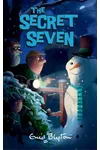
- 1. The Secret Seven (1949): The group investigates strange occurrences in a nearby vacant house, leading to their very first major rescue.
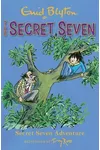
- 2. Secret Seven Adventure (1950): A search for a stolen pearl necklace leads the young detectives to a circus.
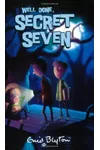
- 3. Well Done, Secret Seven (1951): The Seven build a new treehouse, only to discover it is being used by someone else as a hideout.
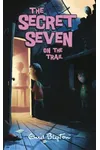
- 4. Secret Seven on the Trail (1952): A mistake with a secret password leads the group to a railway yard and a gang of thieves.
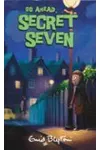
- 5. Go Ahead Secret Seven (1953): While shadow-practicing, the group gets caught up in a case involving a sinister dog-stealing ring.
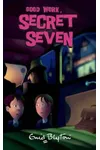
- 6. Good Work, Secret Seven (1954): Peter and Janet witness a car theft, making the investigation intensely personal.
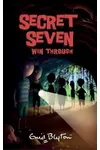
- 7. Secret Seven Win Through (1955): After being kicked out of their shed, the children find a cave, only for their belongings to start disappearing.
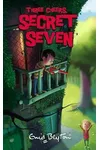
- 8. Three Cheers, Secret Seven (1956): A search for a lost airplane toy in a mansion grounds reveals an unexpected family secret.
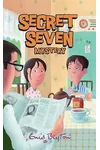
- 9. Secret Seven Mystery (1957): The Seven try to clear a local girl's name when she is accused of stealing a school's practice money.
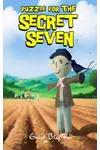
- 10. Puzzle for the Secret Seven (1958): The group helps a family who lost their home in a fire, while tracking down a stolen violin.
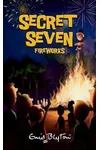
- 11. Secret Seven Fireworks (1959): Guy Fawkes night preparations get complicated when the group uncovers a plot to steal a valuable collection of medals.
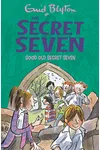
- 12. Good Old Secret Seven (1960): A mysterious box, a ruined tower, and strange lights at night provide a classic mystery for the holidays.
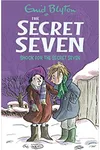
- 13. Shock for the Secret Seven (1961): Internal tension rises when the group splits temporarily, just as they must track down a missing dog.
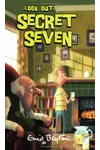
- 14. Look Out, Secret Seven (1962): The society investigates the theft of rare books and a suspicious watchman.
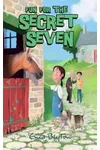
- 15. Fun for the Secret Seven (1963): The final original novel sees the group helping a young boy raise money for a horse, uncovering a farmyard mystery along the way.
The Secret Seven Prequels and Short Stories
Before Enid Blyton published the first novel, she introduced elements of the group in shorter works. If you want to experience the complete chronological setup, you should start with these prequels:
- At Seaside Cottage (1947): Often listed as Book 0.4, this early short story introduces siblings Peter and Janet and their dog, Scamper, on a beach holiday. It does not feature the other five members or the society itself, but establishes the core family dynamic.
- The Secret of the Old Mill (1948): Listed as Book 0.8, this story officially depicts the formation of the Secret Seven society. The children form their detective club and investigate a local mill.
Blyton also wrote several short stories during the run of the main series, which were published in annuals and magazines. These are collected in modern anthologies and box sets, providing quick, standalone mysteries that can be read at any point between the main books:
- The Humbug Adventure (1954)
- Adventure on the Way Home (1955)
- An Afternoon with the Secret Seven (1956)
- Where Are the Secret Seven? (1956)
- Hurry, Secret Seven, Hurry! (1957)
Modern Continuation Books by Pamela Butchart
In 2018, publisher Hodder Children's Books commissioned award-winning author Pamela Butchart to write official sequels to the series. Illustrated by Tony Ross, these books match the setting and period of the original stories while introducing modern storytelling pacing for new readers:
- 16. Mystery of the Skull (2018): Set back in Peterswood, the Seven find a skull hidden in a secret compartment in Janet's bedroom.
- 17. Mystery of the Theatre Ghost (2019): The Seven investigate strange occurrences and ghost sightings during a play rehearsal at a local theatre.
What to Know Before You Start: Tone, Settings, and Characters
The Secret Seven is set in the fictional, idyllic English village of Peterswood. The series is aimed at a slightly younger audience (ages 6 to 9) compared to Blyton's other famous detective series, The Famous Five (ages 9 to 12). While the Famous Five go on sprawling camping trips and encounter smugglers on islands, the Secret Seven focus on local community mysteries: solving dog thefts, finding missing neighborhood items, and protecting old properties.
To keep their society exclusive, the group has strict rules. They meet in a garden shed belonging to Peter and Janet's family, and members must wear their official 'S.S.' button badges and know the current password to enter. The leader, Peter, is often characterized as strict and occasionally bossy, which has sparked friendly debate among modern readers, but his dedication to justice and the camaraderie of the group always wins the day.
Practical Reading Guidance: Standalone vs. Series Continuity
Do you need to read the Secret Seven in order? Not strictly. Every book is a self-contained mystery that resolves by the final chapter. However, starting with the first book (or the prequels) is highly recommended. Reading chronologically ensures that you understand references to the group's meeting shed rules, the role of their golden spaniel Scamper (who is arguably the most helpful member of the club), and the recurring appearances of secondary characters, such as Jack's annoying sister Susie, who constantly tries to infiltrate the group.