
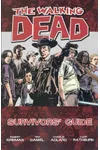
How to Start Reading The Walking Dead
The Walking Dead is a massive, multi-media franchise, but its heart and soul reside in the original black-and-white comic book series created by Robert Kirkman. The entire main story runs for 193 issues and is completely self-contained. For the best experience, you should read the main series in order before diving into the spin-offs or tie-in novels. Here are the three primary formats you can choose from to read the main comics:
- Trade Paperbacks (TPBs): The series is collected into 32 volumes, each containing six issues of the comic. This is a highly digestible format that lets you enjoy the story arc by arc.
- Hardcover Books: The series is collected into 16 hardcover books, with each book containing 12 issues (equivalent to two trade paperbacks).
- Compendiums: For the most cost-effective and continuous reading experience, the entire run is collected in four massive Compendiums (about 48 issues each).
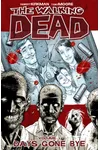
Regardless of which format you choose, you must start at the beginning with The Walking Dead, Vol. 1: Days Gone Bye (or Compendium One). The narrative builds directly upon itself, following Rick Grimes as he wakes from a coma into a zombie-infested world and struggles to keep his family and survivors alive.
The Main Graphic Novel Series (Publication Order)
The core narrative of the comic book series should be read in its strict publication order. Below is the list of the 32 trade paperback volumes:
- Vol. 1: Days Gone Bye (2004)
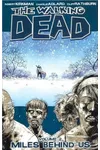
- Vol. 2: Miles Behind Us (2004)
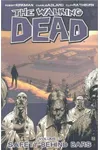
- Vol. 3: Safety Behind Bars (2005)
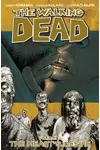
- Vol. 4: The Heart's Desire (2005)
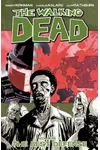
- Vol. 5: The Best Defense (2006)
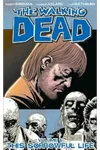
- Vol. 6: This Sorrowful Life (2007)
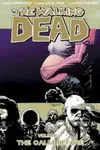
- Vol. 7: The Calm Before (2007)
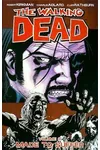
- Vol. 8: Made to Suffer (2008)
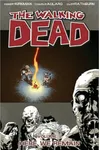
- Vol. 9: Here We Remain (2009)
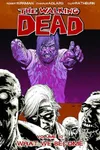
- Vol. 10: What We Become (2009)
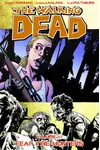
- Vol. 11: Fear the Hunters (2010)
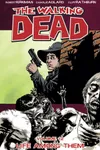
- Vol. 12: Life Among Them (2010)
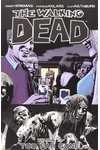
- Vol. 13: Too Far Gone (2010)
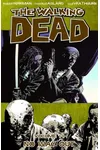
- Vol. 14: No Way Out (2011)
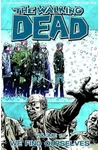
- Vol. 15: We Find Ourselves (2011)
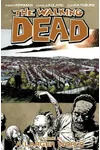
- Vol. 16: A Larger World (2012)
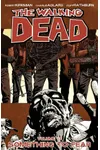
- Vol. 17: Something to Fear (2012)
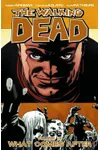
- Vol. 18: What Comes After (2013)
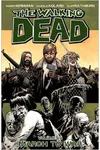
- Vol. 19: March to War (2013)
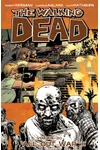
- Vol. 20: All Out War, Part 1 (2014)
- Vol. 21: All Out War, Part 2 (2014)
- Vol. 22: A New Beginning (2014)
- Vol. 23: Whispers Into Screams (2015)
- Vol. 24: Life and Death (2015)
- Vol. 25: No Turning Back (2016)
- Vol. 26: Call to Arms (2016)
- Vol. 27: The Whisperer War (2017)
- Vol. 28: A Certain Doom (2017)
- Vol. 29: Lines We Cross (2018)
- Vol. 30: New World Order (2018)
- Vol. 31: Rotten Core (2019)
- Vol. 32: Rest in Peace (2019)
The prose novels (The Governor Series and Beyond)
In addition to the comics, Robert Kirkman teamed up with author Jay Bonansinga to write a series of prose novels set in the same universe. These novels expand the lore and detail the backstories of key comic characters, primarily focusing on Philip Blake, better known as the villainous Governor of Woodbury. Later entries in this series were written by Bonansinga alone but remain canon to the comic universe.
The prose novels should generally be read in publication order:
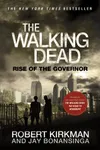
- Rise of the Governor (2011) - Co-authored by Robert Kirkman and Jay Bonansinga. Traces the origin of the Governor.
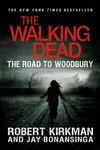
- The Road to Woodbury (2012) - Co-authored by Kirkman and Bonansinga. Follows Lilly Caul and her arrival in Woodbury.
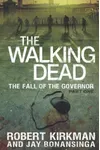
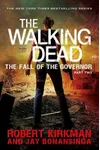
- The Fall of the Governor, Part 1 (2013) - Co-authored by Kirkman and Bonansinga. Retells the events of the Woodbury arc from the Governor's perspective.
- The Fall of the Governor, Part 2 (2014) - Co-authored by Kirkman and Bonansinga. Concludes the retelling of the Woodbury arc.
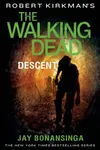
- Descent (2014) - Written by Jay Bonansinga. Focuses on Lily Caul trying to rebuild Woodbury after the Governor's fall.
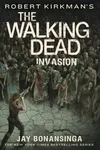
- Invasion (2015) - Written by Jay Bonansinga. Details the conflict between Lilly's group and a rival faction of survivors.
- Search and Destroy (2016) - Written by Jay Bonansinga. Lilly's group seeks out a safe haven, encountering new threats.
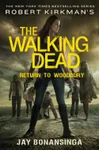
- Return to Woodbury (2017) - Written by Jay Bonansinga. The final book in Lilly's journey as she returns to rebuild the town.
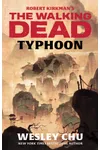
- Typhoon (2019) - Written by Wesley Chu. A standalone novel set in China, expanding the global scope of the zombie outbreak.
Chronological Reading Order Guidance and Caveats
While you can read the comics and novels completely separately, some fans enjoy integrating them chronologically. The novels explore the background of Woodbury and the Governor before Rick's group ever meets them. However, reading the novels first can spoil the mystery of the Governor in the comics. Therefore, the safest and most enjoyable approach is to read the main comic series up to the end of the Woodbury arc, and then read the Governor novels as a deep-dive prequel.
If you want a hybrid chronological reading path, follow this sequence:
- Phase 1: Early Survival: Read Comics Issues #1–24 (collected in Trade Paperbacks Vol. 1–4). This establishes Rick's group, their journey, and their arrival at the prison.
- Phase 2: Enter the Governor: Read the first novel, Rise of the Governor, and the short story Just Another Day at the Office (2012). This short story bridges the gap between the first and second novels and shows how the Governor solidified his control over Woodbury. Then read the second novel, The Road to Woodbury.
- Phase 3: The Woodbury Clash: Read Comics Issues #25–48 (collected in Trade Paperbacks Vol. 5–8). This covers the classic war between the prison survivors and the Governor's town.
- Phase 4: Behind the Scenes: Read The Fall of the Governor, Part 1 and Part 2 to see the other side of the conflict.
- Phase 5: Post-Governor Era: Resume the main comics from Issue #49 all the way to the end at Issue #193.
- Phase 6: Lilly's Woodbury Sequel: Read the remaining novels (Descent, Invasion, Search and Destroy, and Return to Woodbury) to find out what happened to Woodbury after the battle at the prison.
Key Comic Spin-offs and Companion Works
Several one-shots and spin-off graphic novels exist to round out your experience in the Walking Dead universe:
- Here's Negan (2017): A graphic novel detailing the tragic backstory of the series' most iconic antagonist, Negan. While it takes place before the outbreak, it is best read after Issue #174 or at the very end of the main series to appreciate Negan's redemption arc.
- The Walking Dead: The Alien (2016): A one-shot comic written by Brian K. Vaughan that details the outbreak in Barcelona, Spain, focusing on Rick Grimes' brother, Jeffrey. This can be read as a standalone at any point.
- Clementine (Book 1, 2, and 3): A graphic novel trilogy by Tillie Walden that continues the story of Clementine from the popular Telltale Games video game series. This is set in the same comic continuity but functions as a sequel to the video games, so it should only be read after completing those games.