

How to Read This Modern World
Since its debut in 1988, Tom Tomorrow’s (Dan Perkins) This Modern World has served as a biting, hilarious, and often terrifyingly accurate mirror to American politics and consumer culture. Because the series compiles weekly satirical comic strips, there is no fictional plot continuity or chronological storyline to follow. Instead, the books trace the real-world timeline of American history, corporate media spin, and social evolution.
For the best reading experience, you have two primary options:
- The Historical Chronology (Publication Order): Reading the collections in the order they were published allows you to witness the history of the late-20th and early-21st centuries unfold in real-time. You will watch the focus shift from late-Reagan/Bush senior consumer critiques, through the Clinton-era media frenzies, the post-9/11 Bush-Cheney years, the Obama presidency, and into the chaotic Trump administration.
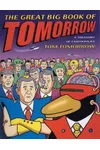
- The Omnibus Shortcuts (Recommended for Newcomers): If you want to dive straight into the best of the strip without hunting down out-of-print paperbacks, starting with the major retrospects is your best bet. The Great Big Book of Tomorrow (2003) captures the first fifteen years of the strip, while the massive, two-volume slipcase edition Tom Tomorrow: 25 Years of Tomorrow (2017) serves as the ultimate archive of his career up to the Trump era.
This Modern World Books in Publication Order
Here is the complete list of anthologies and collections of This Modern World, along with their original publication years:
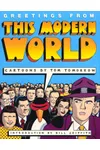
- Greetings From This Modern World (1992) – Collects the earliest strips, focusing heavily on late-1980s workplace drudgery, consumerism, and the Gulf War.
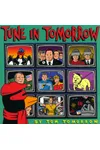
- Tune In Tomorrow (1994) – Captures the transition into the early Clinton administration and the rise of the 1990s counterculture.
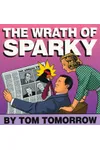
- The Wrath of Sparky (1996) – Introduces more recurring characters and targets the Gingrich-led Republican revolution.
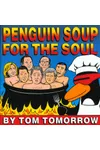
- Penguin Soup for the Soul (1998) – Skewers the late-90s dot-com bubble and Clinton-era political scandals.
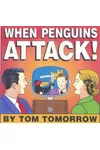
- When Penguins Attack! (2000) – Documents the turn of the millennium and the controversial 2000 presidential election.
- The Great Big Book of Tomorrow (2003) – A massive treasury combining early out-of-print strips, rare works, and photos.
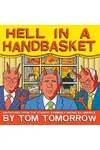
- Hell in a Handbasket (2006) – Focuses on the post-9/11 political landscape, the Iraq War, and the Bush administration's second term.
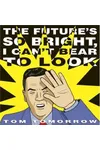
- The Future's So Bright I Can't Bear to Look (2008) – Captures the final years of the Bush administration and the lead-up to the 2008 election.
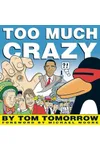
- Too Much Crazy (2011) – Tackles the rise of the Tea Party movement and the early years of the Obama presidency.
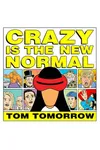
- Crazy Is the New Normal (2016) – Chronicles the mid-Obama years, media polarization, and the precursor to the 2016 election.
- Tom Tomorrow: 25 Years of Tomorrow (2017) – The definitive career-spanning box set compiling over 1,500 cartoons.
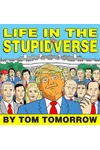
- Life in the Stupidverse (2020) – Focusing entirely on the surreal, chaotic years of the Trump presidency from 2017 to 2020.
Understanding the Major Omnibus Collections
If you are looking to collect the physical books, it helps to understand how the large omnibus editions relate to the individual paperback releases:
The Great Big Book of Tomorrow (2003)
This volume acts as a mid-career retrospective. Instead of buying the first five individual paperbacks (which are increasingly difficult to find in good condition), this 2003 collection offers a convenient way to read his 1980s and 1990s work. It also includes rare underground publications and colorized versions of select strips.
Tom Tomorrow: 25 Years of Tomorrow (2017)
Funded by a massively successful Kickstarter campaign and published by IDW, this two-volume, slipcased hardcover is a beautiful, 15-pound archive. It compiles almost all of his work from 1990 through 2016. What makes this set invaluable to readers are the extensive annotations written by Perkins, explaining the historical context of older strips that younger readers or international fans might not recognize.
The Children's Book Spin-off
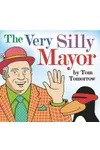
In 2009, Tom Tomorrow published his first and only children's book, The Very Silly Mayor. While technically a standalone work, it stars Sparky the Wonder Penguin as a voice of reason in a city governed by an absurd mayor who demands firemen use peanut butter to put out fires. The book acts as a lighthearted political parable for kids, teaching them the importance of questioning authority and peer pressure.
What to Know Before You Start
Before reading, it helps to understand the conventions Tom Tomorrow uses throughout his career:
- The Clip-Art Aesthetic: The strip's visuals mimic mid-century print advertising. Initially, Perkins literally cut and pasted vintage clip art to build his panels. Over time, he transitioned to drawing his own characters while strictly maintaining that retro, stiff, high-contrast aesthetic.
- Sparky the Wonder Penguin: The primary mascot of the strip is a fast-talking, sunglasses-wearing penguin who frequently breaks the fourth wall to point out the logical fallacies of politicians, pundits, and ordinary citizens.
- Near-Identical Panels: To emphasize his wordy, debate-style humor, Tomorrow often repeats the exact same character drawing across multiple panels, changing only the dialogue bubbles. This minimalist approach forces the reader to focus on the text and the irony of the situation.