
The Recommended Reading Path
For readers diving into the high-stakes, fast-paced world of Dr. Thomas Lourds, the recommended reading path is simple and direct: follow the publication order. Because each novel builds slightly on Lourds's reputation, his recurring relationships, and his background as an elite Harvard academic, reading them in the sequence they were written provides the most satisfying character arc. The narrative flows in a single linear chronology, meaning there are no prequels or complex timeline jumps to navigate.
Here is the recommended reading path for the series:
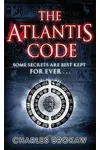
- The Atlantis Code (2009)
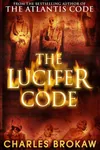
- The Lucifer Code (2010)
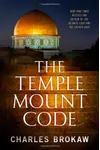
- The Temple Mount Code (2011)
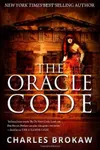
- The Oracle Code (2012)
Publication Order of Thomas Lourds Books
The series was published over a tight four-year span from 2009 to 2012 by Tor Books. While the local database lists The Oracle Code with a publication date of 2012, some retail and library platforms list it as early 2013 due to different regional distribution dates. However, 2012 remains the primary copyright and first release year. The publication sequence is identical to the chronological order, tracing Lourds's career from his initial discovery off the Spanish coast to his dangerous trek through the mountains of Afghanistan.
- The Atlantis Code (Tor Books, 2009) — The novel that introduced the world to Thomas Lourds as he races to find the legendary lost city of Atlantis.
- The Lucifer Code (Tor Books, 2010) — Lourds is kidnapped in Istanbul and forced to hunt for a biblical-era scroll.
- The Temple Mount Code (Tor Books, 2011) — A lethal chase through Jerusalem centered on a document hidden beneath the Temple Mount.
- The Oracle Code (Tor Books, 2012) — Lourds searches for the lost tomb of Alexander the Great using clues linked to the Oracle of Delphi.
What to Know Before You Start
Before cracking open the first page, it helps to understand what kind of thriller Charles Brokaw has crafted. Charles Brokaw is a pseudonym for a Midwest-based academic and college educator with a deep personal passion for history and archaeology. Consequently, the books are filled with fascinating linguistic trivia, historical anecdotes, and geographic details. However, they are first and foremost cinematic, high-octane action thrillers. If you are looking for slow, academic mystery-solving, you might find the frequent shootouts, car chases, and international espionage surprising.
Think of Thomas Lourds as a hybrid between Dan Brown's Robert Langdon and Indiana Jones. He is a roguish, handsome academic who is just as likely to translate an ancient dialect as he is to dodge bullets from shadowy mercenaries. The tone is light, fast-paced, and highly escapist, making it an ideal choice for a weekend binge read.
Deep Dive: The Four Codes of Thomas Lourds
1. The Atlantis Code (2009)
In his debut adventure, Dr. Thomas Lourds is called upon when advanced satellite imaging detects ruins off the coast of Spain that match Plato's descriptions of Atlantis. Lourds quickly discovers a mysterious bell inscribed with an undecipherable ancient language. This artifact is the key to unlocking the location of the legendary lost civilization. However, he isn't the only one searching. A secretive, ultra-conservative branch of the Catholic Church is determined to keep the ruins hidden at all costs, leading to a deadly race across Europe and North Africa.
2. The Lucifer Code (2010)
While visiting Istanbul to deliver a scholarly lecture, Lourds is kidnapped by a group of religious extremists. They force him to use his unparalleled linguistic skills to translate a newly discovered, ancient scroll believed to be written by the author of the biblical Book of Revelation. The scroll contains a prophesied text that could either save humanity or plunge the world into darkness. Alongside a former lover and an unpredictable mercenary, Lourds must navigate the historical layers of Istanbul to stop the scroll from falling into the wrong hands.
3. The Temple Mount Code (2011)
Summoned to Jerusalem by a colleague, Lourds arrives only to find his friend murdered and a priceless, newly excavated artifact missing. The artifact is a text hidden for centuries beneath the Temple Mount. Various global intelligence agencies and regional factions—including representatives of the Iranian government—believe the document contains a secret that could unite the Islamic world and trigger global conflict. Lourds must navigate the explosive politics of Jerusalem to recover the text and prevent a catastrophic war.
4. The Oracle Code (2012)
The final book in the series takes Lourds to the war-torn landscapes of Afghanistan. An ancient scroll discovered in the region contains clues pointing to the final resting place of Alexander the Great and the lost secrets of the Delphi Oracle. Lourds is forced to dodge traps, local Taliban cells, and ruthless Russian secret police agents. Each group seeks the legendary power that allowed Alexander to conquer the known world, forcing Lourds to use both his intellect and survival instincts to secure the tomb.
Reading Order Caveats & Standalone Appeal
One of the best aspects of the Thomas Lourds series is its accessibility. While the novels are sequentially linked, each story is completely self-contained. The central archaeological mystery, the main villains, and the specific locations are fully resolved by the end of each book. You do not have to worry about frustrating cliffhangers or massive multi-book plotlines. If you happen to pick up The Lucifer Code or The Temple Mount Code first, you will have no trouble understanding the plot. However, starting with The Atlantis Code remains the best choice for experiencing Lourds's introduction and his evolving reputation as a globetrotting academic adventurer.