
The Recommended Reading Path: Where to Begin
For the best experience, readers should plunge into the wild jungles of Lemuria by following the original publication order. Lin Carter wrote the core six novels as a continuous, episodic narrative tracking Thongor's rise from a northern Valkarthian mercenary to the eventual Emperor of Lemuria. Starting anywhere else will spoil major plot points and Thongor's gradual conquest of the continent.
While later collections like Young Thongor contain stories that are chronologically set earlier in his life, these were compiled posthumously and are best enjoyed as flavor once you are already familiar with Carter's pulpy fantasy landscape.
The Core Novels in Publication Order
The heart of the saga consists of six novels published between 1965 and 1970. Carter revised and expanded the first two books in 1969 and 1970, adding extra depth to the prose and world-building.
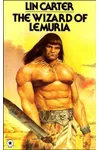
- Thongor and the Wizard of Lemuria (1965): Originally published as The Wizard of Lemuria (and revised in 1969). This is the absolute starting point. Thongor teams up with the ancient, sarcastic wizard Sharajsha of Patanga to forge a mystical star-metal sword and prevent the return of the ancient dragon kings (the Druids of the Shadow).
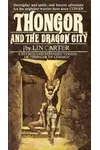
- Thongor of Lemuria / Thongor and the Dragon City (1966): Originally titled Thongor of Lemuria (revised in 1970). Thongor must rescue Princess Sumia of Patanga from the ancient city of Xothun, ruled by a vampire-king, while navigating dinosaur-infested terrains and deadly flora.
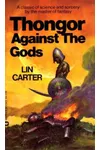
- Thongor Against the Gods (1967): The stakes rise as Thongor faces the direct wrath of the ancient, malevolent gods of Lemuria. Stripped of his allies, he must rely on raw strength and wits to survive divine machinations.
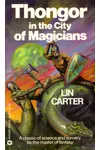
- Thongor in the City of Magicians (1968): Thongor travels to the mysterious, hidden city of Tsatha to rescue his love, Sumia, who has been kidnapped by dark sorcerers utilizing forbidden magical technology.
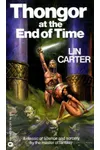
- Thongor at the End of Time (1968): A cosmic scale adventure where Thongor is cast into the far future/alternate reality and must fight his way back to his own era to save Lemuria from ultimate destruction.
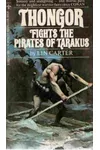
- Thongor Fights the Pirates of Tarakus (1970): The final novel written by Lin Carter. It wraps up Thongor's main adventures with a high-seas confrontation against sky-pirates and treacherous nobles.
Chronological Reading Order (Including Posthumous Additions)
For readers who want to experience Thongor's life strictly in the order events occurred, you can reconstruct his journey by integrating the short story collections compiled by Robert M. Price and Adrian Cole. However, keep in mind that these collections contain stories of varying quality, some developed from Carter's fragments and others written as pastiches.
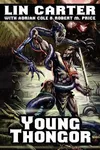
- Young Thongor (2012): A collection of prequel short stories mapping Thongor's youth, his escape from the frozen north of Valkarth, and his earliest days as a thief and mercenary.
- Thongor and the Wizard of Lemuria (1965)
- Thongor and the Dragon City (1966)
- Thongor Against the Gods (1967)
- Thongor in the City of Magicians (1968)
- Thongor at the End of Time (1968)
- Thongor Fights the Pirates of Tarakus (1970)
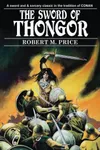
- The Sword of Thongor (2016): A late-stage collection of stories compiled by Robert M. Price. The stories here span Thongor's entire career, including his later years as the sovereign King of Patanga.
- Thongor Conquers the Underground World (2023): A posthumous novella completed by Robert M. Price based on Lin Carter's surviving outlines and notes. Chronologically, this functions as a sequel/spin-off focusing on Thongor's son, Prince Thar, who must defend Kathool while Thongor is away.
What to Know Before You Start
Lin Carter was a legendary figure in fantasy fandom, best known as an editor of the Ballantine Adult Fantasy series and a major proponent of the 1960s sword-and-sorcery revival. Thongor was his personal love letter to two giants of pulp fiction: Robert E. Howard (the creator of Conan the Barbarian) and Edgar Rice Burroughs (the creator of Tarzan and John Carter of Mars).
Because of this, Thongor represents a unique hybrid subgenre: sword and planet meets sword and sorcery. Lemuria is not a standard medieval fantasy setting. It is a prehistoric lost continent set around 500,000 B.C., filled with Mesozoic dinosaurs, advanced scientific anomalies disguised as magic (such as levitating airships fueled by anti-magnetic metals), and ancient non-human civilizations. The prose is unashamedly pulpy, fast-paced, and filled with over-the-top action, making it a perfect quick read for fans of vintage fantasy.
Comics and Adaptations
Thongor's popularity in the early 1970s led to a memorable comic book adaptation by Marvel Comics. He headlined the anthology series Creatures on the Loose from issue #22 (March 1973) through issue #29 (May 1974). The run was primarily adapted by writer George Alec Effinger with striking artwork by Val Mayerik, Vince Colletta, and Vicente Alcazar, offering a fantastic visual companion to Carter's books.