


How to Read the Thunder Moon Series
Frederick Schiller Faust, writing under his iconic pseudonym Max Brand, originally wrote the Thunder Moon stories as a series of interlocking novelettes and serials for Western Story Magazine between 1927 and 1928. Because they were published in pulp magazines, the transition to standalone novels was complicated, resulting in two distinct reading orders: the original, heavily edited book publications and the later, uncut restored editions. To experience the saga at its best, we highly recommend following the restored sequence.
The Recommended Path: The Restored Bison Books Tetralogy
In the late 1990s, the University of Nebraska Press (under their Bison Books imprint) went back to Faust’s original typescripts to publish the series exactly as the author intended. This restored version presents the story uncut, in chronological order, and divided into four volumes. If you are looking for the most coherent narrative flow, this is the order to follow:
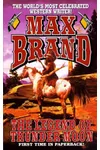
- The Legend of Thunder Moon (1996) – This volume introduces the young hero, a white infant kidnapped and raised as a Cheyenne warrior by Chief Big Hard Face. To overcome the stigma of his pale skin, Thunder Moon must prove his bravery in a daring raid against the Comanches.
- Red Wind and Thunder Moon (1996) – Thunder Moon navigates tribal diplomacy and conflict between rival Cheyenne bands, a struggle complicated by a mysterious gift and the arrival of the enigmatic Red Wind.
- Thunder Moon and the Sky People (1996) – Driven by a growing curiosity about his heritage, Thunder Moon sets out with his loyal companion Standing Antelope to find his biological parents, eventually discovering he is the son of Colonel Sutton.
- Farewell, Thunder Moon (1996) – The dramatic conclusion to the saga. Betrayed and caught between two worlds, Thunder Moon must return to the Great Plains to protect his adoptive people from encroaching white settlers and hostile Pawnee warriors.
The Alternative Path: Original Dodd, Mead Publications
Before the restored editions were released, the stories were compiled posthumously into novels by Dodd, Mead, and other publishers. This older sequence is sometimes fragmented and contains abridgments, but it is the order in which classic Western fans first read them in book format:
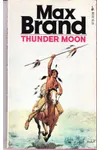
- Thunder Moon (1970) – The first hardcover compilation, covering Thunder Moon’s early life, his upbringing among the Cheyenne, and his struggle to prove his status as a warrior.
- Thunder Moon’s Challenge (1982) – A compilation of stories detailing his challenges within the tribe and interactions with other bands.
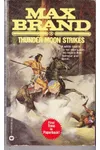
- Thunder Moon Strikes (1982) – Focuses on his encounters with the white world and the escalation of tribal conflicts.
- Farewell, Thunder Moon (1996) – The final chapter of the saga, aligning with the end of the restored series.
- The Legend of Thunder Moon (1996) – Often cataloged separately, this edition marks the start of the restored line but is sometimes grouped with the older paperbacks in databases.
What to Know Before You Start
Max Brand was one of the most prolific pulp fiction writers of the early 20th century. With the Thunder Moon stories, he took a significant departure from the formulaic Westerns of the 1920s. Instead of portraying Native Americans as one-dimensional adversaries, Faust crafted a detailed, sympathetic, and deeply human portrayal of Cheyenne culture, traditions, and spirituality. The central conflict of the series is not just physical survival on the frontier, but the psychological and emotional struggle of a man torn between two distinct cultures.
Because these stories were written for serialized magazines, they feature fast-paced action, cliffhangers, and intense dialogue. However, they also possess a mythological, almost poetic quality that sets them apart from standard frontier tales. Reading the restored Bison Books editions ensures you experience Faust’s raw, uncut prose before editors modified it for the magazine market.
Practical Reader Advice
Can these books be read as standalones? Generally, no. Because the series was written as a continuous, serialized narrative, starting with later volumes like Farewell, Thunder Moon will leave you highly confused about the character relationships, tribal politics, and Thunder Moon's motivation. Always start with The Legend of Thunder Moon (or the 1970 compilation Thunder Moon) to understand the hero's origin story.
If you are collecting physical copies, keep an eye out for the publisher's imprint. The Bison Books editions feature editorial introductions that offer excellent historical context on Frederick Faust's life and the publication of his Western Story Magazine serials.