

The Recommended Reading Order
For the best reading experience, it is highly recommended to read the Time Quintet in its original publication order. While there are slight chronological shifts later in the series, L’Engle’s writing style, worldbuilding, and themes mature naturally over the decades in which these books were written. Reading them in this sequence allows you to grow alongside the characters and follow the emotional and cosmic stakes as the author originally intended.
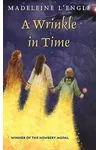
- A Wrinkle in Time (1962)
- A Wind in the Door (1973)
- A Swiftly Tilting Planet (1978)
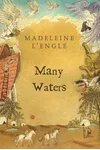
- Many Waters (1986)
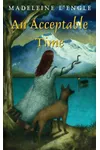
- An Acceptable Time (1989)
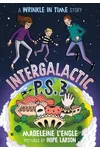
Additionally, you may choose to read Intergalactic P.S. 3 (published as a standalone book in 2018, though written in 1970) between the first and second books. It functions as an alternate, early draft of the events that led to the second novel.
The Timeline Twist: Chronological Order vs. Publication Order
While the publication order is straightforward, L’Engle threw a curveball with the release of the fourth book, Many Waters. If you want to follow the strict chronological timeline of the Murry family’s lives, you will need to swap the order of the fourth and third books. Here is how the timeline actually flows in-universe:
- A Wrinkle in Time: Meg Murry is a teenager (around 14), and her younger brother Charles Wallace is 5.
- A Wind in the Door: Set roughly a year later. Meg is 15, and Charles Wallace is 6.
- Many Waters: The teenage twins, Sandy and Dennys Murry, take center stage. Meg is away at college and Calvin is in graduate school. Chronologically, this book takes place when the twins are in high school, before the catastrophic events of the next book.
- A Swiftly Tilting Planet: Set about ten years after the first book. Meg is now in her mid-20s, married to Calvin O'Keefe, and pregnant with their first child, Polly. Charles Wallace is 15 and must travel through time to avert a nuclear war.
- An Acceptable Time: Set during the next generation. The story stars Polly O'Keefe (Meg and Calvin’s daughter) as she visits her grandparents' house and gets swept back in time to a prehistoric era.
Most readers prefer the publication order because the shift in tone in Many Waters (which deals with biblical themes and a more slice-of-life fantasy style) can feel jarring if placed before the high-stakes, apocalyptic tension of A Swiftly Tilting Planet.
Deep Dive: The Time Quintet Books
1. A Wrinkle in Time (1962)
The book that started it all introducing us to the awkward, brilliant Meg Murry, her precocious little brother Charles Wallace, and her classmate Calvin O'Keefe. Meg’s father has gone missing while working on a secret government project involving a tesseract (a wrinkle in space-time). Guided by three celestial beings—Mrs. Whatsit, Mrs. Who, and Mrs. Which—the trio travels across the universe to rescue him from the dark, brainwashing force known as IT on the planet Camazotz.
2. A Wind in the Door (1973)
Set a year later, the conflict shrinks from the cosmic scale to the microscopic. Charles Wallace falls gravely ill due to a disease affecting his mitochondria (specifically, his farandolae). To save him, Meg, Calvin, and their principal Mr. Jenkins must shrink down and enter Charles Wallace's body. There, they fight the Echthroi, malicious entities representing non-being and hate, in a struggle to maintain the balance of the universe.
3. A Swiftly Tilting Planet (1978)
Ten years after Meg's first adventure, the world is on the brink of nuclear destruction due to a mad dictator. Charles Wallace, now fifteen, is sent on a cosmic quest with a unicorn named Gaudior. Traveling through time (a process called going 'within' another person), Charles Wallace must alter key events in history to change the present and prevent war. Meg, pregnant and staying behind, maintains a telepathic link with him throughout the ordeal.
4. Many Waters (1986)
This entry shifts focus away from Meg and Charles Wallace to the middle Murry siblings, Sandy and Dennys. While messing around in their parents' lab, the twins accidentally trigger a tesseract and are sent back in time to the era of Noah's Ark, shortly before the Great Flood. They encounter nephilim, seraphim, and historical figures, finding their own strengths in a world of ancient myth.
5. An Acceptable Time (1989)
The final book focuses on Meg and Calvin’s eldest daughter, Polly O'Keefe. While staying with her grandparents (the elder Murrys), Polly accidentally steps through a time portal on their property and finds herself in the same location thousands of years in the past. She becomes caught in a conflict between two ancient Native American tribes and must find a way back home before the portal closes forever.
What is Intergalactic P.S. 3?
In 2018, a previously unreleased short story by Madeleine L'Engle was published as a standalone book, illustrated by Hope Larson. Written in 1970 for Children's Book Week, Intergalactic P.S. 3 serves as an early prototype for A Wind in the Door. In this short story, Mrs. Whatsit, Mrs. Who, and Mrs. Which return to take Meg, Charles Wallace, and Calvin to an interstellar school. While it is not a canonical sixth novel, it is a fascinating piece of literary history for fans who want to see how the concepts of the series evolved.
The Broader Universe: Kairos vs. Chronos
Madeleine L'Engle did not view her books as isolated series, but rather as parts of a grand, interconnected universe. She divided this universe into two categories, named after ancient Greek words for time:
The Kairos Sequence (Real Time)
The Kairos books deal with 'God's time' or time outside of linear limits. This is where the Time Quintet sits. It also includes the Polly O'Keefe Quartet (which consists of The Arm of the Starfish, Dragons in the Waters, A House Like a Lotus, and An Acceptable Time). In these books, characters encounter fantasy, sci-fi, and space-time anomalies.
The Chronos Sequence (Linear Time)
The Chronos books deal with ordinary, clock-based time. This sequence primarily follows the Austin Family Chronicles, starting with Meet the Austins. These books are realistic, grounded family dramas with no time travel or space battles.
The Crossover Connectors
Despite these divisions, the two series are linked by 'those who cross and connect.' For instance, the character of Zachary Gray appears in both the Chronos book A Ring of Endless Light and the Kairos book An Acceptable Time. Similarly, the investigator Canon Tallis appears in both sequences, proving that the Murry-O'Keefe family and the Austin family share the exact same universe.
Practical Reader Advice
If you are planning to read the series, keep these quick tips in mind:
- Start with A Wrinkle in Time: Do not skip the first book under any circumstances; it sets up all the concepts and emotional bonds of the Murry family.
- Read Standalones with Caution: While each book has a self-contained plot, they heavily reference prior character growth. Many Waters is the easiest to read as a standalone, but the first three books should definitely be read in order.
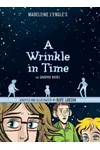
- Check out the Graphic Novel: If you are introducing a younger reader to the series, Hope Larson's 2012 graphic novel adaptation of A Wrinkle in Time is an excellent, faithful entry point.