

















How to Read the Tom Swift Books: The Recommended Starting Path
Since the first volume debuted in 1910, the Tom Swift universe has spanned more than a century, multiple generations of characters, and seven distinct series. Because each era is largely self-contained and episodic, you do not need to read all 100+ books in a single, massive marathon. Instead, the best way to enjoy Tom Swift is to read each distinct series in publication order. This allows you to experience the natural progression of technology and character relationships as they were originally presented to readers.
For the best experience, choose one of these primary entry points:
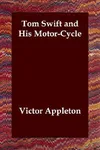
- The Classic Era (Series I): Start with Tom Swift and His Motor-Cycle (1910) to experience the original Edward Stratemeyer and Howard Garis stories that launched the franchise.
- The Space Age (Series II / Tom Swift Jr.): Start with Tom Swift and His Flying Lab (1954) to follow the adventures of Tom Swift's son during the height of mid-century atomic optimism.
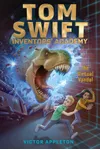
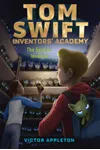
- The Modern Era (Series VII / Inventors' Academy): Start with The Drone Pursuit (2019) if you want a modern, fast-paced introduction with contemporary tech like drones and augmented reality.
The Seven Tom Swift Eras in Order
The franchise is split into seven distinct publication eras, alternating between the original Tom Swift (often referred to as Tom Swift Sr.), his son Tom Swift Jr., and modernized reboots of the classic characters.
1. Tom Swift I (The Original Classic Series, 1910–1941)
The original series features the classic teenage inventor Tom Swift Sr. working out of Shopton, New York. Written primarily by Howard Garis under the syndicate pseudonym Victor Appleton, these books capture the early 20th-century excitement over rapid mechanical progress, moving from motorcycles and airships to early television detectors and magnetic silencers.
2. Tom Swift Jr. Adventures (Series II, 1954–1971)
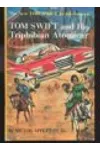
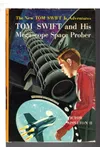
Introduced by Harriet Stratemeyer Adams under the pseudonym Victor Appleton II, this series shifts the focus to Tom Swift Jr., the son of the original inventor. Set in the middle of the Cold War and the Space Race, these 33 novels lean heavily into atomic energy, deep-sea exploration, and outer space travel. Key highlights include Tom Swift and His Rocket Ship and Tom Swift and His Outpost in Space.
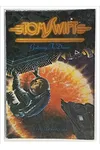
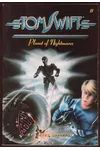
3. Tom Swift III (The Outer Space Saga, 1981–1984)
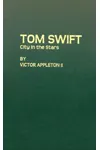
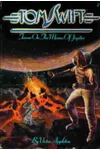
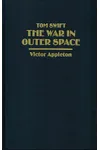
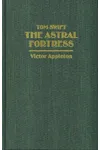
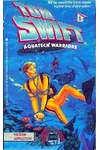
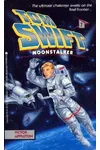
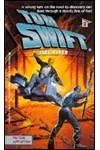
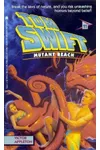
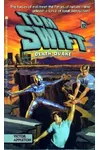
This short-lived series of 11 books took Tom Swift Jr. entirely into the realm of paperback space opera. Rather than focus on Earth-based laboratories, these stories feature interstellar voyages, space fortresses, and alien encounters, beginning with The City in the Stars (1981) and concluding with Planet of Nightmares (1984).
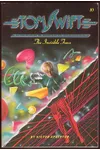
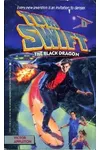
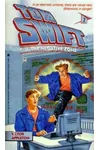
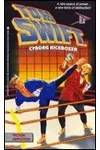
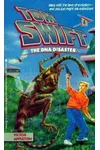
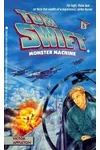
4. Tom Swift IV (The High-Tech Nineties, 1991–1993)
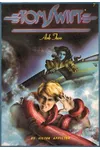
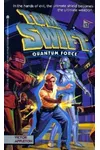
Published by Aladdin Paperbacks, this 13-book run modernized the setting, pitting a teenage Tom Swift against corporate espionage, virtual reality challenges, cybernetic threats, and environmental disasters. The series kicked off with The Black Dragon (1991) and wrapped up with Quantum Force (1993).
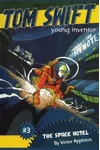
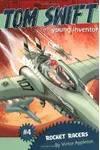
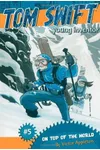
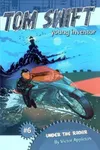
5. Tom Swift, Young Inventor (Series V, 2006–2007)
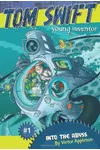
This brief 6-book series updated the classic formula with first-person narration and contemporary gadgets. Tom uses modern cell phones and deals with anti-technology terrorists. The series runs from Into the Abyss (2006) to Under the Radar (2007).
6. Tom Swift Invention Series (Fan-Led & Collaborative Continuation, 2010–2019)
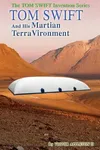
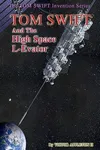
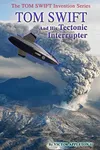
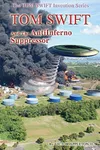
Written by Thomas Hudson and T. Edward Fox, this extensive series of 27 books serves as a fan-driven continuation of the classic Tom Swift style. The series is known for exploring deep lore, creating backstories for legacy characters (such as Tom's father Damon Swift), and featuring advanced sci-fi concepts like the EnvirOzone Revivicator and the Marianas Aquanoids.
7. Tom Swift: Inventors' Academy (Series VII, 2019–2022)
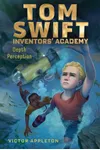
The most recent official reboot from Simon & Schuster, this series places Tom at an elite academy for young minds, blending classic sci-fi mystery with modern STEM concepts like drone technology, artificial intelligence, and virtual reality, spanning from The Drone Pursuit (2019) to Depth Perception (2022).
Chronological Caveats & Standalone Readability
Because the Stratemeyer Syndicate designed these books as fast-paced, episodic adventures for young readers, there is very little heavy serialization. You do not need to worry about cliffhangers carrying over from book to book, and almost every volume can be enjoyed as a standalone adventure. However, reading them in publication order is still highly recommended because recurring side characters, marriages, and laboratory upgrades do occur over time. For instance, in the original series, Tom eventually grows up, marries Mary Nestor, and establishes Swift Enterprises, laying the groundwork for the Tom Swift Jr. spin-off series in 1954.
What to Know Before You Start
Before diving in, it is helpful to keep a few historical and literary context points in mind:
- The Syndicate Formula: None of the Tom Swift books were written by a real person named Victor Appleton. Instead, they were outlined by the Stratemeyer Syndicate and written by ghostwriters. Howard Garis wrote the vast majority of the original 38 books, while authors like James Duncan Lawrence worked on later runs.
- The "Tom Swifty" Pun: The series' ghostwriters famously avoided using the simple word "said" without qualification. This stylistic quirk led to the creation of the "Tom Swifty" pun—a wordplay format where a quote is followed by a punning adverb (e.g., "We must hurry," Tom said swiftly).
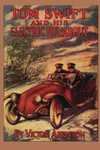
- Real-World Inspiration: The series has a long history of predicting real-world technology. Most famously, NASA physicist Jack Cover named his invention, the Taser, as an acronym for "Thomas A. Swift's Electric Rifle"—referencing the 1911 classic Tom Swift and His Electric Rifle.