





The Recommended Reading Order for Tracie Tanner
If you are looking to dive into Allan Leverone’s gritty, fast-paced world of espionage, you are in luck: the chronological timeline follows the exact order in which the books were published. Because Tracie Tanner's personal journey, physical injuries, and shifting relationship with the CIA build continuously from one mission to the next, we highly recommend reading the series in chronological order starting with the first book, Parallax View.
- Parallax View (2013) – Set in 1987. Tracie's debut mission involves smuggling a secret letter from Mikhail Gorbachev to President Ronald Reagan, which thrusts her into a deadly conspiracy.
- All Enemies (2014) – Set in the fall of 1987. When the U.S. Secretary of State is kidnapped, Tracie must investigate despite recovering from severe injuries and facing betrayal from within her own agency.
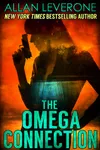
- The Omega Connection (2015) – Tracie is deployed to investigate the murders of defense department contracting executives, leading her to uncover ties to the failed 1961 Bay of Pigs invasion.
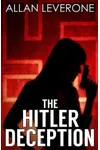
- The Hitler Deception (2015) – Sent to West Germany to locate the missing Amber Room treasure, Tracie must work with an untrustworthy ally and investigate rumors that Adolf Hitler survived WWII.
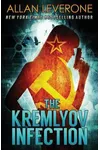
- The Kremlyov Infection (2016) – CIA agents in Moscow are dying of mysterious radiation poisoning. CIA Director Aaron Stallings sends Tracie to infiltrate the Soviet Union and neutralize the threat.
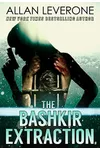
- The Bashkir Extraction (2017) – While monitoring a secret military base in the Ural Mountains, Tracie witnesses an event that forces her into a daring, solo extraction of a captured former colleague.
- The Soviet Assassin (2019) – Tracie is tasked with tracking down a lethal operative responsible for poisoning American assets and preventing a major international disaster.
- The Nuclear Option / The Nuclear Extraction (2020) – Tracie races against the clock to locate a tactical nuclear weapon stolen by Russian radicals before it can be detonated.
- Objekt 825 (2021) – Recovering from injuries sustained in her previous nuclear mission, Tracie is sent to a secret Black Sea submarine base to retrieve a communication device and eliminate the notorious operative Andrei Lukashenko.
What to Know Before You Start
The Tracie Tanner series is a throwback to classic Cold War spy thrillers. While written in the 2010s and early 2020s, the entire narrative is anchored in the late 1980s. This means readers will experience an era of analog intelligence-gathering, where operatives rely on payphones, telexes, physical surveillance, and raw intuition rather than modern digital tracking or smartphones. This retro atmosphere adds a distinct layer of tension, making every communication delay feel critical.
Tracie herself is a compelling protagonist who breaks many conventions of the genre. While she has the lethal capabilities and sharp survival instincts of characters like Jason Bourne or Jack Reacher, she is also deeply human, flawed, and prone to physical and emotional trauma. She frequently sustains major injuries that carry over into subsequent books, affecting her performance and decision-making. Furthermore, her relationship with CIA Director Aaron Stallings is complex; she often operates as a rogue element, bending or outright breaking the rules to protect national security, which sometimes puts her at odds with the very government she serves.
A Book-by-Book Breakdown
Parallax View (2013)
The series opens in the tense summer of 1987. Tracie Tanner, a 27-year-old covert operative, is assigned to retrieve a sensitive letter written by Soviet General Secretary Mikhail Gorbachev in East Germany. The document is meant for President Ronald Reagan, but before she can deliver it, she is targeted by highly trained assassins. Realizing that the leak came from the highest levels of the American government, Tracie goes on the run. She forms an unlikely alliance with Shane Rowley, a civilian air traffic controller, as she fights to prevent a political assassination that could plunge the world into World War III.
All Enemies (2014)
Following the traumatic events of the first book, Tracie is recovering from her physical wounds when the U.S. Secretary of State, J. Robert Humphries, is abducted from his Washington, D.C. home. The CIA immediately points the finger at Moscow, but Tracie suspect a more complex conspiracy. Operating without official backup—and eventually being fired from the agency—she relies on her instincts to locate the Secretary and expose the real architects of the plot before military action is launched.
The Omega Connection (2015)
Back in the good graces of CIA Director Aaron Stallings, Tracie is sent to investigate a string of brutal assassinations targeting high-level defense contracting executives. The killers leave letters blaming the corporation for its involvement in the disastrous 1961 Bay of Pigs invasion. Tracie must navigate corporate greed and historical grudges in a solo operation that takes her from the halls of power in Washington to the treacherous Florida Everglades.
The Hitler Deception (2015)
This installment moves the action to West Germany, where an elderly man's disappearance points to a massive historical conspiracy. Tracie is tasked with recovering the key to the legendary, long-lost Amber Room treasure. However, the mission takes a dark turn when she uncovers evidence suggesting that Adolf Hitler did not die in his bunker in 1945, but instead escaped to plan a future Nazi resurgence. Tracie must determine who she can trust as she races to secure the treasure and prevent a dangerous political coup.
The Kremlyov Infection (2016)
The stakes escalate when CIA operatives stationed in Moscow begin dying from horrific, unexplained symptoms that point to targeted radiation poisoning. Realizing the KGB has compromised their network, Stallings sends Tracie directly into the heart of Soviet territory. Operating in a hostile capital with no diplomatic immunity, she must identify the poisoners and stop them before the remaining American network in Moscow is completely wiped out.
The Bashkir Extraction (2017)
Set deep in the Ural Mountains within the Soviet satellite region of Bashkir, Tracie is initially sent on a simple surveillance mission to investigate a hidden military facility. But after witnessing a captured former colleague being tortured, her mission shifts. Disobeying her standing orders, she initiates a near-suicidal rescue attempt to extract the agent without any backup, forcing her to confront heavy ethical dilemmas and risk everything for a fellow operative.
The Soviet Assassin (2019)
Tracie returns to the field to hunt down a lethal Soviet operative who has been systematically poisoning American assets. This book highlights the relentless, cat-and-mouse nature of Cold War espionage, with Tracie tracking her target across international borders while attempting to avoid a geopolitical catastrophe.
The Nuclear Option / The Nuclear Extraction (2020)
When Russian extremists manage to steal a tactical nuclear warhead, the world stands on the brink of nuclear war. Tracie Tanner is the only operative close enough to intercept the weapon. She must locate the stolen device and neutralize the radicals before they can detonate it, a mission that leaves her with severe physical injuries that set the stage for the final novel.
Objekt 825 (2021)
In the final book of the series, Tracie is still recovering from the brutal physical toll of her previous nuclear mission. Despite this, she is called upon for a highly dangerous assignment on the eastern shores of the Black Sea. Her objective is twofold: infiltrate Objekt 825, a heavily fortified secret Soviet submarine base, to steal a revolutionary communications device, and track down Andrei Lukashenko, a legendary KGB assassin known as "The Weasel" who has eluded the CIA for years.
Reading Guidance and Standalone Potential
While each book features a self-contained mission with a resolved primary plot, we do not recommend reading the Tracie Tanner books as standalone thrillers. The character arc of Tracie, her evolving relationship with her handler Stallings, and her recurring physical and psychological scars form a continuous narrative thread. Starting in the middle of the series will cause you to miss key context regarding her operational trauma and the shifting geopolitics of the late Cold War.
For readers who enjoy Allan Leverone's fast-paced, cinematic style—which features short chapters and high-tension action sequences—his Paskagankee series is another excellent choice, though it is a contemporary crime mystery series and does not feature any crossovers with the Tracie Tanner universe.