





The Recommended Reading Order
For readers diving into the sun-drenched, noir-tinted world of Travis McGee, the path forward is straightforward: publication order is highly recommended. John D. MacDonald wrote the 21 novels sequentially from 1964 to 1985. While almost every book functions perfectly as a standalone mystery, reading them in order allows you to appreciate the subtle development of McGee’s character, the shifting landscape of 20th-century Florida, and the evolution of his close friendship with Meyer, his resident economist neighbor.
Furthermore, reading chronologically by publication is essential to understanding the emotional weight of specific mid-series titles. A tragic event in The Green Ripper changes Travis profoundly, and the subsequent books deal directly with his grief and recovery. Starting at the beginning ensures these shifts in tone and character make complete sense.
The Complete Travis McGee Book List in Publication Order
Below is the complete list of Travis McGee novels in their original publication order. Each title features MacDonald's signature color theme, which was designed to help paperbacks stand out on store spinner racks:
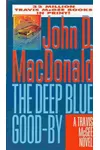
- The Deep Blue Good-By (1964) – The debut novel that introduces Travis, his salvage consultant philosophy, and his Fort Lauderdale home base.
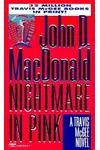
- Nightmare in Pink (1964) – Travis travels to New York to help a friend's sister, exposing a dark mental institution plot.
- A Purple Place for Dying (1964) – A trip to the Midwest turns deadly when Travis witnesses a client's murder.
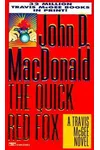
- The Quick Red Fox (1964) – Travis is hired by a movie star who is being blackmailed with compromising photos.
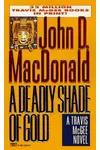
- A Deadly Shade of Gold (1965) – A sprawling mystery involving Aztec gold and travels from Florida to Mexico and California.
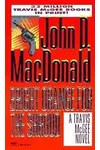
- Bright Orange for the Shroud (1965) – Travis works to recover the stolen assets of a friend who fell victim to a ruthless investment scam.
- Darker Than Amber (1966) – Travis and Meyer rescue a woman thrown from a bridge, leading them into a ring of high-society grifters.
- One Fearful Yellow Eye (1966) – Travis heads to Chicago to recover money hidden by a wealthy man before his death.
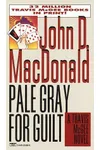
- Pale Gray for Guilt (1968) – A deeply personal case where Travis ruins a corrupt developer's scheme after the death of a close friend.
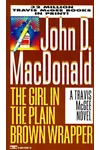
- The Girl in the Plain Brown Wrapper (1968) – A dark investigation into a corrupt Florida town where a wealthy heiress is targeted.
- Dress Her in Indigo (1969) – Travis and Meyer head to Mexico to trace the final days of a wealthy man's rebellious daughter.
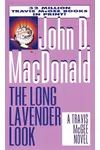
- The Long Lavender Look (1970) – A late-night drive leads to Travis being framed for murder by a corrupt small-town sheriff.
- A Tan and Sandy Silence (1971) – A missing person case hits close to home when the wife of an old acquaintance disappears.
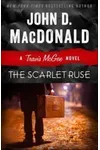
- The Scarlet Ruse (1972) – Travis must solve a complex stamp-collecting fraud, a case that highlights Meyer's intellect.
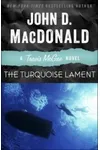
- The Turquoise Lament (1973) – Travis travels to Hawaii and Samoa to investigate a cruise boat mystery involving a young friend's marriage.
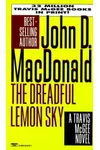
- The Dreadful Lemon Sky (1974) – A late-night visitor leaves a suitcase of cash with Travis, leading to a web of drug smuggling and local corruption.
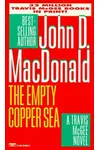
- The Empty Copper Sea (1978) – Travis investigates the suspicious disappearance of a prominent businessman accused of insurance fraud.
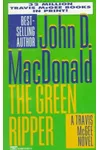
- The Green Ripper (1979) – A dark, revenge-fueled novel that earned MacDonald a National Book Award. Travis tracks down a murderous cult following a devastating personal loss.
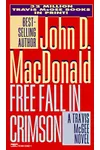
- Free Fall in Crimson (1981) – Travis enters the world of low-budget filmmaking and hot-air ballooning while searching for a dying millionaire's killers.
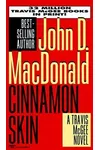
- Cinnamon Skin (1982) – Meyer takes center stage as he and Travis hunt down the man responsible for a tragic boat explosion.
- The Lonely Silver Rain (1985) – The final novel. Travis searches for a stolen yacht, leading to a shocking revelation that changes his life and brings the series to a satisfying close.
What to Know Before You Start: The McGee Philosophy
Before you step onto Bahia Mar Slip F-18, it is useful to understand who Travis McGee is. He is not a licensed private eye, a rogue cop, or a typical detective. He calls himself a "salvage consultant." His business model is simple: he only works when his bank account runs low, and he only recovers things that have been stolen. He charges his clients a flat 50% fee of the recovered value, keeping half to fund what he calls his "retirement in installments." He prefers to take his retirement throughout his life rather than waiting until he is too old to enjoy it.
McGee resides on the Busted Flush, a luxurious 52-foot barge-type houseboat that he won in a marathon poker game. His neighbor and sidekick, Meyer, is a world-renowned economist who lives nearby on his own boat, the John Maynard. Meyer acts as the intellectual foil to Travis's physical and intuitive approach to solving puzzles. Together, they navigate a shifting Florida that MacDonald viewed with growing concern, frequently using the stories to critique unchecked real estate development and environmental degradation.
Adaptations and the Myth of the 'Lost' Book
The success of the Travis McGee books naturally attracted Hollywood, though screen translations have been sparse and polarizing for fans. In 1970, Rod Taylor starred as McGee in a theatrical adaptation of Darker Than Amber. While the film is famous for a brutal, highly realistic hotel room fight scene, it failed to perform well enough at the box office to launch a franchise. In 1983, a television movie titled Travis McGee starred Sam Elliott. This adaptation based on The Empty Copper Sea relocated the action to California and replaced the iconic Busted Flush with a sailboat named Bequia, updates that draw criticism from purists to this day.
For decades, a popular rumor circulated among mystery readers about a legendary 22nd novel. According to fan speculation, MacDonald wrote a final, unpublished manuscript in which Travis McGee is killed off, supposedly titled A Black Border for McGee or Black Border for a Shroud. However, MacDonald’s family and literary estate have repeatedly confirmed that no such manuscript exists. The 21 novels remain the complete and official canon of Travis McGee's adventures.