
How to Read the Tree of Ages Series
Sara C. Roethle’s Tree of Ages is a self-published epic fantasy series heavily inspired by Celtic mythology, Norse folklore, and Druidic magic. The narrative follows Finn, a unique protagonist who spent a century as an oak tree before suddenly awakening in a human form with no memory of her past. Over the course of eight novels, Finn must navigate a war-torn land, master wild magic, and confront ancient deities.
Because the series follows a single continuous storyline centered on Finn's development and the evolving state of the world, there is only one logical way to read it: in chronological order, which matches the publication order. The series is divided into two distinct story arcs: the original Core Arc (Books 1–5) and the Dawn of Magic continuation arc (Books 6–8). Although the latter is sometimes marketed as a separate trilogy or sequel series, it features the same protagonist and directly resolves the plot threads established in the first five books.
Tree of Ages: The Complete Reading Order
Here is the recommended reading order for the entire saga, tracking both the original publication timeline and the narrative progression:
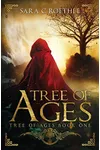
- Tree of Ages (2015)
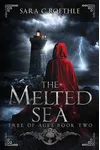
- The Melted Sea (2016)
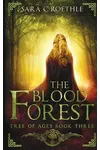
- The Blood Forest (2017)
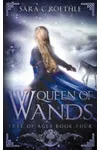
- Queen of Wands (2017)
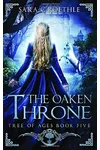
- The Oaken Throne (2018)
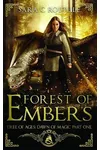
- Forest of Embers (2018) – Dawn of Magic Book 1
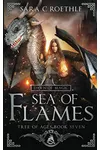
- Sea of Flames (2020) – Dawn of Magic Book 2
- City of Ashes (2021) – Dawn of Magic Book 3
The Core Arc: Tree of Ages (Books 1–5)
The first half of the series introduces readers to Finn and establishes the magical rules of the world. Finn starts her journey in the opening novel, Tree of Ages, waking up disoriented in a meadow. Having lived as a tree for over a hundred years, she struggles with the physical sensations of being human and the complete loss of her memories. She soon teams up with Àed, a kind-hearted conjurer, to evade dark forces that seek to capture her for the mystery she represents.
As the series progresses into The Melted Sea, the threat of the Tuatha Dé looms large, throwing the land into chaos. Mages and the elusive Faie face persecution, and Finn is abducted by an unseen enemy, forcing her to determine who she can truly trust. In The Blood Forest, Finn seeks to reclaim her lost memories by traveling back to Greenswallow, her quiet home meadow, while trying to aid her companion, the stoic sellsword Iseult. By Queen of Wands, Finn's memories are restored, forcing her to confront a complex birthright and seek justice for past betrayals. The core arc comes to a head in The Oaken Throne, where humanity is pushed to its limits by war, setting up the shifting magical landscape that defines the next chapter of the story.
The Continuation Arc: Dawn of Magic (Books 6–8)
Following the events of The Oaken Throne, the series continues with the Dawn of Magic subseries. While some online retailers and libraries list these three books as a spin-off, they are the necessary conclusion to Finn's story. Reading them is essential to experiencing the complete narrative.
This arc begins with Forest of Embers, where Finn realizes that her actions to break the barrier to the "in-between" have had disastrous consequences. Instead of bringing peace, she has plunged the world into chaos, pitting magical mages against ordinary humans, while an ancient god rises to punish those who altered the balance. In Sea of Flames, the stakes increase as dragons and gods enter the fray. Finn is forced to make a perilous bargain with a dragon, threatening her very identity to obtain the power needed to stand against warring deities. The entire epic concludes with City of Ashes, in which Finn stops running and stands her ground in a final, explosive battle alongside the mages of Ealasaid to prevent their world from crumbling to dust.
What to Know Before You Start
Before diving into the series, readers should prepare for a story that relies heavily on atmospheric world-building and character relationships. Finn is a highly unconventional protagonist; her background as a tree gives her a unique perspective on human behavior, nature, and the passage of time. Her relationships with Àed and Iseult form the emotional core of the books, shifting the story away from standard military fantasy and toward an intimate quest of self-discovery.
The magic system is rooted in nature and Druidic lore, drawing heavily on Irish and Norse legends. The Tuatha Dé, the Faie, and ancient elemental forces behave less like typical high-fantasy creatures and more like the capricious, dangerous entities found in traditional folklore. Because the series was self-published, the pacing is brisk and the books are relatively short, making it an accessible read for fans of Young Adult and Epic Fantasy alike.
Reading Caveats and Standalones
Due to the continuous nature of Finn's quest, none of the books in the Tree of Ages series can be read as standalones. Starting with any book other than the original 2015 novel will leave readers confused about the characters' histories, the complex political tensions between mages and humans, and the nature of Finn's powers. Furthermore, readers should not skip the Dawn of Magic books, as the first five books do not provide a final resolution to the overarching conflict surrounding the return of ancient magic.