
The Recommended Twilight Reading Order
If you are dive-bombing into Forks, Washington for the very first time, the absolute best way to experience the story is in Publication Order. Reading the core books as they were released preserves the mystery, character reveals, and emotional pacing of Bella Swan's journey exactly as Stephenie Meyer intended. You get to discover the Cullens, the Quileute pack, and the Volturi naturally, without companion spoilers ruining the tension.
Here is the recommended reading path for first-time readers:
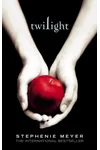
- Twilight (2005) – The novel that started it all. Bella Swan moves to the rainy town of Forks and meets the mysterious Edward Cullen, sparking a dangerous and beautiful romance.
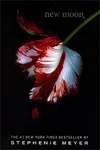
- New Moon (2006) – Heartbreak and healing. When Edward leaves Forks to protect Bella, she finds comfort and secrets in her deep friendship with Jacob Black.
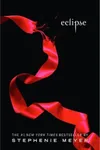
- Eclipse (2007) – High stakes and hard choices. With a vengeful vampire army closing in, Bella must choose between her love for Edward and her bond with Jacob.
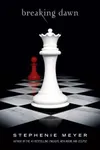
- Breaking Dawn (2008) – The epic conclusion. Bella's human chapter comes to a dramatic end with a wedding, a miraculous pregnancy, and a standoff against the Volturi.
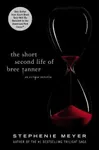
- The Short Second Life of Bree Tanner (2010) – A novella focusing on the tragic perspective of a newborn vampire from Victoria’s army during the events of Eclipse.
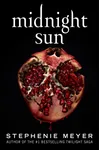
- Midnight Sun (2020) – The first book, Twilight, completely retold from Edward Cullen's perspective. It offers a deeper, darker, and more intense look at his internal struggles and family history.
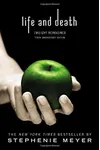
- Life and Death: Twilight Reimagined (2015) – A gender-swapped tenth-anniversary retelling of Twilight featuring Beau Swan and Edythe Cullen.
Publication Order of the Twilight Saga
For those tracking the physical release history, the books hit shelves in this order. Note that companion novellas and retellings arrived years after the main four-book arc concluded. (Note: While some databases list The Short Second Life of Bree Tanner as a 2009 release, official publication occurred in June 2010. Additionally, Life and Death debuted in 2015 as part of the tenth-anniversary flip-book, with a standalone paperback following in 2016.)
- Twilight (2005)
- New Moon (2006)
- Eclipse (2007)
- Breaking Dawn (2008)
- The Short Second Life of Bree Tanner (2010)
- Life and Death: Twilight Reimagined (2015)
- Midnight Sun (2020)
Chronological Twilight Order (And Where the Companions Fit)
If you are a seasoned 'Twihard' looking to mix up your next re-read, a chronological or parallel approach can shed fresh light on the characters. This structure aligns the spin-offs and companion stories directly alongside the timeline of the primary narrative.
- Twilight / Midnight Sun (Parallel View): Midnight Sun runs concurrently with the events of Twilight. Some fans enjoy reading them side-by-side (chapter by chapter) or reading Midnight Sun immediately after the first book. It highlights how differently Edward interprets Bella’s actions compared to her own internal monologue.
- New Moon: Follows immediately after the events of the first book.
- Eclipse / The Short Second Life of Bree Tanner: The Bree Tanner novella takes place during the latter half of Eclipse. For the ultimate timeline experience, read Eclipse up to Chapter 21, pause to read Bree's short story to understand the preparation of the newborn army, and then return to Eclipse to finish the battle.
- Breaking Dawn: The grand finale that wraps up the main narrative arc.
- Life and Death: Twilight Reimagined: Since this gender-swapped version functions as a standalone, alternate-universe retelling with a significantly different ending, it should be read last as a fun 'what-if' experiment rather than integrated into the main timeline.
Exploring the Subseries, Companions, and Graphic Novels
Beyond the novels, Stephenie Meyer has expanded the universe with companion guides, journals, and beautifully illustrated graphic novels. If you want to consume absolutely everything Twilight has to offer, here are the collections:
The Official Companions
- The Twilight Journals (2009) – A set of four decorative journals containing quotes and art from the novels.
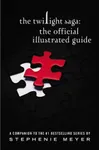
- The Twilight Saga: The Official Illustrated Guide (2011) – The ultimate encyclopedia for fans. It features character profiles, backstories, family trees, maps, and detailed lore explanations that didn't make it into the novels.
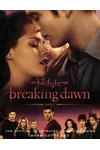
- Breaking Dawn Part 1: The Official Illustrated Movie Companion (2011) – A behind-the-scenes look at the film adaptation.
The Graphic Novels
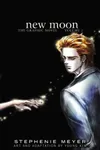
Young Kim adapted and illustrated the early books into gorgeous graphic novels under Stephenie Meyer's close supervision. They are a wonderful visual treat for fans of the original books.
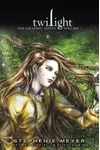
- Twilight: The Graphic Novel, Vol. 1 (2010)
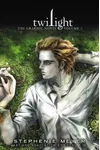
- Twilight: The Graphic Novel, Vol. 2 (2011)
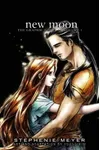
- New Moon: The Graphic Novel, Vol. 1 (2012)
- New Moon: The Graphic Novel, Vol. 2 (2013)
What to Know Before You Start
Before you dive into this atmospheric Pacific Northwest fantasy, here are a few practical tips to keep in mind:
Are the books standalones? No. The main four novels (Twilight, New Moon, Eclipse, and Breaking Dawn) form a continuous, linear story. Reading them out of order will leave you thoroughly confused about the characters, lore, and romantic dynamics. The companion works, however, can be read selectively depending on your interest.
Why Forks? Stephenie Meyer famously chose Forks, Washington because she wanted a setting that was consistently gloomy and rainy—the perfect environment for vampires who sparkle in direct sunlight to live a relatively normal public life.
The Tone: The series is written in a highly emotional, romantic, and first-person style. Bella's perspective is deeply introspective, while Edward's perspective in Midnight Sun leans heavily into self-reflection, angst, and centuries of vampire lore.