
The Recommended Reading Order
For the best reading experience, it is highly recommended to follow the publication order of the Tyrant series. This allows you to experience the natural progression of the characters, the evolving geopolitical conflicts of the Hellenistic world, and the transitions between protagonists. However, incorporating the companion novella and the standalone novel in specific positions can enrich your understanding of the lore.
Here is the recommended reading path for Christian Cameron’s Tyrant saga:
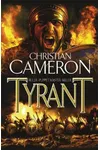
- Tyrant (2008) — The opening novel introducing Kineas, an Athenian cavalry officer exiled to Olbia.
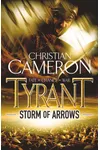
- Storm of Arrows (2009) — The direct sequel focusing on Kineas leading a coalition of Greeks and Scythians.
- Leon's Story (Novella, 2.5) — A companion short story focusing on Leon, one of Kineas's trusted cavalry troopers.
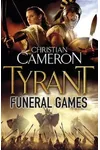
- Funeral Games (2010) — The start of the second major arc, shifting focus to the Bosporan twins, Satyrus and Melitta, fleeing in the wake of their mother's murder.
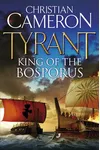
- King of the Bosporus (2011) — Continues the story of the twins as they struggle to reclaim their kingdom amidst the warring Successors.
- Alexander: God of War (Standalone novel, 2012) — A companion biography of Alexander the Great. While chronologically a prequel, it features a framing narrative where Ptolemy tells the story to Satyrus.
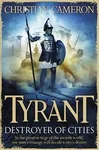
- Destroyer of Cities (2013) — The twins navigate the high-stakes Siege of Rhodes and choose sides among the Successors.
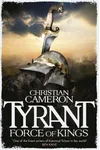
- Force of Kings (2014) — The climactic final novel detailing the culmination of the Successors' wars and the fate of the Bosporan kingdom.
Publication Order vs. Chronological Order
While the publication sequence tracks the chronological narrative of the characters well, there is one major piece of chronological flexibility: the standalone novel Alexander: God of War. Because it depicts the life and conquests of Alexander the Great from his youth until his death, it takes place before the events of the first book, Tyrant (which begins in the aftermath of Alexander’s conquests as his empire begins to fracture).
However, reading Alexander: God of War first is not recommended for newcomers. The book features a framing narrative where an aging Ptolemy narrates the history of Alexander directly to Satyrus, one of the central protagonists of the later Tyrant novels. Reading it after King of the Bosporus or Funeral Games ensures you are already familiar with Satyrus, making the frame narrative far more impactful. Additionally, having read the first few books allows you to appreciate the background context of Kineas's time serving under Alexander, which is mentioned during the events of the standalone.
What to Know Before You Start
Christian Cameron is a trained classicist and a historical reenactor, and this background shines through in every page of the Tyrant series. Unlike historical fiction that relies on Hollywood tropes, Cameron's battle scenes are famous for their realism. Readers will experience the physical weight of bronze armor, the tactical realities of cavalry maneuvers on the Scythian steppes, and the logistics of ancient siege warfare.
The series is divided into two primary acts, separated by a shift in protagonists:
The Kineas Duology (Books 1 & 2)
The first two books, Tyrant and Storm of Arrows, focus on Kineas, a battle-hardened Athenian cavalry commander who served under Alexander the Great. Returning to Athens, he finds himself politically undesirable and is exiled. He travels to the Black Sea city of Olbia to train their forces, finding himself caught between local political schemes, the fierce nomadic Scythians, and the looming threat of Macedonian dominance.
The Bosporan Succession Saga (Books 3–6)
Beginning with Funeral Games, the series shifts forward in time and pivots to a new set of protagonists: the twins Satyrus and Melitta, heirs to the Bosporan throne. Following the murder of their mother, they are forced to flee into a world torn apart by the Diadochi (the Successors of Alexander). Their journey spans the Mediterranean, involving them in major historical events like the epic Siege of Rhodes in Destroyer of Cities.
Practical Reader Advice
If you are deciding how to approach this series, keep these practical tips in mind:
- Do not skip to the later books: While the protagonists change between Books 2 and 3, the political landscape, the legacy of Kineas, and the overarching plot threads carry over. Starting with Funeral Games is possible but will cause you to miss key context regarding the Greek-Scythian alliance and the setting's history.
- Standalone potential: None of the core Tyrant books function well as standalone novels. Each book builds directly on the cliffhangers and political fallout of the previous installment. However, Alexander: God of War can be read completely independently as a standalone historical biography if you are looking for a deep dive into Alexander's campaign.
- The role of Leon's Story: This short story is not essential to understanding the main plot, but it offers a ground-level perspective of the cavalry veterans under Kineas. It is best enjoyed immediately after finishing Storm of Arrows to bridge the gap before the perspective shifts in Funeral Games.