

The Recommended Solar Cycle Reading Path
For almost all readers, the best path through Gene Wolfe's monumental 12-novel science-fantasy masterpiece is the publication order. Because each sub-series builds upon the thematic foundations, cosmic revelations, and narrative layers of the ones before it, skipping around will dilute the mysteries and undermine the growth of Wolfe's famous unreliable narrators.
Here is the recommended reading path through the cycle:
Phase 1: The Book of the New Sun
This is where the cycle begins. It follows Severian, an apprentice in the Guild of Torturers in the far-future city of Nessus on a dying Earth (Urth). After committing the ultimate sin of showing mercy to a prisoner, he is exiled to a distant province, setting off a mythic journey that will decide the fate of his entire planet.
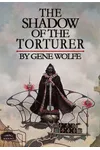
- The Shadow of the Torturer (1980): Severian is expelled from his guild and begins his travels.
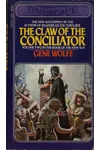
- The Claw of the Conciliator (1981): Severian acquires a strange, miracle-working gem and deepens his journey.
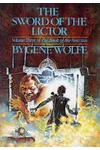
- The Sword of the Lictor (1982): As Lictor of Thrax, Severian faces ancient creatures, monstrous entities, and difficult moral choices.
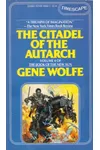
- The Citadel of the Autarch (1983): The climax of Severian's initial journey as he confronts the dying ruler and is selected to face a cosmic trial.
Phase 2: The Coda
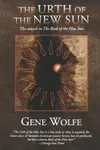
- The Urth of the New Sun (1987): Written as a sequel and coda to the original tetralogy, this book follows Severian's journey into space and time to bring the 'New Sun' that will rejuvenate Urth. It bridges the gap between the original series and the cosmic scale of the later books.
Phase 3: The Book of the Long Sun
This sub-series takes place in the same universe but shifts to a completely different setting: a massive generation ship called the Whorl. We follow Patera Silk, a humble priest who receives a divine revelation from an outsider god and is thrust into a political revolution. While the setting and characters are fresh, it sets up critical elements for the final phase of the cycle.
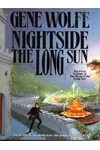
- Nightside the Long Sun (1993): Silk begins his quest to save his school from a ruthless crime boss.
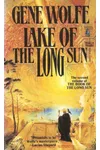
- Lake of the Long Sun (1994): Tensions rise inside the Whorl as Silk becomes a central figure in a growing rebellion.
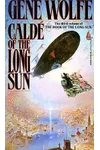
- Caldé of the Long Sun (1994): Silk is elevated to a political leader, navigating civil war.
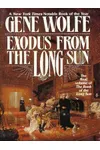
- Exodus from the Long Sun (1996): The dramatic conclusion of the Whorl's crisis as its inhabitants prepare to flee.
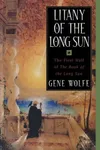
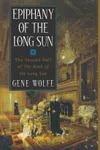
Note on Omnibuses: Due to their size, these four novels are frequently collected into two omnibus volumes: Litany of the Long Sun (1994, combining the first two books) and Epiphany of the Long Sun (1996, combining the final two books).
Phase 4: The Book of the Short Sun
The final trilogy is a direct sequel to the Long Sun. It follows colonists who have left the Whorl to settle on two sister planets, Blue and Green. The story is narrated by a man named Horn, who travels back to the Whorl to find his old mentor Silk, only to return changed in ways he cannot fully explain. It brings the entire Solar Cycle to a profound, circular conclusion.
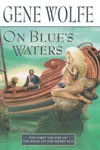
- On Blue's Waters (1999): Horn sets sail across the oceans of Blue to locate Silk.
- In Green's Jungles (2000): The narrative shifts between Horn's past exploits on the wild world of Green and his current state.
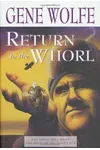
- Return to the Whorl (2001): The final volume where the threads of the New, Long, and Short suns tie together in a brilliant climax.
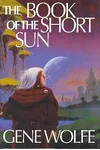
Note on Omnibuses: The Book of the Short Sun (2001) is also the name of a single-volume Science Fiction Book Club (SFBC) hardcover omnibus collecting all three novels in this phase.
Publication Order vs. Chronological Order
While the internal chronology of the Solar Cycle generally matches the publication order (moving from the far-future dying Urth, to the Whorl generation ship, to the settlement of the new planets), the presence of time travel, memory lapses, and cosmic recursion makes a strict 'chronological' reading impossible. Severian's memories are not always linear, and the entities he encounters operate outside conventional timelines. Attempting to rearrange the novels based on internal events will only spoil the dramatic irony and puzzle-solving aspects that make Wolfe's work so celebrated.
What to Know Before You Start
Gene Wolfe's writing is notoriously demanding but immensely rewarding. Here are a few tips to help you navigate your first read-through:
- Expect an Unreliable Narrator: Severian has a photographic memory, but he chooses what to tell you, what to omit, and how to frame his actions. What he describes as 'magic' is often ancient, high-level technology that he does not fully comprehend.
- Pay Attention to Vocabulary: Wolfe does not invent words. Instead, he uses archaic, rare, and specialized English words (like fuligin, cacogen, or patera) to translate concepts from his future setting. Having a dictionary or a companion guide nearby is highly recommended.
- Rereading is Part of the Design: The Solar Cycle is designed to be read more than once. Passages that seem obscure or confusing on your first pass will suddenly make perfect sense once you have completed the series and understand the underlying truths.
Tie-Ins, Companions, and Supplemental Materials
If you want to dive deeper into the lore of the Urth cycle, several companion books and side stories can enrich your experience:
- Lexicon Urthus: A Dictionary for the Urth Cycle (by Michael Andre-Driussi): An invaluable, fan-favorite resource that acts as an alphabetical guide to the archaic terms, historical figures, and obscure words used throughout the series.
- The Castle of the Otter (1982): A collection of essays by Gene Wolfe himself where he discusses the naming conventions, writing process, and structure of The Book of the New Sun. It was later reprinted in his collection Castle of Days (1992).
- The Fifth Head of Cerberus (1972): While not officially part of the Solar Cycle, this novella collection deals with cloning, shifting identities, and unreliable narration, and is often considered a thematic 'dress rehearsal' for Wolfe's later masterpiece.
- Supplemental Short Stories: Wolfe wrote several short stories set in or connected to the Solar Cycle. 'The Cat' and 'The Map' (available in the collection Endangered Species) add flavor to Severian's world, while 'The Night Chough' (in the collection Innocents Aboard) provides extra depth to the characters of the Long Sun.