

Where to Begin Your March: The Recommended Reading Order
Robert Fabbri’s Vespasian series is a sprawling, nine-novel historical fiction epic that details the rise of Titus Flavius Vespasianus from a humble youth in the Sabine hills to the ultimate seat of power as the Emperor of Rome. Alongside the core novels, Fabbri penned a series of companion novellas detailing the gritty criminal underworld of Rome through the eyes of Vespasian's fixer and ally, Marcus Salvius Magnus.
For the best reading experience, most fans and critics recommend reading the series in Publication Order. Because the core novels are written to chronicle Vespasian’s life chronologically, the publication order naturally aligns with his aging and career advancement. The novellas, which focus on Magnus and his street gang, can be read as companions after finishing the main novels, or inserted into the chronology to flesh out the back-alley politics of Rome.
The Core Novels in Publication Order
The core series consists of nine main novels published between 2011 and 2019. This main sequence is straightforward and should be read in this exact order:
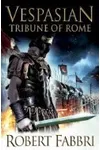
- Tribune of Rome (2011) – Introduces a sixteen-year-old Vespasian in 26 AD as he leaves his quiet family home for the chaotic, politically lethal streets of Rome.
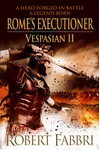
- Rome's Executioner (2012) – Set in 30 AD, Vespasian serves as a military tribune in Thrace and is sent on a high-stakes mission to secure a witness who can destroy the imperial favorite, Sejanus.
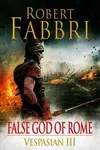
- False God of Rome (2013) – Set in 34 AD, Vespasian navigates the depraved and unpredictable court of Emperor Caligula while carrying out a perilous mission in Alexandria.
- Rome's Fallen Eagle (2013) – Set in 41 AD, Vespasian serves as a legate in Germany and prepares for the Roman invasion of Britannia under Emperor Claudius.
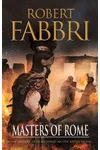
- Masters of Rome (2014) – Set in 45 AD, Vespasian returns from the invasion of Britain as a celebrated hero, only to find himself ensnared in the deadly conspiracies of Rome's imperial palace.
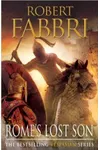
- Rome's Lost Son (2015) – Set in 51 AD, Vespasian is dispatched to the eastern frontier of Armenia to secure Roman influence and find a missing Roman boy.
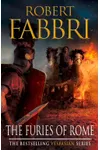
- The Furies of Rome (2016) – Set in 58 AD, Vespasian is sent to govern Africa and later leads campaigns in Britain during Boudica's rebellion.
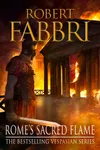
- Rome's Sacred Flame (2018) – Set in 63 AD, Vespasian deals with the aftermath of Rome's Great Fire and the mounting madness of Emperor Nero.
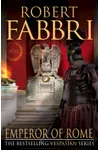
- Emperor of Rome (2019) – Set in 68–69 AD during the infamous Year of the Four Emperors, Vespasian leads the Roman forces in Judaea before claiming the imperial throne himself.
The Crossroads Brotherhood Novellas
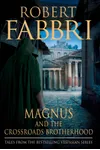
Parallel to Vespasian's military and political career runs the story of Marcus Salvius Magnus, the leader of the South Quirinal Crossroads Brotherhood. These novellas explore the gang warfare, rigged chariot races, and illicit dealings that keep the Roman underworld running. They were originally released as digital-only stories before being collected in the print compilation Magnus and the Crossroads Brotherhood (2020). The individual stories include:
- The Crossroads Brotherhood (2011) – Set in 25 AD, this story serves as a direct prequel to the entire series, showing how Magnus first established his gang.
- The Racing Factions (2013) – Set in 33 AD, Magnus gets involved in the dangerous and highly corrupt world of Rome’s chariot racing teams.
- The Dreams of Morpheus (2014) – Set in 34 AD, Magnus is tasked with locating a stolen drug supply in the dark alleys of the capital.
- The Alexandrian Embassy (2015) – Set in 39 AD, Magnus travels to Egypt on a delicate mission to protect imperial interests.
- The Imperial Triumph (2017) – Set in 44 AD, Magnus returns from campaigning in Britannia to re-establish control over his territory.
- The Succession (2018) – Set in 51 AD, Magnus investigates the murder of a prominent astrologer whose illegal horoscopes threaten Rome's elite.
The Ultimate Chronological Integration
If you want to experience the complete saga in strict historical order, you can interlace the novellas directly with the novels. The timeline flows as follows:
- The Crossroads Brotherhood (Novella, 25 AD)
- Tribune of Rome (Book 1, 26–30 AD)
- Rome's Executioner (Book 2, 30–38 AD)
- The Racing Factions (Novella, 33 AD)
- False God of Rome (Book 3, 34–41 AD)
- The Dreams of Morpheus (Novella, 34 AD)
- The Alexandrian Embassy (Novella, 39 AD)
- Rome's Fallen Eagle (Book 4, 41–43 AD)
- The Imperial Triumph (Novella, 44 AD)
- Masters of Rome (Book 5, 45–51 AD)
- The Succession (Novella, 51 AD)
- Rome's Lost Son (Book 6, 51–58 AD)
- The Furies of Rome (Book 7, 58–63 AD)
- Rome's Sacred Flame (Book 8, 63–68 AD)
- Emperor of Rome (Book 9, 68–69 AD)
What to Know Before You Start
Robert Fabbri's depiction of ancient Rome stands out for its balance of historical accuracy and cinematic pacing. Fabbri holds a degree in Drama and spent twenty-five years in the film industry as an assistant director, a background that clearly influences the visceral action sequences and dialogue in the novels. While the series introduces historical giants such as Caligula, Nero, Claudius, and Vespasian's real-life brother Sabinus, Fabbri also masterfully weaves fictional elements like Magnus to explore the unseen underworld. Readers should be prepared for a gritty, sometimes violent, but highly entertaining journey through the political and military arenas of the first century.