
How to Read the Videssos Universe: Recommended Order
For the best experience, we strongly recommend reading the Videssos series in publication order. Even though the saga spans multiple eras across a vast historical timeline, starting with the original Videssos Cycle (often called the Legion series) provides the essential introduction to the world's magic, religion, and geography. Harry Turtledove wrote these books with the assumption that readers are learning about this unique world alongside a displaced Roman legion.
The Recommended Reading Path
- The Videssos Cycle (Legion Series): Start here. Follow a lost Roman legion magically transported to the empire.
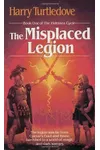
- The Misplaced Legion (1987)
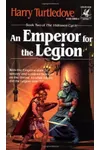
- An Emperor for the Legion (1987)
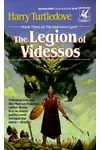
- The Legion of Videssos (1987)
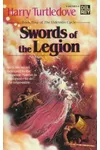
- Swords of the Legion (1987)
- The Tale of Krispos: A prequel trilogy set centuries earlier, exploring the rise of one of Videssos's greatest rulers.
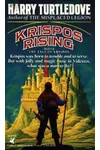
- Krispos Rising (1991)
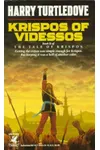
- Krispos of Videssos (1991)
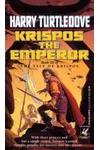
- Krispos the Emperor (1994)
- The Time of Troubles: Another prequel series, set chronologically between Krispos and the original cycle, depicting a massive civil war and invasion.
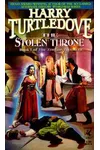
- The Stolen Throne (1995)
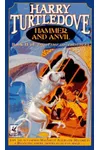
- Hammer and Anvil (1996)
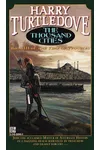
- The Thousand Cities (1997)
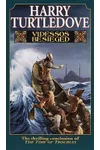
- Videssos Besieged (1998)
- Standalone Prequel Novel: A final retrospective visit to the empire's founding history.
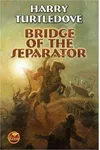
- Bridge of the Separator (2005)
Publication Order vs. Chronological Order
Because Turtledove populated this universe through prequels, reading in chronological order turns the publication sequence almost completely on its head. If you choose to follow the internal timeline of the Videssian Empire, the reading order is as follows:
- "The Decoy Duck" (Short Story, 1992) – The earliest chronological tale, exploring missionary work in Haloga.
- Bridge of the Separator (Novel, 2005) – Explores the breakdown of the schism that shapes the empire's history.
- The Time of Troubles Series (1995–1998) – A four-part epic starting with The Stolen Throne and ending with Videssos Besieged.
- The Tale of Krispos Series (1991–1994) – The life and reign of Krispos.
- The Videssos Cycle (1987) – The arrival of the Roman Legion, ending with Swords of the Legion.
The Verdict: Avoid the chronological route for your first read. Prequels like Bridge of the Separator and the Time of Troubles series dive straight into complex theological disputes and political structures that are much easier to appreciate once you have established a foundation with the original Roman legion tetralogy.
The Major Subseries Explained
The Videssos Cycle
This is the core of the series. During a skirmish in Gaul, a Roman tribune named Marcus Scaurus and his Celtic opponent Viridovix clash with magical swords. The resulting spell rips Marcus's legion out of our world and drops them into Videssos. Here, they must adapt their rigid military discipline to a land dominated by magic and a complex, highly civilized court. It is the perfect entry point because the Romans act as the reader's proxy, asking questions and learning about the realm's rules.
The Tale of Krispos
Set roughly 500 years before the legion's arrival, this trilogy follows Krispos, a simple peasant boy who ascends to the throne of the Videssian Empire. Unlike the military-focused Legion books, this series dwells on the administrative, religious, and political machinations of the capital city, offering a rich character study of leadership and power.
The Time of Troubles
Chronologically situated between Krispos and the Legion cycle, this subseries covers a devastating era of civil war, foreign invasion by the Yezd sorcerers, and internal religious turmoil. It provides deep historical context for the geopolitical landscape that Marcus Scaurus and his men eventually inherit.
The Standalone & Short Stories
Turtledove wrote a few pieces of short fiction to expand the universe. "A Difficult Undertaking" (1986) showcases military strategy under siege. "The Seventh Chapter" (1997) deals with a localized religious dispute, while "The Decoy Duck" (1992) is a prequel detailing early religious conflicts with northern neighbors.
What to Know Before You Start
Harry Turtledove holds a Ph.D. in Byzantine history, and this academic background is the lifeblood of Videssos. The empire's capital, the complex bureaucracy, the absolute monarch, and the constant threat of northern barbarians and eastern empires are directly modeled on Constantinople and its real-world struggles. Additionally, the dominant religion of Videssos, centered on the good god Phos and the evil Skotos, is heavily inspired by dualistic Zoroastrianism and Manichaeism. Expect a heavy emphasis on military tactics, historical realism, religious politics, and slow-burn worldbuilding rather than high-magic wizard battles.