


The Recommended Reading Order for Warstrider
When starting the Warstrider series, there is no need to overcomplicate your reading path. The chronological storyline follows the exact sequence in which the books were published. The narrative is a continuous, evolving epic centering on the life, military career, and philosophical evolution of Devis 'Dev' Cameron. Skipping around or reading the books out of order will ruin the character progression, the escalating technological scale, and the complex political shifts of this 26th-century universe.
To get the most out of the series, read the books in this recommended order:
- Warstrider (1993) – The essential starting point. This book introduces Dev Cameron, the harsh desert planet of Loki, the terrifying, nanotechnology-wielding Xenophobes, and the ground-level mechanics of piloting a multi-legged warstrider.
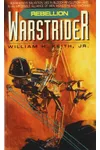
- Rebellion (1993) – The conflict shifts from humans-versus-aliens to internal political strife. Dev is caught between his loyalty to the military and his growing realization of the oppressive nature of the Earth-ruling Japanese Hegemony.
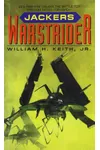
- Jackers (1994) – This installment focuses heavily on the technology of direct neural-link interfaces. Pilots, known as 'jackers,' merge their minds with their war machines, exploring the psychological costs of human-machine integration.
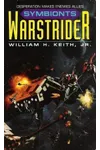
- Symbionts (1995) – The scope expands as humanity encounters the DalRiss, a bizarre, organic-technology-using alien race. Dev must navigate the difficulties of communicating with a genuinely non-human consciousness to forge an alliance.
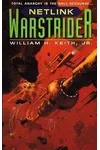
- Netlink (1995) – As neural network technology advances, the boundary between individual minds and the collective network begins to blur, setting up the transhumanist themes that define the end of the series.
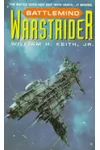
- Battlemind (1996) – The dramatic climax to the original hexalogy. Humanity and their alien allies must unite to face the ultimate threat: a galaxy-spanning, collective artificial intelligence known as the Web.
- The Ten Billion Gods of Heaven (2015) – A follow-up novella published nearly twenty years after the original series ended. It serves as a direct sequel, catching up with Dev Cameron and exploring the long-term consequences of the events in Battlemind.
Publication Order vs. Chronological Order
For the Warstrider saga, publication order and chronological order are identical. William H. Keith Jr. (writing under the pseudonym Ian Douglas) wrote the core hexalogy between 1993 and 1996 as a single, linear storyline. The only minor deviation in the publishing history is the novella The Ten Billion Gods of Heaven, which was released in 2015 during a digital revival of the series. Because it takes place after the events of Battlemind, it fits naturally at the end of both your publication and chronological reading lists.
Unlike other sci-fi universes that bounce around with prequels, spin-offs, and side stories written by different authors, Warstrider remains a tightly controlled, single-author narrative. This makes tracking the series refreshingly simple for new readers.
What to Know Before You Start
Before diving into the cockpit of a warstrider, there are a few unique historical and thematic contexts that will enrich your reading experience:
The BattleTech Connection
Author William H. Keith Jr. is a legendary figure in tabletop gaming and sci-fi fandom, particularly renowned for his early BattleTech novels, including the famous Gray Death Legion trilogy. If you are a fan of BattleTech, you will immediately recognize his signature attention to tactical detail, mechanical realism, and the logistics of armored warfare. However, the 'warstriders' in this series are not humanoid, Gundam-style robots; they are low-slung, multi-legged armored weapon platforms designed for stability, realistic physics, and heavy payloads in extreme planetary environments.
The 1980s Japanese Hegemony Trope
Written in the early 1990s, the series reflects a common trope of late-20th-century science fiction: the projection of Japan as the dominant global economic and technological superpower. In the Warstrider universe, Earth and its colonies are ruled by a neo-feudal, Japanese-dominated Hegemony. Keith integrates Japanese terms, cultural hierarchies, and political structures into the military hierarchy, creating a unique socio-political backdrop that contrasts sharply with the Western-centric military sci-fi of its era.
The Shift from Mechs to Metaphysics
While the first book reads like a gritty, ground-level military action novel, the series rapidly evolves. As the books progress, the focus expands from mechanical mech battles to high-concept hard science fiction. You will encounter deep explorations of nanotechnology, transhumanism, neural networks, collective consciousness, and the difficulty of communicating with truly alien biology (the DalRiss) and machine intelligences (the Web).
Practical Reader Guidance
Are the books standalones? No. While the first novel, Warstrider, can be enjoyed as a self-contained military operation, it sets up characters and conflicts that are left unresolved. The subsequent novels rely heavily on the events of the previous books. Reading them out of order is not recommended, as characters die, political alliances shift permanently, and the technology undergoes massive generational leaps from one book to the next.
Availability: The original Avon paperback editions from the 1990s can be difficult to find in physical bookstores, though they are often available via online used book retailers. Fortunately, the entire series—including the 2015 novella—was re-released in digital format, making ebooks the most accessible way to read the complete saga today.