
The Recommended Reading Order for the Were Chronicles
Because the Were Chronicles is a tightly knit, continuous trilogy following the journeys of the Marsh family and their allies, there is only one recommended way to read the series: in its original publication order. The narrative builds sequentially, with each book shifting focus to a different protagonist and expanding the stakes of the overarching rebellion against systemic discrimination.
- Random (2014) – Focuses on Jasmine "Jazz" Marsh, a "Random" Were whose first Turn throws her family and the authorities into chaos.
- Wolf (2015) – Focuses on Malcolm "Mal" Marsh, Jazz's brother, who struggles with isolation and seeks path to redemption among the secretive Lycan clan.
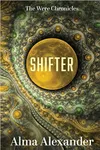
- Shifter (2016) – Focuses on Chalky, a true Shifter capable of taking any shape, as he unites with Jazz and Mal to confront a massive anti-Were conspiracy.
If you prefer to have the entire story in one place, you can also look for the complete omnibus edition, The Were Chronicles, which was released in 2020 and bundles all three novels into a single volume.
Publication Order vs. Chronological Order
For the Were Chronicles, chronological order and publication order are identical. The events of Wolf follow the aftermath of the disruption caused in Random, and Shifter serves as the direct culmination of the plotlines introduced in the first two volumes. Reading the books out of order is highly discouraged, as the character developments, family secrets, and the escalating political tensions between Weres and "normals" will not make sense without the context of the preceding books.
What to Know Before You Start
Before diving into Alma Alexander's world, it helps to understand the unique lore that sets this series apart from traditional werewolf fantasy:
The Scientific Twist on Shapeshifting
Alma Alexander holds an MSc in Molecular Biology, and she used her scientific background to construct the rules of her shapeshifters. Rather than relying purely on magic or curses, the shifting mechanics in the Were Chronicles are explained through genetic variables and biological processes, giving the world-building a grounded, speculative science-fiction feel.
The Three Types of Weres
In this universe, Weres are categorized by how they transform:
- Fixed Weres: The majority of Weres, who shift into one specific animal form determined by their genetics.
- Random Weres: A rare group, represented by Jazz Marsh. They do not have a fixed animal form; instead, during their monthly Turn, they shift into whatever warm-blooded creature they happen to look at or are closest to.
- True Shifters: The rarest and most powerful category, represented by Chalky. Shifters are not bound by external cues or specific forms; they can choose to shift into any shape at will.
Allegory and Social Commentary
The series is less of a typical action-packed monster story and more of an allegory for the immigrant experience, xenophobia, and systemic discrimination. Weres in this world are marginalized by human "normals," subjected to strict registration, forced into isolation during their monthly Turns, and required to carry dehumanizing identification cards. The series charts their fight for basic civil rights and acceptance.
Practical Reader Advice
Where should I start?
You should absolutely start with Random. The book sets up the rules of the world, explains the biological nature of the Turn, and introduces the central mystery regarding Jazz's deceased sister, Celia, whose hidden diaries drive much of the plot in the later books.
Are there any co-authored books or spin-offs?
No. The Were Chronicles is a standalone trilogy written entirely by Alma Alexander. There are no co-authored books, spin-offs, companion novellas, or short stories connected to this specific universe, making it a very accessible and manageable series to complete.
Can the books be read as standalones?
No, the books cannot be read as standalones. Random ends with unresolved mysteries, Wolf expands the scope of the family's conflict, and Shifter acts as the final resolution to the overarching conspiracy. To get the full emotional impact and understand the plot, they must be read as a trilogy.