







Where to Begin the Wine of the Gods Multiverse
Pam Uphoff’s Wine of the Gods is an incredibly expansive self-published science fiction and portal fantasy epic. Spanning dozens of novels and novellas, the series follows genetically engineered superhumans possessing psychic abilities, often referred to in-universe as 'magic.' They fight against corporate and societal oppression, escape to parallel Earths, and build new civilizations across a timeline that stretches over 1,500 years.
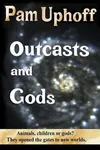
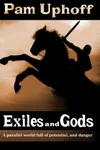
Because the series features overlapping character arcs, parallel universes, and chronological jumps, new readers are often intimidated. The consensus among both fans and the author is that you should start with the core foundational books that establish the universe and its rules. Specifically, the best place to start is the very first book, Outcasts and Gods, followed immediately by Exiles and Gods.
In Outcasts and Gods, we meet Wolfgang Oldham, an enhanced teenager who is treated as corporate property. His rebellion, along with a group of other genetically modified youths, sets off the entire saga. Exiles and Gods continues their journey through a collection of three novellas detailing their struggles to survive and adapt after being banished to a parallel planet.
Publication Order vs. Chronological Order
As the series has grown to over fifty works, the timeline has become what the author herself describes as a 'tangle.' Pam Uphoff has noted on her blog and in discussions on the Mad Genius Club that while she writes the stories sequentially, they frequently branch off to follow different characters or events happening simultaneously in different parts of the multiverse.
This leaves readers with two primary choices for their reading path:
- Publication Order: Highly recommended for first-time readers. Reading the books in the order they were published allows you to experience the world-building as the author created it, slowly peeling back layers of the multiverse and meeting new characters as they are introduced.
- Chronological Order: Best reserved for a re-read. While chronological order attempts to align the events linearly across the 1,500-year history, it can be disorienting. For instance, the late-series novel Spy Wars (published fifth) is pushed to the very end of the chronological list because of where its plot resolves, while other early publications jump back and forth.
For a smooth narrative flow, stick to the publication order for your first journey through this complex sci-fi landscape.
Key Arcs and Subseries to Watch For
While the books are numbered sequentially in publication, they group naturally into minor story arcs or thematic threads:
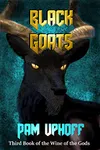
- The Exile and Colonization Arc: Starting with Outcasts and Gods, Exiles and Gods, and Black Goats, this arc focuses on the immediate aftermath of the exile, planetary survival, and the early generations of the enhanced humans.
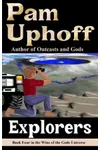
- The Gate Conflicts: Starting around Explorers and continuing through Spy Wars and Earth Gate, these novels cover the geopolitical tension when Earth rediscover the portals and attempts to colonize or exploit the exiles' new home.
- Mages and Magic Development: Books like Growing Up Magic, The God of Assassins, and Professor of Magic focus heavily on the fantasy-like elements of the series, detailing how the exiles' descendants harness and teach their psychic powers.
Complete Publication Order
Here is the complete sequence of the Wine of the Gods books in the order they were originally published. Following this path is the most reliable way to avoid spoilers and appreciate the evolution of the multiverse:
- Outcasts and Gods (2011)
- Exiles and Gods (2011)
- Black Goats (2011)
- Explorers (2011)
- Spy Wars (2012)
- Comet Fall (2012)
- A Taste of Wine (2012)
- Dark Lady (2013)
- Growing Up Magic (2013)
- Young Warriors (2013)
- Saturday Night (2013)
- The God of Assassins (2013)
- Heirs of Crown and Spear (2014)
- The Fiend (2014)
- Dancer (2014)
- Warriors of the One (2014)
- Earth Gate (2014)
- Empire of the One (2014)
- One Alone (2014)
- Mages at Large (2015)
- Triplets (2015)
- Sea Wolves (2015)
- Bad Karma (2015)
- The Dark Side of the Moon (2016)
- Cascades (2016)
- Olympian (2016)
- Embassy (2016)
- Rael (2016)
- On the Run (2016)
- God of the Sun (2017)
- Cannibal World (2017)
- No Confidence (2017)
- Pure Poison (2017)
- Flying (2017)
- Last Merge (2018)
- Nowhere Man (2018)
- Black Point Clan (2018)
- External Relations (2018)
- Meet the Family (2018)
- Children of a Foreign God (2019)
- Lucky Dave (2019)
- A Prophetable Dimension (2019)
- Tales from the Multiverse (2019)
- Guardsman (2019)
- Lost and Found (2019)
- Kaat (2019)
- Marooned (2019)
- Professor of Magic (2019)
- Moles (2019)
- Cyborgs (2020)
- Freshmen (2020)
- War Party (2020)
- Warrior At Large (2020)
- Cool as Ice (2020)
Complete Chronological Order
For readers who want to see how the timelines of the various parallel Earths and generations align historically, use this chronological reading order:
- Outcasts and Gods (2011)
- Exiles and Gods (2011)
- Black Goats (2011)
- Explorers (2011)
- Comet Fall (2012)
- One Alone (2014)
- A Taste of Wine (2012)
- Dark Lady (2013)
- Growing Up Magic (2013)
- The God of Assassins (2013)
- Young Warriors (2013)
- Heirs of Crown and Spear (2014)
- The Fiend (2014)
- Dancer (2014)
- Warriors of the One (2014)
- Earth Gate (2014)
- Mages at Large (2015)
- Triplets (2015)
- Sea Wolves (2015)
- Bad Karma (2015)
- The Dark Side of the Moon (2016)
- Empire of the One (2014)
- Cascades (2016)
- Olympian (2016)
- Embassy (2016)
- Rael (2016)
- On the Run (2016)
- God of the Sun (2017)
- Cannibal World (2017)
- No Confidence (2017)
- Pure Poison (2017)
- Flying (2017)
- Last Merge (2018)
- Nowhere Man (2018)
- Black Point Clan (2018)
- External Relations (2018)
- Meet the Family (2018)
- Children of a Foreign God (2019)
- Lucky Dave (2019)
- A Prophetable Dimension (2019)
- Tales from the Multiverse (2019)
- Guardsman (2019)
- Lost and Found (2019)
- Kaat (2019)
- Marooned (2019)
- Professor of Magic (2019)
- Moles (2019)
- Cyborgs (2020)
- Freshmen (2020)
- War Party (2020)
- Warrior At Large (2020)
- Cool as Ice (2020)
- Saturday Night (2013)
- Spy Wars (2012)
What to Know Before You Start
Pam Uphoff’s series is known for its fast pacing, high-concept world-building, and lighthearted character interactions (including quirky details like characters utilizing magic to turn opponents into purple rabbits). However, it also touches on darker, serious themes such as corporate exploitation, genetic slavery, and the challenges of cultural integration. Because the books are self-published and written at a prolific rate, the style is conversational and direct, focusing heavily on action, dialogue, and rapid universe expansion rather than dense, descriptive prose.