

Since fluttering onto television screens in 2004, the Italian animated franchise Winx Club, created by Iginio Straffi and produced by Rainbow S.p.A., has captured the hearts of fans worldwide. Blending the magical girl anime aesthetic with Western fantasy, the series follows Bloom, an ordinary girl from Earth who discovers she is actually a powerful fairy. Alongside her classmates at the Alfea School for Fairies, Bloom forms the Winx Club to defend the Magic Dimension from the villainous Trix witches and other dark forces.
As the animated show exploded in popularity, it spawned a diverse literary universe. Over the years, publishers like Scholastic and VIZ Media have released chapter books, graphic novels, and activity books to expand on the fairies' adventures. Navigating these releases can be tricky, as they span different eras, television dubs, and formats. This comprehensive guide outlines the recommended reading paths, publication history, and practical reader advice to help you find your footing in the Magic Dimension.
Where to Start Reading Winx Club Books
Because the literary landscape of Winx Club is split between two distinct publishing eras, your starting point depends heavily on your preferred reading format:
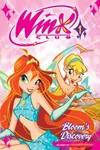
- For Graphic Novel Fans (Recommended): Start with Winx Club Vol. 1: Bloom's Discovery (2012), published by VIZ Media. This series compiles and translates the original Italian comics in chronological sequence, offering the most faithful comic-style adaptation of the fairies' early adventures.
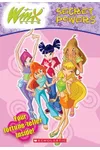
- For Chapter Book Readers: Start with Scholastic's Secret Powers (2005). Written by Michael Anthony Steele, this serves as the narrative beginning of the mid-2000s chapter books, adapting the first few episodes of the animated series where Bloom discovers her powers and joins Alfea.
Scholastic Novelizations and Chapter Books (2005–2007)
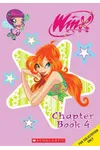
During the mid-2000s, Scholastic secured the rights to publish tie-in books aligned with the 4Kids Entertainment English dub of the show. This run consists of narrative chapter books, specialized "Tele-Novels" featuring television screen grabs, and interactive activity guides. Many of the narrative chapter books were written by author Michael Anthony Steele, while Ellie O'Ryan penned several of the activity-focused releases.
The publication order of the Scholastic books generally matches their chronological progression through the show's first two seasons, though the activity guides can be enjoyed as standalone pieces. Here is the order of the books published during this classic era:
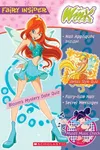
- Fairy Insider (2005) - An interactive guide book by Pam Pollack and Meg Belviso, featuring quizzes, character profiles, and fun tips.
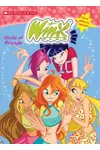
- Circle of Friends (2005) - A friendship-themed coloring and activity book by Ellie O'Ryan.
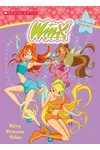
- Fairy Princess Tales (2005) - A storybook by Ellie O'Ryan focusing on the backgrounds of the royal Winx fairies.
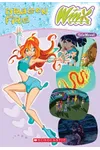
- Dragon Fire (2005) - A Tele-Novel adaptation that utilizes comic-strip formatting and screen frames from the show to retell Season 1, Episode 10.
- Secret Powers (2005) - A chapter book by Michael Anthony Steele adapting Bloom's discovery of her magic and her arrival at Alfea.
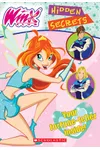
- Hidden Secrets (2005) - A chapter book by Michael Anthony Steele where Bloom begins questioning her identity and faces the Trix.
- Magical Magix (2005) - An early adventure storybook by Ellie O'Ryan exploring life in the city of Magix.
- What Are Friends For (2005) - A storybook by Ellie O'Ryan that highlights the core bonds between the main cast.
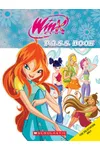
- P.A.S.S. Book (2006) - Standing for 'Pass Along Secretly and Silently', this is a spiral-bound interactive friendship diary.
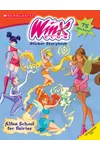
- Alfea School For Fairies (2006) - A sticker storybook by Ellie O'Ryan centered on Alfea's campus.
- Last Princess of Sparks (2006) - A core chapter book where the Winx travel to the frozen planet Sparks (Domino) to recover Bloom's stolen Dragon Fire.
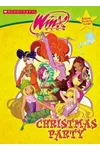
- Christmas Party (2006) - A holiday-themed activity and sticker book featuring seasonal puzzles.
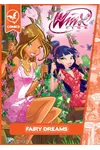
- Fairy Dreams (2006) - A chapter book adapting the Winx's journey into the dream world to combat nightmare magic.
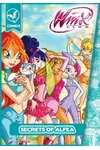
- Secrets of Alfea (2006) - A Scholastic chapter book focusing on hidden chambers and history within the fairy academy.
- Pixie Power (2007) - A chapter book by Michael Anthony Steele introducing the bonded pixies from Season 2 of the animated series.
VIZ Media Graphic Novels (2012–2013)
In 2012, VIZ Media launched a graphic novel line to tie in with the Nickelodeon revival of the series. Instead of novelizing the episodes, these volumes collected and re-translated the long-running Italian Winx Club comic series. VIZ Media adjusted the order of the original chapters slightly to create a smoother chronological timeline for English-speaking readers. Each volume typically contains two complete comic adventures.
This run should be read in numerical order, as it builds a continuous narrative arc mirroring the show's early seasons:
- Vol. 1: Bloom's Discovery (2012) - Contains the chapters 'A Friend for Bloom' and 'First Day in Magix'.
- Vol. 2: Secrets of Alfea (2012) - Contains the chapters 'Secrets of Alfea' and 'The Boys from Red Fountain'.
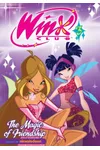
- Vol. 3: The Magic of Friendship (2012) - Contains the chapters 'A Job for Bloom' and 'The Swamp Monster'.
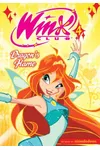
- Vol. 4: Dragon's Flame (2012) - Contains the chapters 'Dragon's Flame' and 'Magic Battle'.
- Vol. 5: Fairy Dreams (2012) - Contains the chapters 'The Guardian of Dreams' and 'An Evil Wind'.
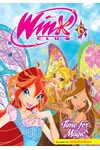
- Vol. 6: Time for Magic (2013) - Contains the chapters 'Magix on Ice' and 'Future Adventures'.
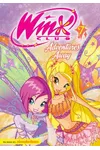
- Vol. 7: Adventures Away (2013) - Contains the chapters 'The Island of Time' and 'The Rebellion'.
- Vol. 8: Magic in the Air (2013) - Contains the chapters 'Magix Virus' and 'Perfume and Magic'.
- Vol. 9: The Cursed Jewel (2013) - Contains the chapters 'The Cursed Jewel' and 'Kyral's Test'.
Additionally, VIZ Media released the Winx Club: Magic Collection in 2014, which serves as an omnibus compiling several of these early graphic novels into a single, thick volume.
Understanding the Continuity and Formats
To enjoy the Winx Club books, it is helpful to understand how they relate to the broader franchise. The franchise is television-first, meaning the animated series is the source of truth, and the books exist as adaptations or side-stories. Because the television show went through major localization changes—most notably the differences between the 4Kids Entertainment dub and the later Nickelodeon co-production—the book lines reflect these differences.
Scholastic's 2005–2007 books refer to names and terms popularized by the 4Kids dub (such as referring to Bloom's home planet as 'Sparks' instead of 'Domino'). Conversely, the VIZ Media graphic novels align closely with the original Italian naming conventions and the Nickelodeon dub translations. Because of this, readers may notice minor inconsistencies in names, spellings, and character backgrounds if they jump directly between the Scholastic chapter books and the VIZ Media graphic novels.
Spin-Offs and Live-Action Tie-Ins
For older readers who watched the live-action Netflix adaptation, Fate: The Winx Saga, there is a dedicated spin-off novel series. These books offer a darker, young-adult urban fantasy tone rather than the whimsical, colorful atmosphere of the original cartoons and comics. The primary novel in this line is The Fairies' Path (2021) by Sarah Boswell, published by Scholastic. It novelizes the first season of the Netflix series, expanding on the characters' inner monologues and relationships.
Practical Reader Advice
If you are planning to dive into the series, keep these practical tips in mind:
- Standalones vs. Serials: The activity books and holiday specials (such as Christmas Party and Circle of Friends) are completely standalone and do not impact the overarching plot. However, the core narrative chapter books (such as Secret Powers and Last Princess of Sparks) and all nine VIZ Media graphic novels are serialized and should be read in numerical order.
- Availability: The original Scholastic books from the mid-2000s are long out of print and can be difficult to find. Fans looking to collect them will need to search secondary markets, used bookstores, or library catalogs. The VIZ Media graphic novels are occasionally easier to track down digitally or via comic book retailers.
- Feminist and Empowerment Themes: Parents and educators often praise the books for their strong emphasis on teamwork and 'girl power.' Each fairy in the club represents a different interest and personality—from Tecna's affinity for technology and Musa's love of music, to Flora's passion for nature—encouraging young readers to embrace their own unique strengths.