
The Recommended Reading Order
If you want to experience the World of Tiers as Philip José Farmer originally intended, the best way to do so is in strict publication order. The narrative builds sequentially through the eyes of its human protagonists as they learn about the vast, artificial pocket universes and the godlike beings who created them. While the sixth book in the series deviates conceptually, it is critical to read the final book last to see the saga's true resolution.
Here is the recommended reading path for the World of Tiers:
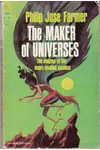
- The Maker of Universes (1965)
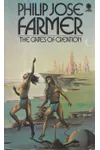
- The Gates of Creation (1966)
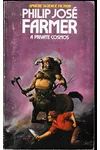
- A Private Cosmos (1968)
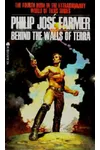
- Behind the Walls of Terra (1970)
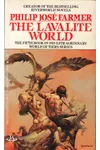
- The Lavalite World (1977)
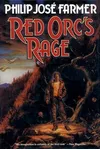
- Red Orc's Rage (1991)
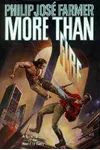
- More Than Fire (1993)
What to Know Before You Start
Published between 1965 and 1993, the World of Tiers is a cornerstone of mid-century science fantasy. The core premise revolves around the Lords (also known as Thoans), an ancient, genetically human race who possess incomprehensibly advanced technology. Using this technology, they construct custom-built "pocket universes"—alternate realities that operate under their own physics, geographies, and ecological rules. Crucially, the Lords are not actual gods; they are immortal, decadent, and deeply paranoid aristocrats prone to familial backstabbing and turf wars.
Our guides through this multiverse are Robert Wolff, a retired Earth professor who finds himself rejuvenated in a strange new world, and Paul Janus Finnegan (known as Kickaha), a clever trickster who has mastered the art of surviving the Lords' whims. If you love the grand worldbuilding of Roger Zelazny's Chronicles of Amber or the planetary adventures of Edgar Rice Burroughs' Barsoom, you will find yourself right at home here.
The Seven Books: A Deep Dive
1. The Maker of Universes (1965)
The saga begins when Robert Wolff, an aging classics professor dissatisfied with his mundane life on Earth, hears a mysterious horn sounding from an abandoned house. Stepping through a portal, he is transported to a world shaped like a colossal, tiered wedding cake. Restored to the peak of youth and strength, Wolff must scale the tiers to confront the creator of this realm. Along the way, he meets the clever rogue Kickaha and begins to unlock the secrets of his own forgotten past, discovering he is actually the Lord Jadawin.
2. The Gates of Creation (1966)
Now ruling his tiered realm alongside his love Chryseis, Jadawin is drawn into a trap when his tyrannical father, the Lord Urizen, kidnaps Chryseis. To save her, Jadawin must venture into Urizen's private universe—a hostile, labyrinthine landscape designed specifically to neutralize Jadawin's strengths. This installment leans heavily into the toxic, competitive family dynamics of the Lords and the sheer danger of navigating unfamiliar pocket dimensions.
3. A Private Cosmos (1968)
With Jadawin temporarily out of the picture, the focus shifts to the trickster hero Kickaha. The World of Tiers faces a terrifying threat: the Bellers, insidious artificial entities that can consume a person's brain and take over their body. Kickaha must use his wits, speed, and intimate knowledge of the world's hidden paths and gates to wage a guerrilla war against these body-snatchers and protect the tiers from total collapse.
4. Behind the Walls of Terra (1970)
Kickaha's battle against the Lords leads him back to a shocking revelation: our own Earth is nothing more than a pocket universe, created and manipulated by the sinister Lord Red Orc. Kickaha finds himself navigating the relative mundanity and unexpected dangers of 20th-century Earth as he hunts down his enemies and tries to prevent Red Orc from erasing the planet's population.
5. The Lavalite World (1977)
Stranded alongside the ancient Lord Anana, Kickaha finds himself trapped in one of the most imaginative settings in science fiction: the Lavalite World. Created by the Lord Urthona, this planet is in a state of constant, geological flux. Mountains melt into valleys, solid ground turns to liquid stone, and the entire landscape reshapes itself every few hours. Kickaha must survive this shifting nightmare while outsmarting Urthona's deadly traps.
6. Red Orc's Rage (1991)
This is the most controversial entry in the series due to its highly unusual, meta-fictional structure. Written in collaboration with psychiatrist Dr. A. James Giannini, the book centers on Jim Grimson, a troubled teenager undergoing "Tiersian Therapy." In this real-world-inspired psychiatric method, patients project their psyches into the roles of characters from Philip José Farmer's novels. Jim becomes emotionally linked with the Lord Red Orc, and the boundaries between Jim's psychological recovery on Earth and the literal reality of the World of Tiers begin to blur. While it does not advance Kickaha's main plot, it provides crucial psychological background on Red Orc before the final showdown.
7. More Than Fire (1993)
The series reaches its grand finale as Kickaha returns to the forefront for a direct, high-stakes confrontation with Red Orc. Utilizing every trick, gate, and weapon he has gathered across his travels, Kickaha fights to end Red Orc's tyranny and secure the safety of the pocket universes once and for all. It ties up the major plot threads of the series and delivers a satisfying conclusion to the saga.
Chronology and Reading Advice
There are no prequels or alternative chronological orders to worry about with the World of Tiers; the timeline of the universe flows in the same sequence as the publication dates. However, you should keep the following tips in mind to get the most out of your journey:
- Do Not Skip the Meta-Fiction: While some readers suggest skipping Red Orc's Rage because it features a different protagonist, doing so leaves a massive narrative gap regarding Red Orc's motives and character development heading into the finale, More Than Fire.
- Look Out for the Amber Connection: Keep an eye on how Farmer handles the concept of "gates" and world creation. Fans of Roger Zelazny's Chronicles of Amber will notice how Zelazny drew direct inspiration from the Lords and their pocket dimensions.
- Read Them Together: Because the books transition rapidly from one cliffhanger to the next (especially books 3 through 5), it is highly recommended to read them in close succession to keep the character alliances and world mechanics fresh in your mind.