



Where to Start the Dan Lenson Series
For readers diving into David Poyer's acclaimed military thriller series, the most critical decision is choosing between the order in which the books were published and the chronological order of Dan Lenson's career. The author himself strongly recommends reading the books in chronological order. Reading chronologically allows you to watch Dan Lenson grow naturally from an inexperienced Ensign navigating cold-war Arctic waters into a veteran commander, Captain, Rear Admiral, and eventually a Vice Admiral handling global superpower conflicts.
While each book is meticulously written to serve as a standalone naval adventure, the overarching development of Lenson's military rank, strategic understanding, and complicated personal life—especially his relationship with his wife Blair and his daughter—benefits immensely from being read in the order the events actually happen.
The Recommended Chronological Reading Order
Here is the complete sequence of the Dan Lenson series arranged by its internal timeline, matching David Poyer's official recommendation. This order differs from the publication order in the early parts of the series, where Poyer wrote prequels and filled in gaps in Lenson's early career.
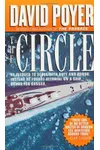
- The Circle (Published in 1992) – Ensign. Dan's career begins under extreme pressure aboard the USS Reynolds Ryan during a grueling, disaster-plagued cruise in the Arctic. Here he faces mutinous crew dynamics and a career-threatening court-martial.
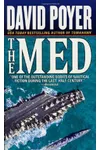
- The Med (Published in 1988) – Lieutenant. The book that started it all. Dan Lenson is deployed as a Lieutenant to the Mediterranean, where he must navigate a complex hostage crisis involving a Syrian terrorist group while his own family is caught in the crossfire.
- The Passage (Published in 1994) – Lieutenant. Assigned to the destroyer USS Barrett, Dan is sent on a high-stakes mission down the coast of South America and around the treacherous waters of Cape Horn.
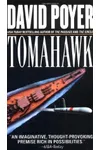
- Tomahawk (Published in 1998) – Lieutenant-Commander. Lenson is assigned to a desk job at the Pentagon to oversee the testing and deployment of the newly developed Tomahawk cruise missile, thrusting him into military-industrial politics and sabotage.
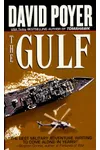
- The Gulf (Published in 1990) – Lieutenant-Commander. Lenson returns to sea duty in the Persian Gulf during the volatile Iran-Iraq "tanker war," escorting oil tankers through mine-infested waters.
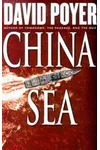
- China Sea (Published in 2000) – Commander. Dan takes command of the rundown destroyer USS Barrett, leading it into the South China Sea to combat modern pirates and confront escalating tensions with Chinese forces.
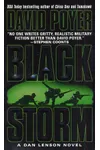
- Black Storm (Published in 2002) – Commander. Serving as a weapons inspector on a high-stakes mission inside Iraq, Lenson must find and neutralize hidden weapons of mass destruction before they can be unleashed.
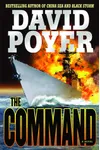
- The Command (Published in 2004) – Commander. Lenson commands a joint multinational destroyer task force in the Mediterranean, dealing with modern piracy, illegal weapons smuggling, and maritime law.
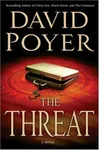
- The Threat (Published in 2006) – Commander. Plunged into the post-9/11 War on Terror, Dan works within the Pentagon and in the Arabian Sea to stop a devastating terrorist plot aimed at the heart of the U.S. government.
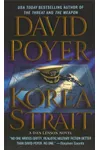
- Korea Strait (Published in 2007) – Captain. Promoted to Captain, Lenson is sent to the Western Pacific to lead joint exercises with Japanese and South Korean forces, which quickly turn dangerous as a crisis with North Korea erupts.
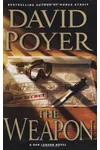
- The Weapon (Published in 2008) – Captain. Dan is assigned to test an experimental, high-power naval laser defense system, a technology that makes his ship a prime target for foreign espionage.
- The Crisis (Published in 2009) – Captain. Operating in the Black Sea, Lenson's ship is caught in the middle of a shooting war between Russia and Georgia, testing the limits of international diplomacy and rules of engagement.
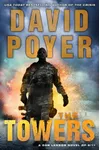
- The Towers (Published in 2011) – Captain. This retrospective entry serves as a direct follow-up to the events of 9/11, showing Lenson's immediate response and his role in the changing landscape of global defense.
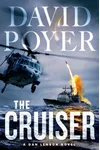
- The Cruiser (Published in 2014) – Captain. Lenson takes command of the newly modernized cruiser USS Savo Island, dealing with an experimental ballistic missile defense system and a highly divided crew.
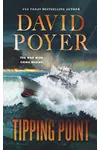
- Tipping Point (Published in 2015) – Captain. Under intense scrutiny from a Congressional inquiry in Washington, Lenson returns to the USS Savo Island to patrol the Indian Ocean and prevent a nuclear conflict between India and Pakistan.
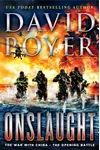
- Onslaught (Published in 2016) – Captain. The opening salvo of a global conflict. A massive Chinese cyber-attack cripples American infrastructure, and Dan must defend the Miyako Gap against overwhelming Chinese naval forces.
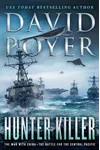
- Hunter Killer (Published in 2017) – Captain. As World War III rages across the Pacific, Lenson commands a scratch task force, engaging in brutal submarine warfare and fleet actions.
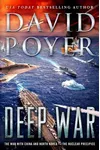
- Deep War (Published in 2018) – Captain. The global war goes deep and threatens to turn nuclear. Lenson is tasked with cutting undersea communications cables and fighting in the dark depths of the ocean.
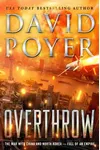
- Overthrow (Published in 2019) – Captain. The Allies launch a desperate counter-offensive against Chinese forces, culminating in high-stakes actions in the Western Pacific that will decide the fate of the war.
- Violent Peace (Published in 2020) – Rear Admiral. Promoted to flag rank, Dan Lenson is tasked with negotiating a fragile postwar peace treaty with a defeated but still dangerous China.
- Arctic Sea (Published in 2021) – Rear Admiral. The geopolitical landscape shifts to a new Cold War in the far north. Lenson leads a task force into the Arctic to confront Russian and Chinese joint maneuvers.
- The Academy (Published in 2023) – Vice Admiral. Bringing the saga full circle, Dan Lenson is appointed Superintendent of the U.S. Naval Academy at Annapolis, where he must prepare the next generation of officers for the threats of tomorrow.
Publication Order vs. Chronological Order
If you choose to read the series in publication order, you will start with The Med (1988), followed by The Gulf (1990), and then jump back in time with The Circle (1992). The primary reason for the chronological discrepancy is that David Poyer decided to write prequels to flesh out Dan's early naval career. For example, The Circle introduces a green Ensign Lenson, while The Med features him as an experienced Lieutenant. Similarly, The Gulf (published second) takes place chronologically after Tomahawk (published fifth).
From China Sea (2000) onward, the publication order and chronological order align perfectly, taking Lenson through a linear progression of ranks and conflicts. Reading in publication order offers a fascinating look at how Poyer's writing style and the series' scale evolved over three decades, but it can be jarring for readers who prefer a continuous narrative arc.
Major Subseries and Story Arcs
The 22-novel Dan Lenson saga can be broken down into distinct eras, which can help you digest the massive series or pick a specific starting point:
The Junior Officer Era (The Circle to The Gulf)
These early novels focus on the tactical, deck-plate level of the Navy. Dan is a junior officer learning the ropes, dealing with difficult commanding officers, and surviving harsh maritime environments. The stakes are localized—hostage rescues, storms, and regional skirmishes.
Command and Captaincy Era (China Sea to Tipping Point)
In this block, Lenson gains command of his own ships, starting with the destroyer USS Barrett and moving up to the cruiser USS Savo Island. The series shifts focus to the heavy burden of command, naval diplomacy, and the integration of experimental military technologies like advanced Aegis systems and lasers.
The World War III Cycle (Onslaught to Violent Peace)
Often referred to by fans as the "War with China" or "World War III" sequence, this five-book arc is a massive, serialized epic that describes a near-future global war. Beginning with a devastating cyber-offensive in Onslaught, it tracks naval battles, nuclear threats, submarine warfare, and the eventual struggle to negotiate a peace treaty. This is the most action-heavy and continuous segment of the series.
What to Know Before You Start
David Poyer is a graduate of the U.S. Naval Academy and a retired Navy captain, and this experience shines through on every page. The Dan Lenson series is highly regarded for its technical accuracy, realistic depictions of shipboard life, and naval jargon. Poyer does not romanticize the military; instead, he focuses on the moral gray areas, bureaucratic frustrations, and physical tolls of service. Additionally, Lenson's personal life is a major running plotline, meaning his relationships and family issues carry over directly from book to book.