




























Where to Start Reading David Poyer
David Poyer is widely regarded as one of the most prolific and realistic voices in modern American sea fiction. With a career spanning over four decades and more than 40 novels, his work draws heavily from his own 30-year service as an active-duty and reserve U.S. Navy captain. His books are celebrated for their technical precision, deep-sea authenticity, and the complex ethical dilemmas faced by his characters.
Because his books span several distinct genres—from modern naval techno-thrillers and historical Civil War battles to Appalachian regional dramas—where you start depends on what you want to read:
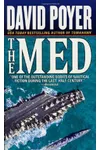
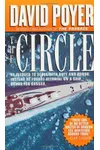
- For Modern Naval Adventure: Start with The Med (publication order) or The Circle (chronological order). This begins the legendary 22-book Dan Lenson series, which follows a naval officer's entire career.
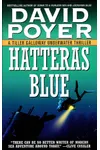
- For Underwater Salvage and Mystery: Start with Hatteras Blue, the first book of the Tiller Galloway series, which explores commercial diving, historic shipwrecks, and maritime intrigue.
- For Historical Fiction: Start with Fire on the Waters, the opening volume of his Civil War at Sea trilogy.
- For Regional and Industrial Drama: Start with The Dead of Winter, the first entry in his Hemlock County series set in rural Pennsylvania.
The Dan Lenson Series: Two Ways to Read
The Dan Lenson series is Poyer's crowning achievement, a massive 22-volume epic that chronicles the life of a dedicated U.S. Navy officer. The series stands alongside C.S. Forester's Hornblower and Patrick O'Brian's Aubrey-Maturin books, but updated for the modern American navy, tracking everything from the Cold War to a terrifyingly plausible near-future global conflict.
Because Poyer occasionally wrote prequels to flesh out Lenson's early career, readers have two options for tackle the series: chronological order or publication order.
Option 1: The Author's Recommended Chronological Order
David Poyer recommends reading the series in chronological order. This ensures you experience Dan Lenson's career progression in a logical timeline, watching him grow from a green Ensign to a senior Admiral. In this sequence, The Circle is read first because it takes place in the early 1970s, even though it was published after The Med and The Gulf.
- The Circle (1992) – Lenson's first cruise as an Ensign on a troubled, rusty Destroyer.
- The Med (1988) – Lieutenant Commander Lenson participates in a high-stakes hostage rescue mission in the Mediterranean.
- The Passage (1994) – Jumps back slightly to Lenson's time as a Lieutenant navigating dangerous waters in the Caribbean.
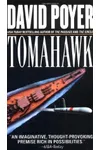
- Tomahawk (1998) – Lenson is assigned to test a powerful new cruise missile system.
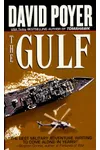
- The Gulf (1990) – Set during the intense Tanker War in the Persian Gulf during the late 1980s.
- China Sea (2000) – Lenson takes command of a multinational peacekeeping force in the South China Sea.
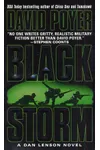
- Black Storm (2002) – A tense thriller involving the hunt for chemical weapons in the Middle East.
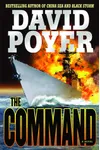
- The Command (2004) – Lenson commands a cruiser during a period of mounting global tension.
- The Threat (2006) – A complex political thriller involving homeland security and high-level naval operations.
- Korea Strait (2007) – A naval confrontation near the Korean Peninsula threatens to spark a regional war.
- The Weapon (2008) – A look at cutting-edge military technology and the ethical burdens of its usage.
- The Crisis (2009) – A humanitarian and military emergency off the coast of East Africa.
- The Towers (2011) – A novel addressing the repercussions of the 9/11 attacks on naval operations and Lenson's life.
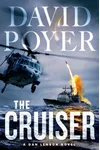
- The Cruiser (2014) – Lenson commands the USS Savo Island, ushering in the modern era of the series.
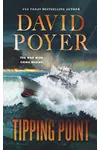
- Tipping Point (2015) – The start of a major near-future conflict arc involving cyberwarfare and naval skirmishes.
- Onslaught (2016) – The outbreak of an all-out conventional war in the Western Pacific.
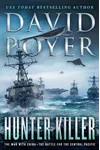
- Hunter Killer (2017) – Submarine warfare and fleet battles escalate the global conflict.
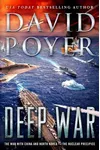
- Deep War (2018) – Deep-sea operations and submarine warfare push both sides to their absolute limits.
- Overthrow (2019) – Global logistics and tactical battles reshape the alliance networks.
- Violent Peace (2020) – The struggle for control in the war's final, devastating phases.
- Arctic Sea (2021) – A chilling showdown under the polar ice caps as the global conflict reaches its climax.
- The Academy (2023) – The final book in the series, following a veteran Lenson as he returns to where his journey began at the Naval Academy.
Option 2: The Publication Order
If you prefer to see how Poyer's writing style and the real-world political landscapes evolved over his 35-year writing journey, you can read the books in publication order. The main difference is that you will experience Lenson's early career through flashbacks and prequels after having already seen him serve as a senior officer in the first two novels.
- The Med (1988)
- The Gulf (1990)
- The Circle (1992)
- The Passage (1994)
- Tomahawk (1998)
- China Sea (2000)
- Black Storm (2002)
- The Command (2004)
- The Threat (2006)
- Korea Strait (2007)
- The Weapon (2008)
- The Crisis (2009)
- The Towers (2011)
- The Cruiser (2014)
- Tipping Point (2015)
- Onslaught (2016)
- Hunter Killer (2017)
- Deep War (2018)
- Overthrow (2019)
- Violent Peace (2020)
- Arctic Sea (2021)
- The Academy (2023)
The Tiller Galloway Series: Deep-Sea Diving Thrillers
Moving away from the official command structures of the U.S. Navy, the Tiller Galloway series follows an ex-Navy SEAL and commercial salvage diver. Galloway is a rugged, flawed protagonist who takes on high-risk salvage operations in treacherous waters. The stories combine historical mysteries, deep-water salvage technology, and crime thriller elements.
- Hatteras Blue (1989) – Tiller searches for a lost German U-boat off the coast of North Carolina.
- Bahamas Blue (1991) – A dangerous salvage operation involving drug smuggling and deep-ocean technology.
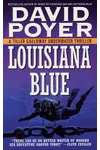
- Louisiana Blue (1994) – Galloway takes on a job involving offshore oil rigs and industrial sabotage in the Gulf of Mexico.
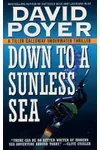
- Down to a Sunless Sea (1996) – A deep-sea hunt for a lost artifact that turns into a fight for survival.
The Hemlock County Novels: Pennsylvanian Regional Fiction
For a completely different side of David Poyer, the Hemlock County series shifts focus to the rugged landscapes of northwestern Pennsylvania. These books explore the history of the American oil industry, local folklore, environmental changes, and personal conflicts. The latest addition, The Hill (2023), was actually the first novel Poyer ever wrote, but it was revised and published decades later to serve as a prequel set in the 1960s.
- The Dead of Winter (1988) – A tense rural thriller involving local corruption and hunting.
- Winter in the Heart (1993) – Explores industrial pollution, local history, and family secrets.
- As the Wolf Loves Winter (1996) – A story of survival and wilderness secrets in the Pennsylvania mountains.
- Thunder on the Mountain (1999) – Focuses on the working-class families and industrial struggles of the region.
- The Hill (2023) – A story set in the 1960s centering on a local school scandal and community divisions.
The Civil War at Sea Trilogy
Poyer's love of naval history shines in this historical fiction trilogy. The books follow the naval side of the American Civil War, tracing the struggle between the Union and Confederacy through the eyes of officers, sailors, and engineers.
- Fire on the Waters (2001) – The buildup to war and the naval blockade around Fort Sumter.
- A Country of Our Own (2003) – The escalation of the conflict as Southern officers resign to join the Confederacy.
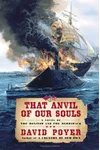
- That Anvil of Our Souls (2005) – The historic clash of ironclads, culminating in the battle between the Monitor and the Merrimack.
What to Know Before You Start
Poyer's books are highly regarded for their technical accuracy. As a former naval officer, Poyer does not gloss over the terminology; he explains sonar, radar, navigation, and weapon systems with realistic detail. The Dan Lenson series also stands out for its longevity. Over the 35 years it took to write the series, real-world naval technology shifted drastically, and Poyer integrated these changes—such as GPS, Aegis combat systems, cyberwarfare, and changing social dynamics like women serving in combat roles—into the progression of Lenson's career.