
The Recommended Reading Order
The Dancers at the End of Time series, written by science fiction grandmaster Michael Moorcock in the 1970s and early 1980s, is a satirical, Wildean space-fantasy set on a collapsing, entropic far-future Earth. In this world, immortal humans use power rings to turn their every whim into reality, living in a state of perpetual hedonistic boredom.
Because the setting revolves around time travel and immortal beings who do not experience time linearly, attempting to map a strict chronological order is both futile and unnecessary. Instead, the best way to experience the series is to follow the original publication order. This allows you to experience the main romance arc of Jherek Carnelian and Amelia Underwood before diving into the spin-offs and companion stories.
Here is the recommended reading path for the series:
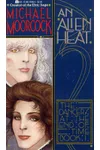
- An Alien Heat (1972) – The first novel of the core trilogy. Jherek Carnelian falls in love with Amelia Underwood, a time-traveling Victorian woman.
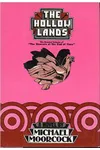
- The Hollow Lands (1974) – The second novel of the core trilogy. Jherek travels back to 19th-century London to find Amelia, resulting in cosmic culture clashes.
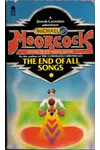
- The End of All Songs (1976) – The final book in the core trilogy, bringing the epic love story of Jherek and Amelia to a definitive and universe-altering conclusion.
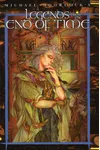
- Legends from the End of Time (1976) – A companion collection of three short stories (“Pale Roses,” “White Stars,” and “Ancient Shadows”) expanding on the lives of other eccentric inhabitants at the End of Time.
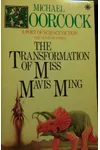
- The Transformation of Miss Mavis Ming (1977) – A standalone companion novel (also published under the title A Messiah at the End of Time) focusing on Mavis Ming and the chaotic arrival of a fanatical prophet called the Fireclown.
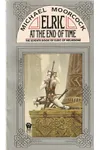
- Elric at the End of Time (1981) – A crossover story featuring Moorcock's famous albino antihero, Elric of Melniboné, who is accidentally transported to the End of Time, where the locals mistake his tragic brooding for a hilarious party trick.
Understanding the Core Trilogy
The narrative heart of the series lies in the original trilogy. Jherek Carnelian, one of the few natural-born citizens of the End of Time, lives a life of absolute luxury and no consequences until he meets Mrs. Amelia Underwood. Amelia, kidnapped from 1890s England, is a prim, morally rigid Victorian who is deeply shocked by the amoral antics of Jherek's peers.
Their romance drives the plot of An Alien Heat, The Hollow Lands, and The End of All Songs. As Jherek tries to understand Victorian morality—which he views as a fascinating and exotic game—he travels through time, gets imprisoned in 19th-century London, and faces the literal collapse of the space-time continuum. The trilogy balances lighthearted comedy of manners with existential dread as the universe runs out of energy.
The Companion Works and Spin-Offs
Once you finish Jherek and Amelia's story, Moorcock's companion works allow you to spend more time in this bizarre setting. These books flesh out the background characters who make the End of Time so memorable:
- Legends from the End of Time: This collection contains three stories. “Pale Roses” focuses on the melancholic Werther de Goethe as he tries to recreate childhood play for a young girl stranded from the past. “White Stars” features Duke Elric-like posturing and duel culture, and “Ancient Shadows” deals with the preservation of human history.
- The Transformation of Miss Mavis Ming (A Messiah at the End of Time): Mavis Ming, a minor character from the core trilogy, takes center stage here. Stranded at the End of Time, her quiet life is disrupted by the Fireclown, a self-styled savior from the past who wants to bring suffering and redemption to a society that has absolutely no use for either. It is a darker, sharper satire than the main trilogy.
- Elric at the End of Time: A delightful crossover novella. Because the End of Time denizens cannot comprehend real tragedy or pain, they find the brooding, soul-sucking Elric of Melniboné to be an incredibly entertaining performance artist. It remains a fan-favorite intersection of Moorcock's fantasy and sci-fi worlds.
What to Know Before You Start
Moorcock wrote the Dancers at the End of Time sequence as a deliberate departure from the dark, brooding sword-and-sorcery of his Elric stories. Influenced by the Decadent movement of the late 19th century, particularly the illustrations of Aubrey Beardsley and the plays of Oscar Wilde, the tone is witty, theatrical, and satirical. Jherek Carnelian and his companions represent the absolute peak of post-scarcity apathy, yet their childlike curiosity keeps them from becoming purely villainous.
For readers interested in Moorcock's grander Eternal Champion mythos, the series is a crucial piece of the puzzle. Characters like Una Persson appear, and Jherek Carnelian himself is often interpreted as an incarnation (or a mirror image) of the Eternal Champion. However, you do not need any prior knowledge of Moorcock's multiverse to enjoy the trilogy; it stands perfectly well on its own as a self-contained romantic comedy.
Omnibus Editions and Compilations
Because the books are relatively short and tightly linked, they are frequently compiled into omnibus editions. If you are looking for physical copies, keep an eye out for these collections:
- Tales from the End of Time (1989): This volume compiles Legends from the End of Time and The Transformation of Miss Mavis Ming, making it a convenient way to get all the primary companion stories in one place.
- The Dancers at the End of Time (Single-Volume Omnibus): Many modern publishers offer the core trilogy (An Alien Heat, The Hollow Lands, and The End of All Songs) bound together in a single, comprehensive volume, which is the absolute best way to start reading the series.