


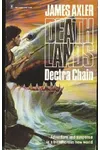
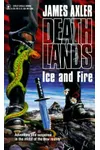
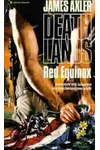
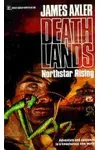

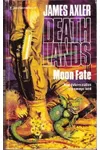
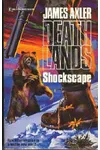
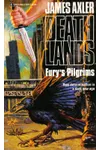
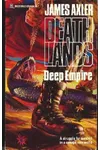
The Recommended Reading Path for Deathlands
Stepping into a post-apocalyptic saga that spans over 150 books might feel as daunting as navigating a radioactive mutant swamp. However, the survivalist sci-fi series Deathlands is remarkably welcoming to newcomers. Because the series is structured as an ongoing, episodic pulp adventure, you do not need to commit to reading all 150+ books in a rigid sequence to enjoy the ride. That said, having a roadmap will help you get the most out of your journey through the ruined American wasteland.
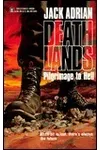
The absolute best place to start is at the very beginning with Pilgrimage to Hell (1986). This first installment establishes the grim reality of the post-nuclear world, introduces the central protagonist Ryan Cawdor, and details how his group of survivalists forms. Reading the first five books in sequence provides the essential foundation for the entire series' continuity, character dynamics, and lore.
Crucial Early Milestones
If you want to experience the core narrative and get a feel for the characters before deciding to dive deeper into the catalog, you should focus on the first five novels in the publication order:
- Pilgrimage to Hell (Book 1): Introduces Ryan Cawdor, the rugged, one-eyed leader, and his psychic companion Krysty Wroth, as they search for a rumored safe haven in a shattered America.
- Red Holocaust (Book 2): Expands the scope of the world, taking the team to the ruins of Alaska where they face cold-weather hazards and brutal adversaries.
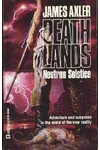
- Neutron Solstice (Book 3): A fan favorite that introduces Jak Laurent, the fierce albino teenager who becomes a permanent and vital member of Ryan's crew.
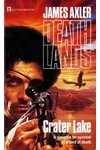
- Crater Lake (Book 4): Ryan and his companions encounter a highly advanced, sinister community of scientists, introducing critical pre-war lore.
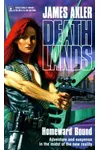
- Homeward Bound (Book 5): Ryan Cawdor confronts his family's dark past and his villainous brother, Morgan. This book served as the basis for the 2003 Sci-Fi Channel television movie adaptation.
Understanding the Deathlands Universe: MAT-TRANS and the Team
To navigate the vast wasteland of this series, readers need to understand the two central pillars that hold the narrative together: the MAT-TRANS network and the core band of companions.
The MAT-TRANS (Matter Transmission) network is a system of hidden pre-war teleportation chambers constructed in secret underground military bunkers known as "redoubts." Because the characters lack the security clearances and technical manuals to program these chambers safely, every trip is a gamble. Stepping into a MAT-TRANS chamber usually transports the group to a completely random location across North America—or occasionally even further. This brilliant plot device allows each novel to function as a self-contained adventure in a brand-new setting, ranging from swampy baronies ruled by mutant lords to high-tech underground vaults.
The travelers who navigate this network are a tightly knit family of survivalists, each bringing unique skills to the table:
- Ryan Cawdor: The one-eyed leader, a master strategist and hardened warrior who keeps the group focused on survival.
- J.B. Dix (The Armorer): Ryan's close friend and second-in-command. He is a quiet, methodical weapons expert who keeps their firearms functioning and handles explosives.
- Krysty Wroth: Ryan's romantic partner, a strong-willed woman possessing a distinct preternatural empathy and psychic abilities that warn the group of danger.
- Mildred Wyeth: A physician from the pre-war era who was cryogenically frozen. She is an expert marksman and provides essential medical knowledge.
- Jak Laurent: A young, albino scout who speaks in short, clipped sentences and is lethal with leaf-bladed throwing knives.
- Dr. Theophilus "Doc" Tanner: An eccentric, elderly intellectual who was accidentally displaced from the 19th century due to a temporal malfunction, adding historical perspective and flavor to the team.
Publication Order vs. Chronological Order
A common question for long-running series is whether to read the books chronologically or in publication order. For Deathlands, the answer is simple: publication order is chronological order. Because the characters travel sequentially from one redoubt to another using the MAT-TRANS system, the timeline of their journey moves forward book by book. There are no prequels or major flashbacks that require you to jump around the publication chronology.
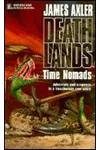
However, there are a few science-fiction caveats to keep in mind. The series occasionally dips into time travel or temporal anomalies. In Time Nomads (Book 11), the characters experience time shifts, and later in Chrono Spasm (Book 114), temporal disruptions again alter the flow of their journey. Additionally, in the later phases of the series (starting around Book 133), the plotlines become slightly more continuous and intertwined, dealing with timeline fractures. Despite these sci-fi elements, sticking strictly to the publication order remains the best and only logical way to follow the overarching character development and lore.
Co-Authors and the House Pseudonym "James Axler"
The cover of every Deathlands novel lists the author as James Axler. However, James Axler does not exist. It is a house pseudonym created by Gold Eagle Publishing (an imprint of Harlequin) to maintain a consistent brand for their action-adventure lines. Over the decades, a rotating roster of talented writers has contributed to the series under this name.
The foundational voice of the series belonged to Laurence James. After co-writing the debut novel with Christopher Lowder (who used the pen name Jack Adrian), James went on to write the next 32 books in the series. His gritty, fast-paced style and character development established the "Golden Age" of Deathlands. Following James' passing in 2000, other writers took up the mantle. Prominent contributors include Mark Ellis, who wrote dozens of entries and created the official spin-off, as well as Victor Milán, Nick Pollotta, and Mel Odom. While the tone can shift slightly depending on the individual author behind the keyboard, the core pulp survival formula remains remarkably consistent.
The Outlanders Spin-Off
If you fall in love with the post-apocalyptic landscape of the Deathlands, you will want to explore the official spin-off series, Outlanders. Created by author Mark Ellis in 1997, Outlanders is set in the exact same universe but takes place roughly 100 years after the events of Deathlands.
While Deathlands focuses on survival, travel, and lawless baronies, Outlanders shifts its tone toward high-concept science fiction, ancient conspiracies, and organized resistance. In this future era, the chaotic baronies have been replaced by a centralized, despotic government controlled by mysterious barons. The story follows Kane, Grant, and Brigid Baptiste as they uncover pre-war secrets and combat global threats from a hidden military base. To get started with the spin-off, you should read it in publication order, starting with Exile to Hell (1997).
Audiobooks and the GraphicAudio Experience
You cannot discuss the longevity of Deathlands without mentioning its massive success in the audiobook format. While early books were published as physical paperbacks, the series transitioned in later years (particularly after Book 126) to releasing primarily as audiobooks.
Specifically, the series became a flagship franchise for GraphicAudio, produced under their famous slogan "A Movie in Your Mind." These adaptations feature a full cast of voice actors, cinematic music, and immersive sound effects. For many modern fans, listening to the GraphicAudio editions is the definitive way to experience Ryan Cawdor's adventures, as the voice acting and production values perfectly complement the fast-paced, cinematic action of the novels.
Practical Tips for Wasteland Readers
- Jump-in Points: Aside from Book 1, you can safely jump into almost any early novel. Homeward Bound (Book 5) or Pony Soldiers (Book 6) make excellent early starting points if you want to skip the introductory setup.
- Manage the Scale: Do not feel pressured to read all 150+ books. Many fans read the first 30 to 40 books (covering the Laurence James era) and then dip in and out of later trilogies or books that catch their interest.
- Keep Outlanders Separate: While they share a universe, you do not need to read Deathlands to understand Outlanders. Treat them as separate series with different styles.