




The Recommended Reading Order
If you want to experience the sheer, unadulterated madness of Simon R. Green’s space opera universe, the safest and most satisfying path is to read the books in their publication order. Because the narrative is split into two distinct multi-book segments set two centuries apart, publication order aligns perfectly with the chronological progression of the main storyline.
While there are three prequel novels that take place earlier in the timeline, starting with them can be disorienting. The main series is where the tone, world-building, and stakes are fully established. Therefore, we recommend diving straight into the original novel first.
The First Saga: The Owen Deathstalker Arc (Books 1–5)
This is the core of the series, detailing the desperate galactic rebellion led by Owen Deathstalker against the psychotic Empress Lionstone XIV. It is a continuous, high-stakes story that must be read in order:
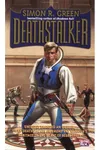
- Deathstalker (1995): The epic starting point. We meet Owen Deathstalker, a quiet historian and reluctant aristocrat who is suddenly outlawed by the Empress. To survive, he must flee to the fringes of the galaxy and gather a crew of outlaws, pirates, and warriors to spark a rebellion.
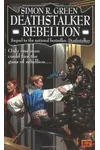
- Deathstalker Rebellion (1996): The conflict escalates. Owen works to unite various factions—including clones, psychics (espers), and rogue AIs—into a cohesive rebel force capable of challenging the Empire's massive military machine.
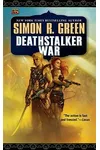
- Deathstalker War (1997): The war reaches its bloody climax. The battle moves directly to the home planet of Golgotha, where secrets are laid bare, old alliances crumble, and the fate of the galaxy is decided in a brutal confrontation.
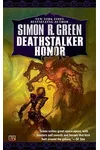
- Deathstalker Honor (1998): In the aftermath of the war, a new government is formed, but peace is fragile. Owen and his allies face internal betrayal, political maneuvering, and a terrifying new threat lurking in the depths of space.
- Deathstalker Destiny (1999): The grand finale of Owen's story. With the stakes higher than ever, Owen must make the ultimate sacrifice to secure the future of humanity and defeat the ancient, cosmic horrors threatening the galaxy.
The Second Saga: The Lewis Deathstalker Arc (Books 6–8)
Set two hundred years after the events of Deathstalker Destiny, this second trilogy shifts the focus to Owen's descendant, Lewis Deathstalker, who serves as the Deathstalker Champion in a seemingly peaceful and civilized galaxy that is secretly rotting from within.
- Deathstalker Legacy (2002): Lewis Deathstalker is a noble warrior tasked with maintaining order in the Golden Age. However, when political schemes, a rising religious cult, and mysterious alien threats converge, Lewis is outlawed just like his ancestor, forcing him to run and fight.
- Deathstalker Return (2004): As the galaxy descends into chaos and the mysterious Terror threatens all life, Lewis embarks on a desperate quest through space and time to find the legendary Owen Deathstalker, the only man who can save them.
- Deathstalker Coda (2005): The definitive conclusion to the entire eight-book epic. All storylines collide as Lewis, Owen, and their remaining allies face off against the ultimate threat in a battle that reshapes the universe forever.
The Twilight of the Empire Prequels
Before Simon R. Green wrote the main Deathstalker series, he published a trilogy of standalone novels set in the same universe. Often referred to as the Deathstalker Prelude or collected under the title Twilight of the Empire, these books explore the dark, oppressive height of the Empire long before Owen's rebellion began. They are:
- Mistworld (1992): Set on a rogue, hidden planet that serves as a sanctuary for outlaws, rebels, and espers fleeing the Empire's psychic hunters.
- Ghostworld (1993): Follows an expedition to a mysterious, haunted planet covered in strange ruins and deadly ghosts, expanding on the supernatural elements of Green's sci-fi universe.
- Hellworld (1993): Focuses on a remote planet where researchers and soldiers uncover ancient, terrifying secrets that threaten their sanity and survival.
Should you read them? These prequels do not feature Owen or Lewis Deathstalker, but they introduce key factions (like the rogue AI collective Shub and the espers) and world-building details that enrich the main series. You can read them either before starting Deathstalker (chronological order) or after completing the Owen Deathstalker arc as a lore expansion.
Chronological vs. Publication Order
For most readers, the debate comes down to where to place the Twilight of the Empire prequels. Here are the two primary ways to approach the series:
1. The Publication Order (Highly Recommended)
Reading in the order the books were written allows you to experience the universe exactly as the author developed it. You start with the explosive, action-packed Deathstalker, and then read the prequels later as bonus lore, or skip them entirely if you want to stay focused on the main narrative.
Order: Deathstalker → Rebellion → War → Honor → Destiny → Legacy → Return → Coda (with the prequels read either first or as a break between the two main sagas).
2. The Chronological Order
If you want to understand the history of the Empire, the origin of the espers, and the threat of Shub before diving into the main rebellion, you can start with the prequels. Be warned, however, that these early books have a slightly different, darker tone and lack the fast-paced, satirical space-opera style of the main series.
Order: Mistworld → Ghostworld → Hellworld → Deathstalker → Rebellion → War → Honor → Destiny → Legacy → Return → Coda.
Simon R. Green's Shared Multiverse
Like many of Simon R. Green’s works, the Deathstalker series is part of a larger multiverse. Readers of his urban fantasy series Nightside and his fantasy series Hawk & Fisher will find subtle crossovers, recurring concepts, and easter eggs. For example, characters and objects from the Nightside occasionally cross paths with the cosmic physics of the Deathstalker universe. However, these are strictly thematic links and minor cameos; you do not need to read any of Green's other series to fully enjoy and understand the Deathstalker saga.
What to Know Before You Start
The Deathstalker series is a love letter to the golden age of space opera, blended with 1990s cynicism and dark humor. It is intentionally over-the-top, featuring genetically engineered warriors, psychic hive minds, swashbuckling space pirates, and planet-destroying weapons. If you appreciate fast-paced action, witty banter, and characters who refuse to take themselves too seriously even in the face of cosmic dread, this is the series for you. Just remember that it is a continuous story—skipping books is not recommended, as each novel builds directly on the consequences of the last.